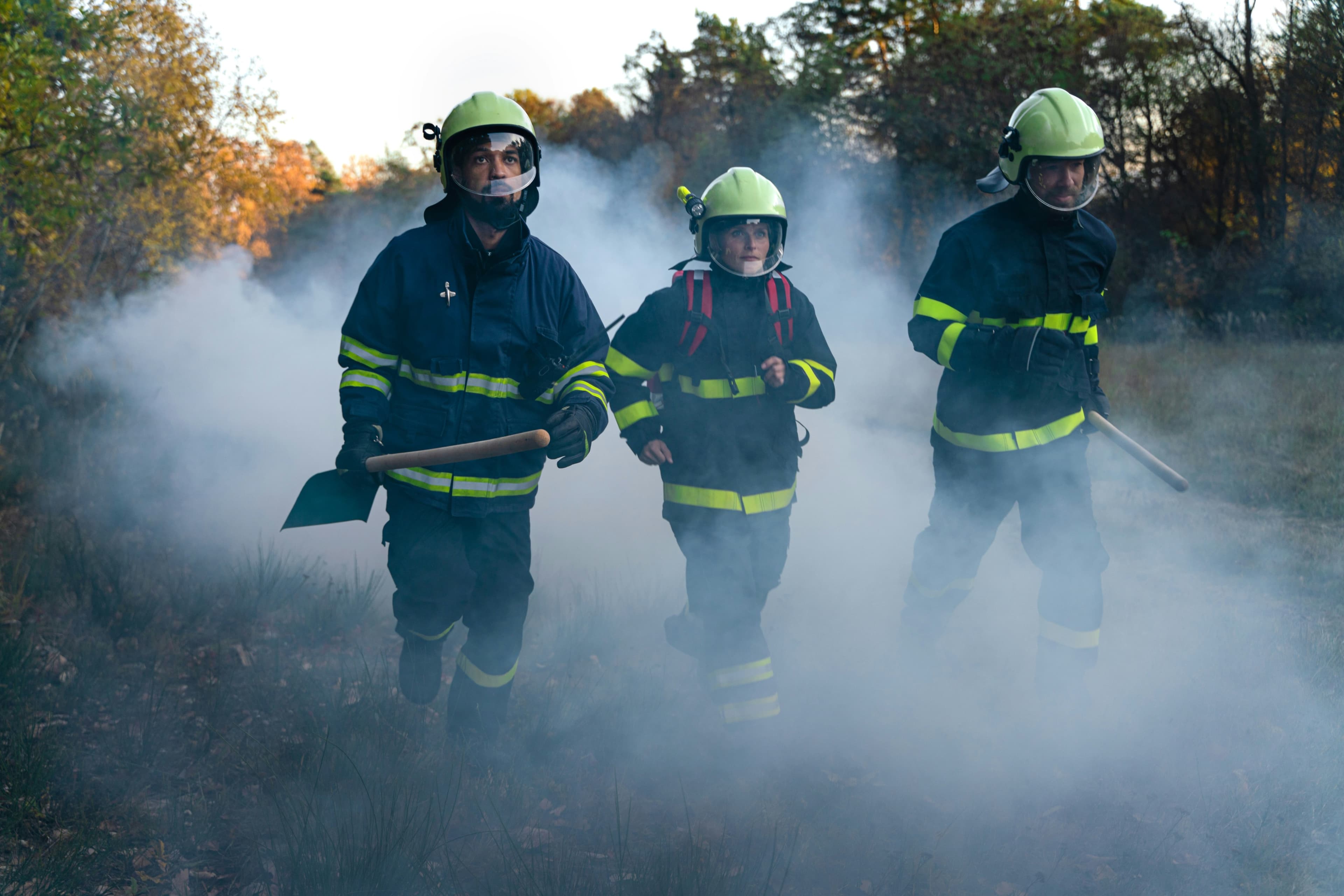
Unified Command 101: The Backbone of Inter-Agency Emergency Coordination
One of the most critical features of the Incident Command System (ICS) is its ability to facilitate a Unified Command structure when multiple agencies or jurisdictions are involved. Unlike a single Incident Commander model, which may be feasible in smaller incidents, a Unified Command allows representatives from each participating agency to collaborate in the development of incident objectives and the overall strategy. This approach ensures that all agencies maintain their authority, responsibilities, and operational awareness while contributing to a common operating picture. Unified Command is especially useful during large-scale natural disasters, mass casualty events, or hazardous materials incidents where fire, law enforcement, emergency medical services, and public works may all be involved simultaneously.
Each participating agency designates a representative to the Unified Command team, typically from a command-level officer or someone with decision-making authority. These leaders work together to prioritize objectives, allocate resources, and coordinate communication strategies. For example, during a wildland-urban interface fire, the fire department may focus on containment and suppression, law enforcement may manage evacuations and perimeter security, and EMS may coordinate triage and transport of the injured. By functioning under a Unified Command, these agencies avoid duplicative efforts, reduce inter-agency conflict, and ensure that resources are used efficiently and effectively. This structure has been shown to reduce response times and improve outcomes during complex incidents (FEMA 2020)1.
Standardized Roles and Scalable Organization
ICS is built around a modular organization that can expand or contract depending on the size and complexity of the incident. This scalability is a key feature that allows it to be used for everything from single-vehicle accidents to major disasters. The system is organized into five functional areas: Command, Operations, Planning, Logistics, and Finance/Administration. Each section can be staffed as needed, and roles within these sections are clearly defined, which enables seamless integration of additional personnel from other agencies.
Having standardized roles is particularly beneficial during mutual aid responses, where personnel from different jurisdictions or disciplines must work together without prior experience. When a responder is assigned to the Planning Section, for example, they immediately understand their responsibilities regardless of their home agency. This clarity minimizes confusion and allows for quicker onboarding during an active incident. For instance, a Logistics Section Chief from a neighboring county can step into that role on a multi-agency deployment and begin managing supplies, personnel support, and communications without needing extensive briefings or retraining (National Wildfire Coordinating Group 2017)2.
Interoperable Communications and Information Flow
Effective communication is foundational to any emergency response, and ICS provides the framework for establishing interoperable communications systems across agencies. One of the earliest lessons from large-scale disasters such as the 9/11 attacks and Hurricane Katrina was the need for reliable, shared communication platforms. ICS addresses this by assigning a Communications Unit under the Logistics Section, charged with ensuring that all responders can communicate using compatible systems and protocols.
In practical terms, this often means deploying mobile command centers equipped with multi-band radios, satellite phones, and redundant communication channels. The Communications Unit develops a Communications Plan as part of the Incident Action Plan (IAP), which outlines frequencies, call signs, and procedures for all responders. This structured approach prevents miscommunication and ensures that critical information flows quickly from the field to command and vice versa. Agencies that routinely train together using ICS are more likely to maintain communications discipline and adhere to established protocols during real incidents (Department of Homeland Security 2008)3.
Training, Certification, and Exercises
For ICS to function effectively, all participating agencies must commit to ongoing training and certification. The National Incident Management System (NIMS) outlines various ICS training levels, from introductory courses like ICS-100 to advanced courses such as ICS-400, which cover large-scale events and complex incident management. These trainings are available through FEMA’s Emergency Management Institute and are often incorporated into state and local emergency management programs.
Regular joint exercises are essential to reinforcing ICS principles and ensuring that personnel understand their roles during an actual incident. Tabletop exercises, functional drills, and full-scale simulations provide opportunities to test plans, identify gaps, and build inter-agency relationships. For example, an annual multi-agency active shooter drill might involve law enforcement conducting tactical entries, fire personnel managing triage zones, and EMS coordinating hospital transports. These exercises also help build trust and familiarity among agencies, which translates to smoother operations during real-world incidents (GAO 2012)4.
Resource Management and Mutual Aid Integration
ICS incorporates a standardized approach to resource management, which includes the categorization, ordering, dispatching, and tracking of personnel and equipment. This system enables agencies to understand what resources are available, where they are deployed, and when they are expected to arrive or be released. The use of resource typing ensures that requests for assistance are clear and that the requested resources meet operational needs.
During major incidents requiring mutual aid, ICS integrates seamlessly with regional and national resource networks. For instance, a local fire agency can request a Type III incident management team through established mutual aid agreements, and the ICS structure ensures that those resources are integrated into the command system upon arrival. This capability is especially critical during emergencies that overwhelm local capacity, such as wildfires, floods, or mass casualty events. By maintaining standardized resource management protocols, ICS helps reduce redundancy, prevent resource shortages, and optimize operational tempo (FEMA 2019)5.
Benefits for Municipal Emergency Management
For local governments, adopting and institutionalizing ICS offers clear benefits. First, it enhances the professionalism and readiness of local emergency services by aligning them with nationally recognized standards. This not only improves operational performance but also increases eligibility for federal grants and reimbursement following declared disasters. Second, it fosters a culture of preparedness and collaboration across agencies that may not otherwise interact on a regular basis.
Municipal public safety leaders should prioritize ICS training for all supervisors and ensure that ICS principles are embedded in emergency operations plans. Additionally, they should encourage participation in regional planning efforts and multi-agency exercises. As incidents become more complex and cross-jurisdictional, the ability to quickly implement a shared command structure will be vital to protecting lives, property, and critical infrastructure. Agencies that have embraced ICS as more than a compliance requirement consistently perform better during emergencies (Homeland Security Studies and Analysis Institute 2011)6.
Bibliography
Federal Emergency Management Agency. 2020. National Incident Management System: Third Edition. Washington, D.C.: U.S. Department of Homeland Security.
National Wildfire Coordinating Group. 2017. Incident Response Pocket Guide. PMS 461. Boise, ID: National Interagency Fire Center.
Department of Homeland Security. 2008. National Emergency Communications Plan. Washington, D.C.: U.S. Department of Homeland Security.
U.S. Government Accountability Office. 2012. Emergency Preparedness: FEMA Has Made Progress, but Needs to Improve Grant Management and Performance Measurement. GAO-12-526. Washington, D.C.
Federal Emergency Management Agency. 2019. Resource Management Preparedness Toolkit. Washington, D.C.: U.S. Department of Homeland Security.
Homeland Security Studies and Analysis Institute. 2011. Assessment of the National Incident Management System Implementation. Arlington, VA.
More from Public Safety
Explore related articles on similar topics