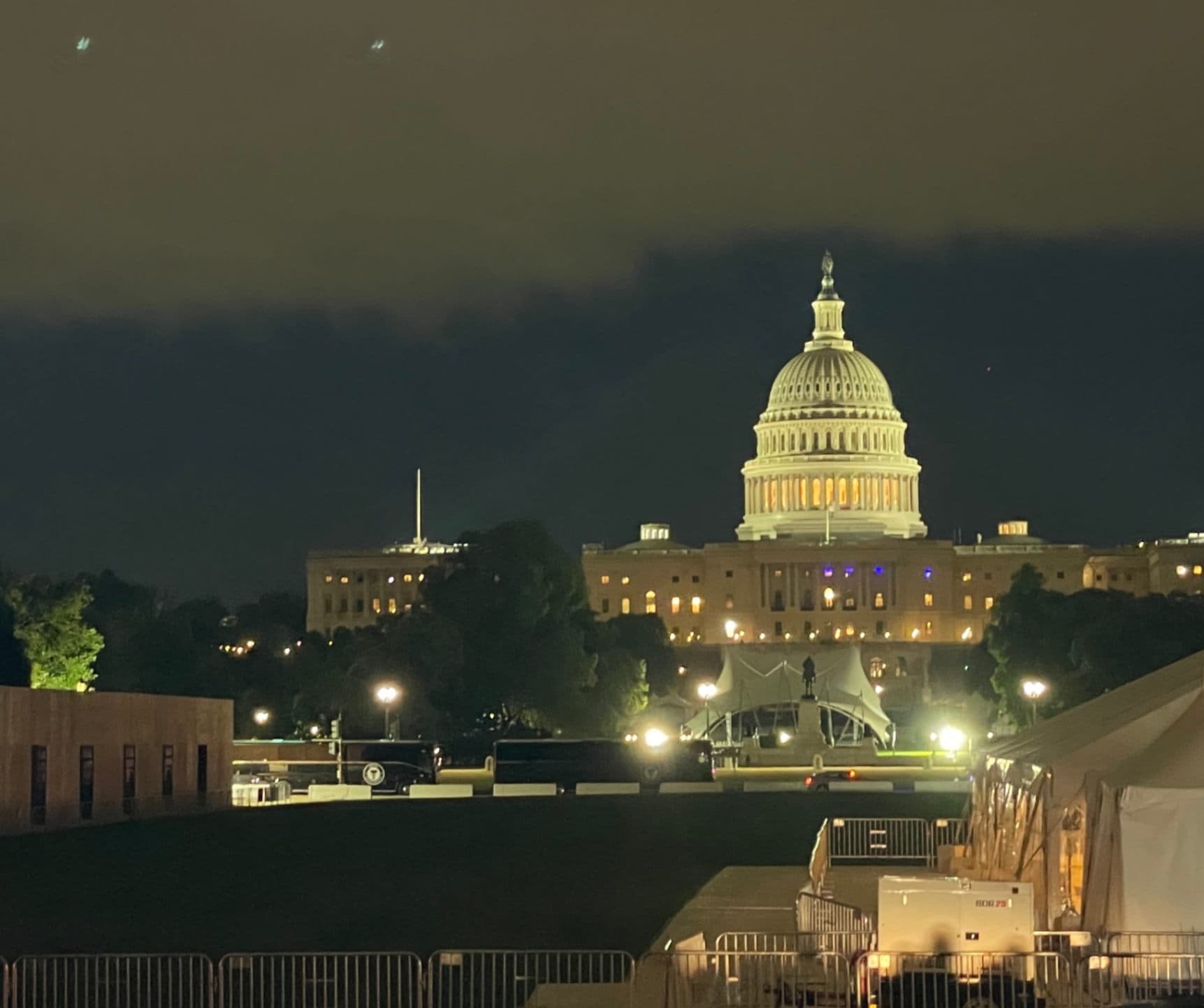
Ultimate Sacrifice
As National President of the National Latino Peace Officers Association (NLPOA), I had the honor of serving as a 2026 Name Reader during the National Law Enforcement Officers Memorial Fund 38th Annual Candlelight Vigil. The roll call of fallen heroes is among the most solemn tributes in American law enforcement - honoring those who gave their lives in the performance of their duties.
Much of my professional life was shaped by my early years as a Police Officer with the New York City Police Department (NYPD). And when one of our brothers or sisters lays down their life in the line of duty, every member of the profession feels that loss. Their sacrifice becomes a shared sacrifice - borne not only by the officer, but by their family, loved ones, friends, and fellow officers. It is a pain that lasts forever and one that requires a lifetime of healing, remembrance, and support.
It pains me that over the last decade our profession has increasingly become vilified in many corners of public discourse. Across America, police departments have been forced to answer the call of other failing systems - particularly the dismantling of large portions of our nation’s mental health infrastructure.
In 1955, the United States maintained approximately 339–340 inpatient psychiatric beds per 100,000 residents when the national population was roughly 166 million people. Today, with a U.S. population of approximately 336 million people, the nation has only about 28 public psychiatric beds per 100,000 residents- a dramatically reduced level of inpatient mental health capacity for a country with America’s resources.
As our nation’s mental health system was steadily defunded and dismantled, the responsibility for managing the consequences increasingly fell upon American police officers. Officers became the default responders to mental health crises, public disorder, addiction, homelessness, and violence because someone had to protect the public when other systems failed to intervene effectively.
In many instances, officers have sacrificed their lives while carrying out those responsibilities. That pain is forever carried by their families and loved ones.
As a young police officer entering the profession in 2000, and especially after witnessing the horrors that followed the terrorist attacks of September 11, 2001, I could never have imagined a time when policing, particularly in major American cities, would become so deeply politicized and, at times, openly vilified. Constructive criticism and accountability are necessary in any profession, including law enforcement. But there is also a growing tendency to dismiss or diminish the extraordinary sacrifices made every day by police officers who continue to place themselves in harm’s way to protect complete strangers.
Police officers and their families are extraordinary people. Despite the challenges facing cities across America, from rising disorder and violence to declining public trust and institutional instability, thousands of officers continue to report for duty each day knowing the risks involved. They do so not for recognition, but because they believe in service, duty, and protecting others.
I pray that the sacrifices made by more than 24,000 names of officers killed in the line of duty inscribed on the National Law Enforcement Officers Memorial in Washington, D.C., dating back to the first known death in 1786 are never forgotten and were not made in vain.
In the darkest moments of a crime victim’s life- often during acts of violence, fear, or tragedy- there are still men and women willing to run toward danger for people they have never met. Even for those who may criticize or resent them, police officers continue to stand as a barrier between order and chaos.
That reality deserves remembrance, honesty, and respect.
References:
National Law Enforcement Officers Memorial Fund. 38th Annual Candlelight Vigil Program. May 13, 2026.
Treatment Advocacy Center. Background Paper. September 2016.
American Psychiatric Association. The Psychiatric Bed Crisis in the US: Understanding the Problem and Moving Toward Solutions. May 2022.
Yohanna, Daniel, MD. “Deinstitutionalization of People with Mental Illness: Causes and Consequences.” History of Medicine.
United States Census Bureau. “U.S. Population Clock.” Accessed May 14, 2026. https://www.census.gov/popclock/
National Law Enforcement Officers Memorial Fund. “Memorial.” Accessed May 14, 2026. https://nleomf.org/memorial/
Louis Molina is a decorated veteran of the United States Marine Corps and former Detective with the New York City Police Department. During his distinguished public service career, he served as Chief of Public Safety for the City of Las Vegas and later held several senior leadership positions in New York City government, including Commissioner of the New York City Department of Correction, Assistant Deputy Mayor for Public Safety, and Commissioner of the New York City Department of Citywide Administrative Services.
Molina earned a Bachelor of Arts in Philosophy from Chaminade University of Honolulu, a Master of Public Administration from Marist University School of Management, and a Master of Arts in Human Rights Studies from Columbia University Graduate School of Arts and Sciences. He also studied abroad at the University of Cambridge.
He was selected as a National Institute of Justice Scholar through the U.S. Department of Justice Office of Justice Programs and, in 2020, received a scholarship from the Harvard Business School Fund for Leadership and Innovation in support of his completion of the General Management Program at Harvard Business School.
More from Public Safety
Explore related articles on similar topics