Phones, Fidgets, and Fifteen Distractions: Teaching Focus in a World That Pings Back
There’s a very specific look students get when you say, “Alright, eyes up here.” It’s not defiance. It’s not confusion. It’s more like their brains just got a group text from seventeen competing thoughts- and every single one is marked urgent.
A hoodie string suddenly demands emotional support. A pencil begins a solo career in percussion. Someone across the room makes eye contact for half a second too long, and now we have a silent comedy unfolding.
And me? I’m standing there, holding a reading lesson, competing with hoodie strings and pop-it pencil cases.
Welcome to teaching in 2026, where attention doesn’t drift- it ricochets.
Let’s be honest: kids didn’t invent distraction. We modeled it. Adults toggle between tabs, texts, and to-do lists like it’s an Olympic sport. Then we hand kids devices designed to capture attention and ask them to ignore them for long stretches of time.
When a child says, “I can’t focus,” it usually means, “I don’t have a system that helps me yet,” or, “I don’t feel grounded enough to try.”
The average teen gets over 200 notifications a day (Common Sense Media 2023). Younger students are catching up- not always in volume, but absolutely in instinct. Even when phones are “away,” they’re mentally nearby, like a song stuck in your head you didn’t choose.
And in the middle of all that, we ask for sustained focus.
It’s not that kids won’t focus.
It’s that we’re asking them to do it in conditions that actively train the opposite.
Field Notes from the Front Lines
“I wasn’t off task- I was thinking about the task while also building a fort with my sweatshirt.”
A fourth grader once removed his own stitches. No panic, no drama. Just a calm explanation: “I'd rather go to the nurse than take this quiz.”
Two boys scaling bathroom stalls like it’s a low-budget action film. No conflict, no argument. Just curiosity: “We wanted to see if we could.”
“I need my fidget to focus,” a student explains, moments before launching it across the room and pursuing it like a retriever.
“My mom texts me during class so I don’t forget stuff.” A pause. (What stuff?)
It’s funny. It really is.
But underneath it is something more serious: kids are getting very, very good at being distracted.
And very little practice getting back.
Why Relationships Matter More Than Ever
Before any system works, the relationship has to land.
A student will follow a structure much faster if they feel seen by the person holding it in place. Without that connection, every boundary feels arbitrary. With it, even firm expectations feel safe.
Kids don’t say, “I trust you, so I will regulate my attention accordingly.” It looks more like eye contact. A quicker reset. Less resistance when redirected.
It’s subtle, but it’s everything.
In a world where so much interaction is filtered through screens, genuine connection stands out. A teacher who notices. A parent who listens without multitasking. A moment of shared humor that isn’t rushed.
Those moments anchor attention in a way no app ever could.
Because when a child feels connected, they’re far more willing to try focusing—even when it’s hard.
Why Structure Is the Real Superpower
If relationships open the door, structure keeps the room from falling apart.
Kids are not overwhelmed because they have too many rules. They’re overwhelmed because the rules are inconsistent, unclear, or constantly shifting.
Predictability is calming. It reduces the number of decisions a brain has to make. And right now, kids are making too many decisions about where their attention should go.
When systems are clear and repeatable, attention has somewhere to land.
A seven-minute focus round is easier to enter than “just focus.” A consistent place for devices removes the daily negotiation. A simple, practiced “come back” routine turns distraction from a dead end into a detour.
Structure doesn’t limit kids.
It steadies them.
And in a distracted world, steadiness is a competitive advantage.
What Actually Works (When It’s Done Consistently)
Focus improves when it’s made visible and time-bound. Short, repeatable bursts give kids a clear starting point and a clear finish. It turns effort into something they can measure instead of something they’re guessing at.
Phones become less powerful when they’re less accessible. Not banned with fanfare, not negotiated daily, just quietly and consistently placed out of reach. Boring systems win.
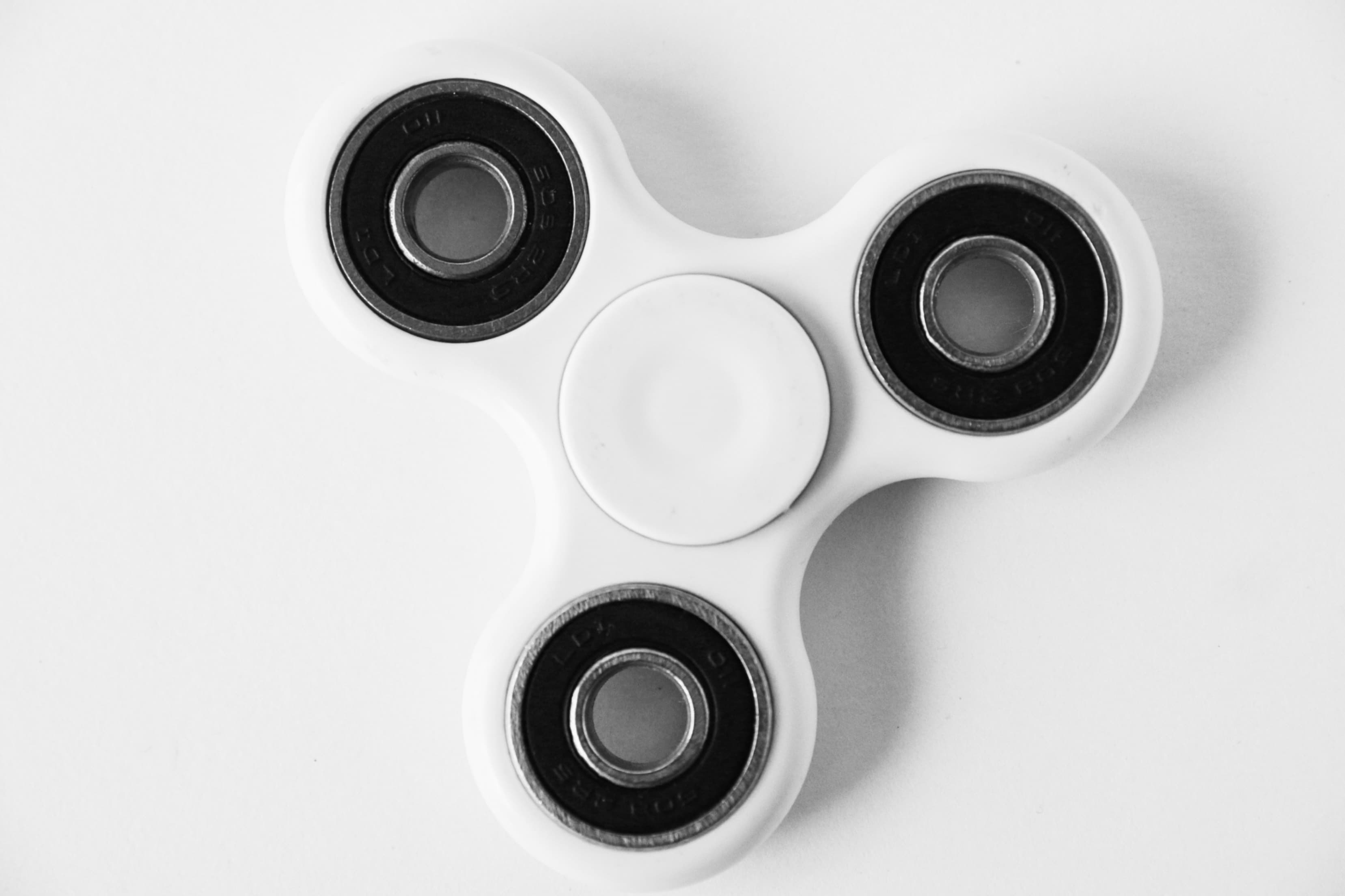
Fidgets work when they’re defined. When they have boundaries, they support regulation. Without those boundaries, they become just another distraction wearing a helpful disguise.
Students get stronger at focusing when we teach them how to return, not just how to start. The skill isn’t staying perfectly locked in. It’s noticing the drift and coming back without spiraling.
Movement helps because attention isn’t just mental. When kids get the chance to reset physically, they don’t have to invent their own version mid-lesson.
And none of this sticks without alignment. When adults share language, expectations, and routines, kids don’t have to relearn the rules every time they switch environments.
Everything gets quieter.
Everything gets easier.
A Reality Check for Adults
We are not going to outcompete devices that are designed to win attention.
But we can build environments that make focus more likely.
When a child says, “I can’t focus,” it usually means, “I don’t have a system that helps me yet,” or, “I don’t feel grounded enough to try.”
That’s where relationships and structure meet.
And that’s where the real work is.
Try This Tomorrow
Start small. One short focus block. One predictable place for devices. One clearly explained expectation that you actually follow through on.
Pair it with connection. A quick check-in. A shared laugh. A moment where the student feels like more than a set of behaviors to manage.
Then repeat it.
Not perfectly. Just consistently.
The Work That Matters
Somewhere between the buzzing phone and the wandering mind is a child trying to figure out if they can take control of their own attention.
That’s not a small skill.
That’s a life skill.
And we don’t build it through pressure or speeches. We build it through connection, clarity, and repetition.
So here’s the challenge: choose one relationship you’ll strengthen and one system you’ll make predictable this week.
Then stick with it long enough for it to matter.
Because in a world full of distractions, the real advantage isn’t more control.
It’s better anchors.
And you get to be one of them.
What’s one relationship you can deepen- and one system you can stabilize- starting tomorrow?
References
Common Sense Media. The Common Sense Census: Media Use by Tweens and Teens, 2023. San Francisco: Common Sense Media, 2023.
Gazzaley, Adam, and Larry D. Rosen. The Distracted Mind: Ancient Brains in a High-Tech World.Cambridge, MA: MIT Press, 2016.
Newport, Cal. Deep Work: Rules for Focused Success in a Distracted World. New York: Grand Central Publishing, 2016.
Radesky, Jenny S., et al. “Mobile and Interactive Media Use by Young Children: The Good, the Bad, and the Unknown.” Pediatrics 135, no. 1 (2015): 1–3.
Rosen, Larry D. iDisorder: Understanding Our Obsession with Technology and Overcoming Its Hold on Us. New York: Palgrave Macmillan, 2012.