Grow or Fall Behind: Why Agricultural Education Can’t Wait
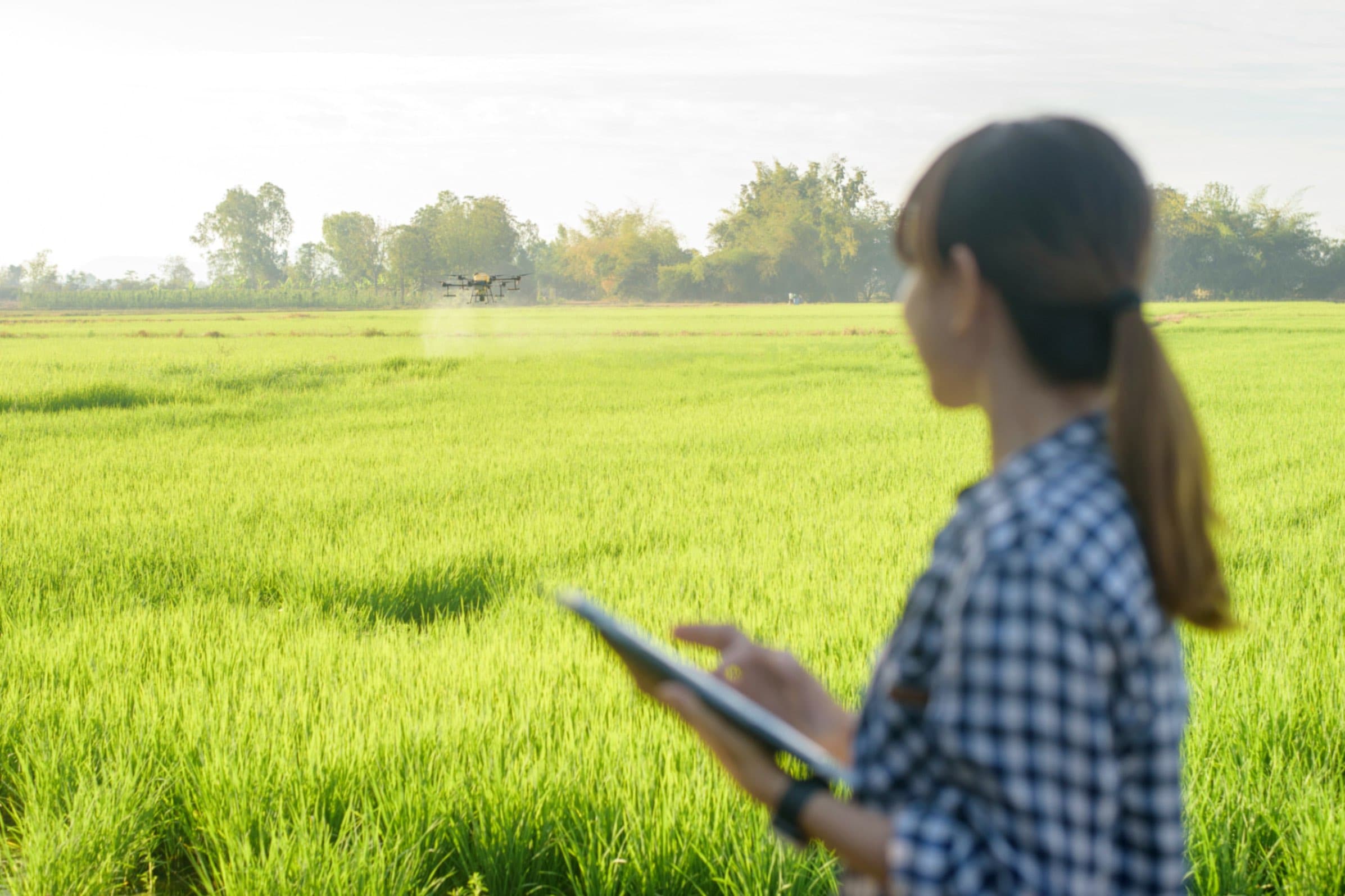
A student stands at the edge of a field at sunrise- tablet in hand, drone overhead, soil beneath their boots. This is not the agriculture of the past. It’s the future of education, economy, and survival.
Integrating Agricultural Education into Broader Curricula
Agricultural education can no longer sit on the margins of the school day—it belongs at the center. When embedded across disciplines, it transforms abstract concepts into lived experience. Biology becomes the study of soil health and plant systems. Chemistry comes alive through nutrient cycles and fertilizer composition. Economics is no longer theoretical when students track crop yields, pricing, and supply chains.
This interdisciplinary approach does more than deepen understanding—it builds relevance. According to the National Academy of Sciences (2018), solving global food challenges will require cross-sector knowledge, not siloed expertise. When students see how agriculture intersects with climate, commerce, and community, learning becomes tangible—and urgent.
Partnerships with local farms and agricultural businesses bring this learning to life. Students who step into fields, greenhouses, and food systems develop not only technical skills, but adaptability, collaboration, and problem-solving—competencies consistently ranked among the most in-demand workforce skills. Just as importantly, these experiences introduce students to careers they may never have considered, helping to sustain and revitalize rural economies.¹
Addressing Technological Advancements in Agriculture
Modern agriculture is driven by data as much as by soil. From GPS-guided tractors to AI-powered crop monitoring, the field has become a laboratory of innovation. Yet many students graduate without exposure to these tools.
Integrating technology into agricultural education is no longer optional—it’s essential. Precision agriculture alone has been shown to increase crop yields by up to 15% while reducing input costs, according to USDA data (2020). Courses that introduce students to drones, sensors, and data analytics prepare them not just for farming—but for careers in ag-tech, one of the fastest-growing sectors in the global economy.
Schools don’t have to do this alone. Partnerships with technology companies can open doors to equipment, training, and real-world applications. Meanwhile, investing in ongoing professional development ensures educators stay ahead of the curve. When classrooms reflect the realities of modern agriculture, students graduate ready to lead—not catch up.²³
Challenges and Opportunities in Agricultural Education
The promise is clear—but so are the barriers. Many rural schools face persistent funding gaps, limiting access to equipment, land, and specialized programming. At the same time, a shortage of qualified agricultural educators threatens program sustainability.
These challenges, however, are not insurmountable. Strategic partnerships—with local businesses, community organizations, and grant-making institutions—can unlock resources and expand opportunities. Programs like the National FFA Organization have demonstrated that when schools invest in agricultural education, student engagement and career readiness rise significantly.⁴
Recruiting and retaining educators requires equal attention. Competitive compensation, mentorship networks, and targeted professional development can turn teaching into a long-term pathway rather than a short-term stop. When educators are supported, programs thrive.⁵
The Role of Policy in Supporting Agricultural Education
Policy is the lever that can scale what works. Targeted funding streams, incentives for school-industry partnerships, and support for career and technical education (CTE) pathways all play a critical role in expanding access.
The Strengthening Career and Technical Education for the 21st Century Act (2017) offers a blueprint—aligning education with workforce needs and emphasizing real-world skill development. But implementation matters. Without sustained investment and accountability, even strong policies fall short.⁶
Standardized, high-quality curricula can also ensure equity across regions. Whether a student lives in rural Iowa or upstate New York, they should have access to rigorous, relevant agricultural education that prepares them for a rapidly changing industry. Aligning education with labor market demands not only improves employability—it strengthens entire regional economies.⁷
The Future of Agricultural Education
Agriculture sits at the intersection of some of the most pressing issues of our time: climate change, food security, and economic resilience. Education must rise to meet that moment.
Forward-looking programs are already integrating topics like sustainable agriculture, climate adaptation, and regenerative practices. These are not niche subjects—they are the future of the field. The Food and Agriculture Organization (2021) emphasizes that building resilient food systems will require a new generation of workers equipped with both technical expertise and systems thinking.
Equally important is student voice. Programs that listen to and evolve with their learners see stronger engagement and outcomes. When students help shape what and how they learn, education becomes a partnership—not a prescription.⁸⁹
Call to Action
Agricultural education is not just about preparing students for jobs—it’s about preparing communities for the future. It connects classrooms to economies, theory to practice, and students to purpose.
The question is no longer whether we should invest in agricultural education. It’s whether we can afford not to.
If we want resilient communities, sustainable food systems, and a workforce ready for what’s next, we must act now—integrate it, fund it, modernize it, and champion it. The field is waiting.
Bibliography
National Academy of Sciences. 2018. "Science Breakthroughs to Advance Food and Agricultural Research by 2030." Washington, DC: The National Academies Press.
Food and Agriculture Organization of the United Nations. 2021. "The State of Food and Agriculture 2021: Making Agrifood Systems More Resilient to Shocks and Stresses." Rome: FAO.
U.S. Department of Agriculture. 2020. "Agricultural Resource Management Survey." Washington, DC: USDA.
National FFA Organization. 2022. "FFA: A Guide to Local Program Success." Indianapolis: FFA.
American Farm Bureau Federation. 2019. "Ag Education: Building the Future." Washington, DC: AFBF.
U.S. Department of Education. 2017. "Strengthening Career and Technical Education for the 21st Century Act." Washington, DC: USDOE.
Alliance for Excellent Education. 2019. "The Future of Education and Skills: Education 2030." Washington, DC: AEE.
International Fund for Agricultural Development. 2020. "Transforming Rural Economy through Agricultural Education." Rome: IFAD.
World Bank. 2021. "Agricultural Innovation Systems: An Investment Sourcebook." Washington, DC: World Bank.
Organisation for Economic Co-operation and Development. 2019. "Trends Shaping Education 2019." Paris: OECD.
More from Education
Explore related articles on similar topics