A New Measure of College Readiness
Most of what our students carry to college isn’t in their backpacks. It’s in the habits, mindsets, and quiet behaviors they’ve practiced for years before they ever step on a campus. I’m reminded of this every time an alum reaches out; or, in this case, when I run into one by accident on the subway.
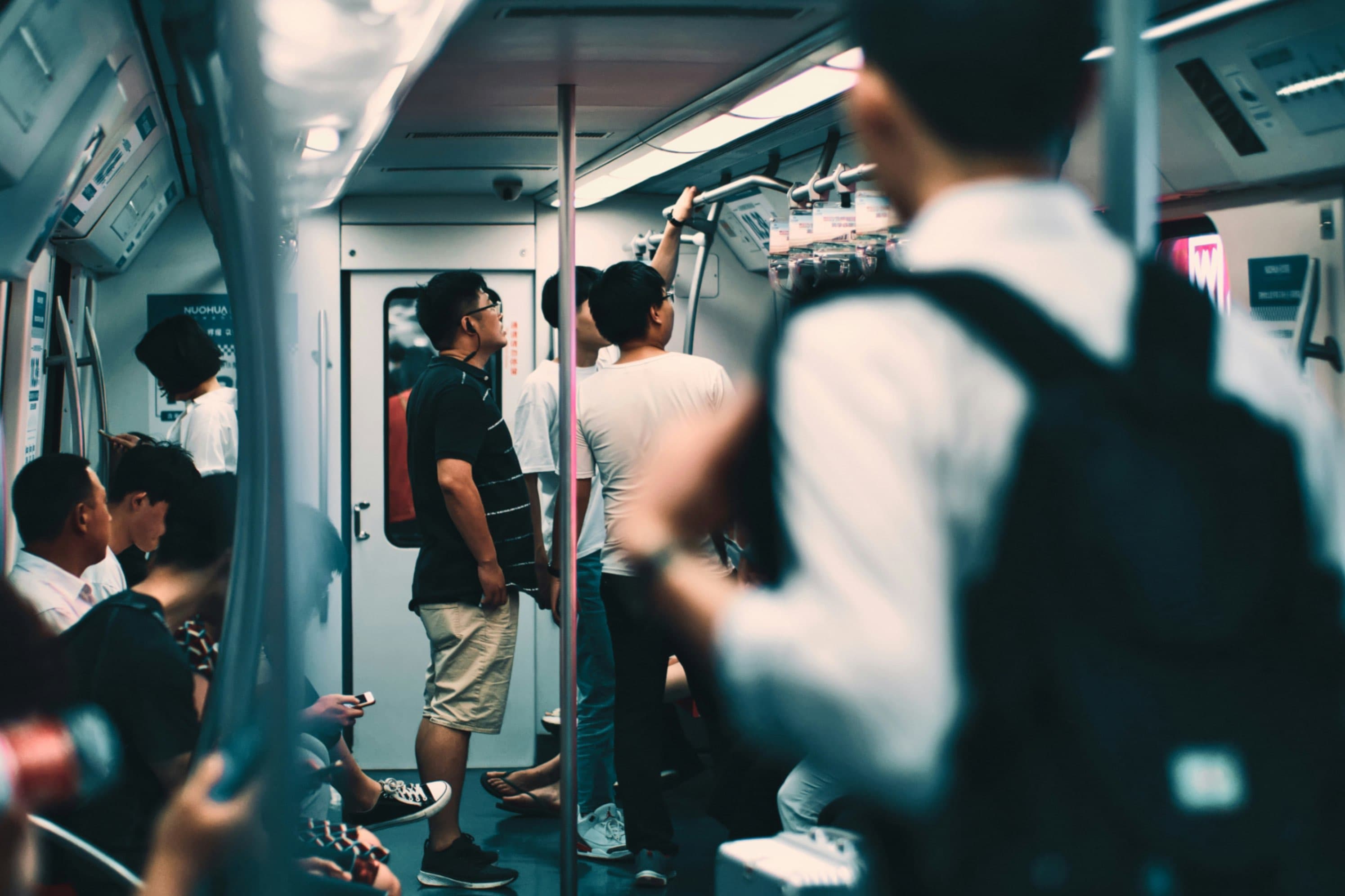
I saw him on the E train between Queens Plaza and Forest Hills, balancing a laptop on his knees, backpack at his feet. Diego had graduated from Richmond Hill High School three years earlier and was now a junior at a SUNY campus upstate. He looked like a typical college student: tired, focused, and quietly confident.
“How’s it going?” I asked, half-expecting the usual mix of stress and doubt.
“It’s going really well,” he said. “My roommate keeps missing deadlines, but I’ve got everything lined up in a calendar. I see my professors during office hours, and I already locked in next year's financial aid. Legit, I feel like Richmond Hill trained me for this.”
Diego lit up as he recalled learning to email teachers professionally in 11th grade, using planners in advisory, practicing how to communicate during 'fake interviews' so the real thing wouldn’t feel intimidating. Then he added something more vulnerable: “Freshman year was rough. I bombed my first big paper. Old me would’ve shut down. But I remembered what my counselor used to say at Richmond Hill: ‘Disappointment is data. What will you do with it?’ So I went to office hours instead of pretending everything was fine.”
College is hard. Life is harder. One of the most difficult things any of us ever learn is how to live with disappointment without being defined by it.
Diego’s transcript got him into college. His resilience, adaptability, and relationship-building skills are what keep him there.
Beyond Regents and GPAs
Regents exams and GPAs matter; they open doors. But they don’t tell us whether a student can:
Plan weeks ahead without daily reminders
Ask for help before they hit a crisis
Navigate confusing systems and official emails
Recover from failure and keep going
Build relationships with peers, professors, and mentors
Nationally, far too many students still do not complete a four-year degree within six years, and first-generation and low-income students are at the greatest risk of stopping out. Behind those statistics are broken study habits, confusing paperwork- and very human moments of disappointment, isolation, and doubt.
At Richmond Hill High School in Queens, we’ve learned that we cannot leave those “soft” skills to chance. They are, in truth, the hardest skills to build and the ones our graduates rely on most.
Skill 1: Self-management in a messy world
College gives students more freedom and far less structure. Without planning and adaptability, that “free time” becomes a trap.
In high school, Diego was not always organized. As a 10th grader, he relied on last-minute efforts and adults reminding him about missing work. Over time, he learned not only to plan ahead, but also to adjust when life got in the way- a family obligation, a late shift, an unexpected setback.
What we do at Richmond Hill:
Shift some upper-grade assignments to multi-week projects that require students to set their own interim deadlines—and revise their plan when things don’t go perfectly.
Use planners or digital calendars as non-negotiables- students show us their next two weeks and talk through their plan and their backup plan.
Share “syllabi” with major dates up front, then reduce reminders so students practice managing long-range tasks amid everyday chaos.
How adults can help:
Ask, “What big deadlines are coming up, and what’s your plan B if something goes wrong?”
Praise process and flexibility: “You adjusted your plan and still got it done- that’s real growth.”
We’re not just organizing homework; we’re teaching students how to steer when the road suddenly bends.
Skill 2: Help-seeking, self-advocacy, and relationships
Students who thrive in college don’t go it alone; they build networks. They talk to professors, lean on classmates, use tutoring centers, and check in with advisors and counselors. Many NYC students, especially first-generation students, arrive believing that needing other people is a sign of weakness.
Diego remembers feeling that way. “I didn’t want teachers to think I was dumb,” he once told us. That changed when he had to pass a tough Regents course. A counselor challenged him to attend every extra-help session for a month. His grade went up, but more importantly, he began to see that relationships were not a crutch- they were a strategy.
What we do:
Teach students how to email adults clearly and respectfully, using real class needs.
Require every student to attend a teacher’s “office hours” at least once, to lower the emotional barrier to walking in and asking.
Encourage group work that isn’t just “divide and conquer” but actually requires conversation, feedback, and compromise.
Bring back alumni like Diego to say, “The difference wasn’t that I suddenly got smarter; it was that I stopped trying to do everything alone.”
How adults can help:
When a student struggles, ask, “Who on your campus or in your school do you trust enough to talk to about this?” and help them plan that conversation.
Celebrate relationship-building: “I’m glad you reached out to your professor and your friend about this- that’s what strong people do.”
We have to teach that independence and interdependence are not opposites. Thriving adults do both.
Skill 3: Navigating systems- and bouncing back from “no”
A single unopened email from the bursar or registrar can derail a semester. One alum called, panicked, because an unread message about a missing form had frozen his account. “In high school, someone always told me what to do next,” he said.
Diego’s experience was different not because everything went smoothly, but because he learned how to respond when it didn’t. When a scheduling conflict threatened to push him off track, he didn’t shut down. He went to his advisor, explained his situation, and worked out an alternative plan.
What we do:
Use sample college emails and forms in seminar and ask, “What is this telling you to do? What happens if you ignore it?”
Role-play calling or visiting an office to solve a problem: introducing yourself, explaining the issue, asking follow-up questions, and coping if the first answer is “no.”
Have students take more responsibility for their own high school paperwork and communication, including fixing mistakes.
How adults can help:
Read school emails and letters with students, asking, “If this doesn’t go your way the first time, what’s your next move?”
Normalize hearing “no” as part of the process, not the end of it.
We’re not just teaching students to follow directions; we’re preparing them to persist through closed doors.
Skill 4: Academic habits and intellectual resilience
Cramming might get students through a Regents exam; it will not sustain them through dense readings, cumulative exams, and repeated challenges.
Diego learned this the hard way when he failed his first major college paper. “I thought I was done,” he admitted. “Then I remembered all those times in high school we had to rewrite, revise, try again. It still hurt-but it felt familiar.” That familiarity turned crisis into adjustment.
What we do:
Teach note-taking as a way of making sense of ideas, not just copying them.
Assign some “college-length” readings and show students how to annotate, question, and discuss them.
Ask students to create simple study plans, then revisit them after assessments: “What did you try? What will you change?”
How adults can help:
When a student is disappointed with a grade, ask, “What did you learn about how you study?” instead of only, “Why did this happen?”
Share your own stories of academic disappointment and what you changed afterward.
We’re not just building stronger students; we’re building thinkers who can get knocked down and still stay curious.
Skill 5: Money, time, and the realities of adulthood
Many Richmond Hill students will work, commute, and support family while in college. Those pressures aren’t “distractions” from school; they are the context in which school happens.
When Diego visited as a sophomore in college, he showed our juniors his weekly schedule: classes, study blocks, work shifts, commuting, and sleep. There were few blank spaces. “If I add one more shift,” he told them, “my grades pay the price. I had to learn to disappoint some people so I didn’t disappoint myself.”
What we do:
Build simple budgets into math and advisory using realistic NYC costs, including emergencies.
Have students design mock first-semester schedules and then ask, “Where will rest and friendships fit? What will you say no to?”
Invite financial aid experts and alumni to talk frankly about loans, grants, workload, and burnout.
How adults can help:
Talk openly about tradeoffs: “If you take on these extra hours, what might suffer?”
Frame boundaries as strength: “Protecting your time is part of protecting your future.”
We want students to understand that being responsible is not about doing everything; it is about choosing what matters most and adjusting when life intervenes.
Skill 6: Belonging, purpose, and the courage to keep going
Underneath everything is a deeper question: “Do I belong here, and why am I here at all?”
Like many first-generation students, Diego initially felt out of place on campus. He considered transferring after a lonely first semester. What changed wasn’t just his study routine; it was his relationships and his sense of purpose. He joined a cultural club, started attending more events, and found a mentor in a professor who shared his background.
“Once I had people who knew my story,” he told me, “I could handle the bad grades and the bad days. I felt like I wasn't just trying to get by- people understood me.”
What we do:
Use advisory for real conversations about stress, identity, disappointment, and values- not just announcements.
Design college visits that include sitting in on classes and visiting cultural and identity centers, not just the admissions office.
Ask students to reflect on the kinds of problems they want to help solve in their communities and beyond, and how education connects to that.
How adults can help:
Share your own moments of not belonging and how you found your people.
Ask, “When things get hard, what will keep you going?” and help students name their reasons.
We’re not just preparing students for college; we’re helping them become the kind of adults who can face real life- with its unfairness, setbacks, and disappointments- and still move forward with integrity.
The real measure of “college-ready”
Diego is not an exception; he is evidence of what happens when a caring adults in a school collaborate to treat planning, self-advocacy, and purpose as non-negotiable parts of the curriculum, not extras squeezed in after test prep. Because in the long run, the question that will matter most is not, “How many seniors did we send to college?” but, “How many graduates can look back and say: You taught me how to think, ask, navigate, and belong?”
Bibliography
Conley, David T. College and Career Ready: Helping All Students Succeed Beyond High School. San Francisco: Jossey-Bass, 2010.
Karp, Melinda Mechur. “Toward a New Understanding of Non-Academic Student Support: Four Mechanisms Encouraging Positive Student Outcomes in the Community College.” CCRC Working Paper No. 28. New York: Community College Research Center, Teachers College, Columbia University, 2011.
Kuh, George D., Jillian Kinzie, John H. Schuh, and Elizabeth J. Whitt. Student Success in College: Creating Conditions That Matter. 2nd ed. San Francisco: Jossey-Bass, 2010.
National Center for Education Statistics. Undergraduate Retention and Graduation Rates. Washington, DC: U.S. Department of Education, U.S. Department of Education, Institute of Education Sciences.
Tinto, Vincent. Completing College: Rethinking Institutional Action. Chicago: University of Chicago Press, 2012.