The Biggest Boat in the Whole Universe and I Think it's Also a Transformer
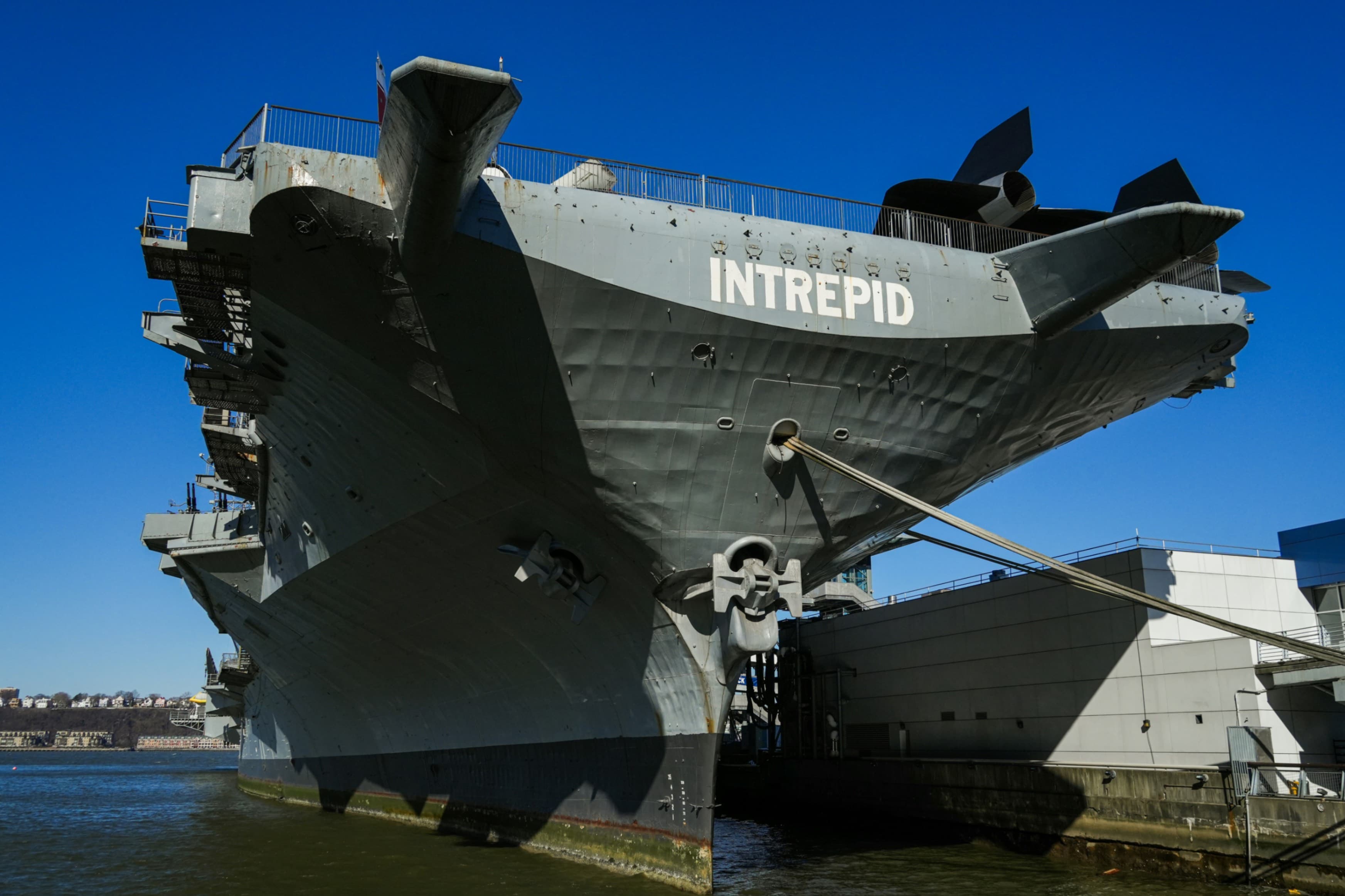
There are two kinds of silence in a school building: the peaceful kind… and the deeply suspicious kind. This morning as three kindergarten classes left my Brooklyn elementary school for the Intrepid, I experienced the second one. No tiny sneakers squeaking down the hallway, no spontaneous debates about dinosaurs vs. sharks- just an eerie calm, like the building itself was holding its breath.
Meanwhile, on the other side of New York City somewhere in Queens, a fleet of fourth graders were en route to Citi Field, fully prepared to scream like seasoned sports commentators and gorge on hot dogs like Joey Chestnut.
Welcome to field trip season: where adults question their life choices and children have the best day of their year.
The Adult Experience: A Light Jog Through Chaos
Let me paint the scene. You have:
One clipboard.
Thirty students.
A headcount system that you swear will work this time.
A child already asking if the bus has Wi-Fi.
By the time you reach your destination, you’ve counted your group so many times you start including nearby pigeons just to feel something.
At the Intrepid, one of my colleagues reported a kindergartner loudly asking, “Is this boat still alive?” while another attempted to “drive” the aircraft carrier by gently pushing on a wall. At Citi Field, a fourth grader confidently explained to a stranger that the Mets won “because our class came today,” which, honestly, feels statistically possible.
For adults, field trips are a blend of logistics, vigilance, and the constant fear that someone will wander off toward a gift shop and emerge with a $47 foam finger and no memory of how they got it.
And yet- we keep going.
Fifty five-year-olds on a boat: 'WOAH'
Somewhere on the deck of the Intrepid, a kindergartner stands, eyes wide, staring up at a structure so massive it breaks their understanding of “boat.” They are not thinking about naval history. They are thinking:
“This is the biggest boat in the whole universe and I think it’s also a transformer.”
They are half wrong, half brilliant.
This is the magic of field trips. Kids don’t just see things- they reinterpret them. A fighter jet becomes “a superhero plane.” A control room becomes “where the boss of the ocean lives.” The scale, the sounds, the feeling of being somewhere new- it all lands differently when you’re five.
You can teach vocabulary in a classroom. But you cannot replicate the moment a wide-eyed child whispers, completely unprompted, “WHOA".
Why Field Trips Actually Matter (Beyond Surviving Them)
Underneath the chaos, something serious- and powerful- is happening.
Field trips:
Turn abstract ideas into real experiences (a “ship” becomes this ship, with stairs and smells and wind).
Build background knowledge that fuels reading, writing, and discussion.
Strengthen social skills in ways worksheets simply cannot (sharing space, following directions, navigating the world).
Spark curiosity- the kind that leads to questions later, back in the classroom or at home.
Research consistently shows that experiential learning improves retention and engagement. A study by Greene et al. found that students who attended cultural field trips demonstrated increased critical thinking and empathy months later.¹ In other words, the trip doesn’t end when the bus pulls back into the school yard-it lingers.
And yes, even the Mets game counts. There’s math in the score, physics in the pitch, storytelling in the play-by-play, and community in the shared experience of cheering (or dramatically groaning).
For Parents: You Don’t Need a Bus to Make This Happen
Here’s the good news: you don’t need permission slips or a school budget to give your child a “field trip” experience.
Summer is full of opportunities- many of them free, local, and surprisingly powerful.
Try this:
Turn a neighborhood walk into a “science safari.” Look for patterns in leaves, insects, shadows, or clouds. Ask, “What do you notice?” and let them lead.
Visit a local library, museum, or even a grocery store with a mission (“Find three foods that grow underground” is wildly entertaining for a seven-year-old).
Create a “writing walk.” Bring a notebook and have your child describe one thing they see, hear, and feel. Bonus points for dramatic exaggeration.
Use public spaces- parks, subways, city streets- as living classrooms. NYC is basically one giant, slightly noisy textbook.
The key isn’t the destination. It’s the mindset: curiosity over correctness, exploration over efficiency.
The Real Win (It’s Not Just the Mets Score)
By the end of the day, the buses return. Kids stumble off, sun-tired and overstimulated, clutching souvenirs, stories, and crumbs.
You’ll hear things like:
“I saw the biggest boat ever.”
“I think I understand baseball now.”
“I want to go back tomorrow.”
And for all the counting, the coordinating, the mild adult panic- you realize something:
They learned. Not just facts, but how to look at the world and wonder about it.
That’s the part we’re really after.
So here’s the challenge: don’t wait for the next permission slip.
Take the walk. Visit the place. Ask the question. Let the day be a little messy, a little loud, and a lot memorable.
Because somewhere between the chaos and the curiosity, kids aren’t just going on trips- they’re building the way they understand the world.
That’s worth every single headcount.
References
Greene, Jay P., Brian Kisida, and Daniel H. Bowen. “The Educational Value of Field Trips.” Education Next 14, no. 1 (2014): 78–86.