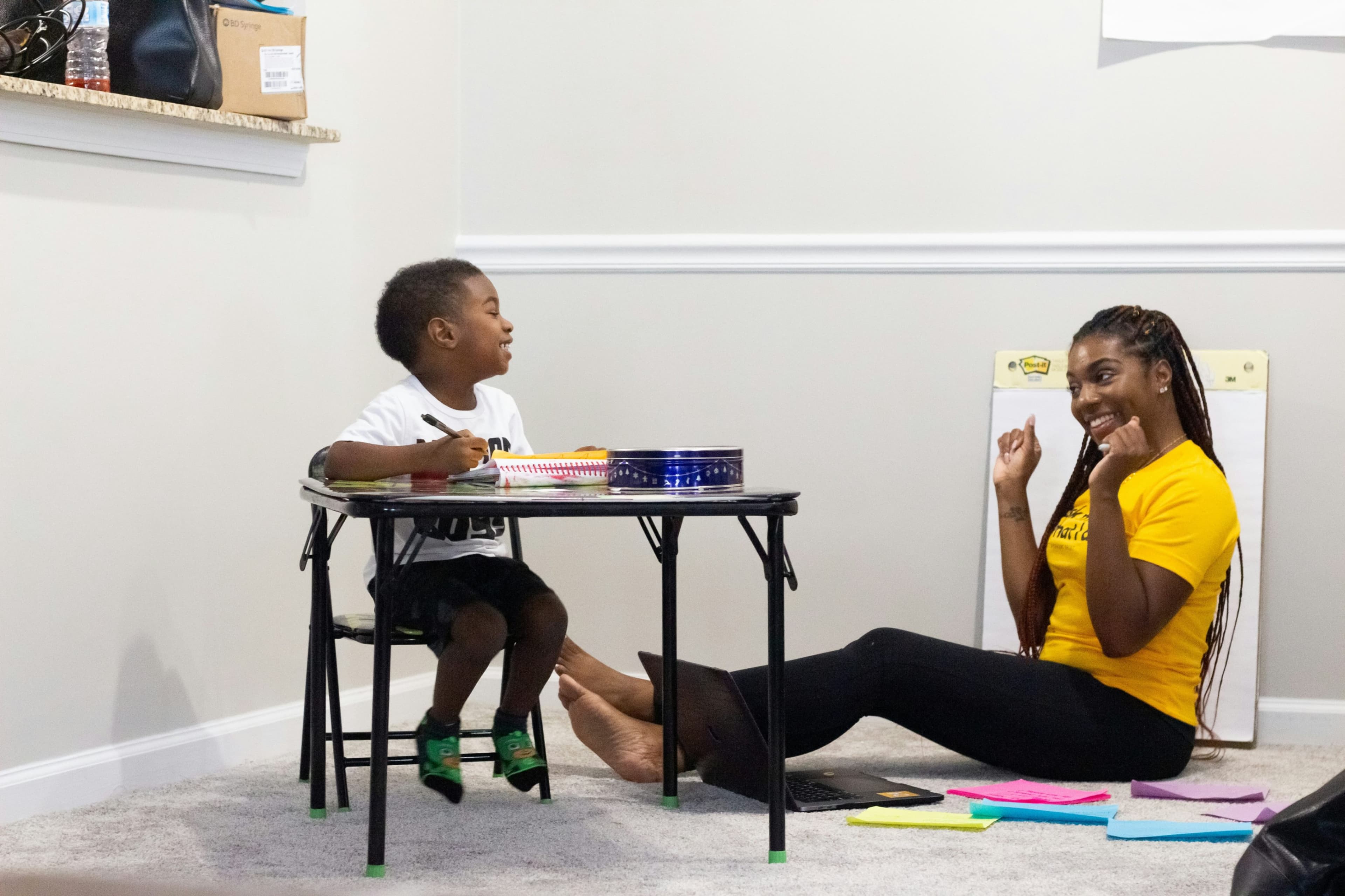
Homeschooling Done Right: The Science Behind Routines, Rewards, and Results
Homeschooling promises freedom- but without structure, it can quickly unravel into distraction and frustration. The real magic lies in striking a balance: a predictable rhythm that grounds the day, paired with enough flexibility to spark curiosity and growth. When routines, communication, and motivation align, homeschooling transforms from a daily challenge into a powerful, personalized path to learning that actually works.
The Role of Structured Routines in Homeschooling
A structured daily routine is crucial for homeschooling success. Children thrive in environments where predictability and consistency are maintained, which helps reduce anxiety and foster a sense of security. Research indicates that structured environments are beneficial for children's emotional and academic development. According to a study conducted by the American Psychological Association, children who have consistent routines perform better academically and display fewer behavior problems1. This is particularly relevant for homeschooling, where the line between home and school can blur, making structured routines even more essential. Establishing clear routines helps children understand expectations and manage transitions between different activities. This predictability allows them to focus better, enhancing their ability to absorb and retain information. When children know what to expect, they can engage more effectively with their learning materials, thereby maximizing educational outcomes. In a homeschooling context, parents can tailor schedules to their children's unique needs, ensuring that activities align with their natural rhythms and learning preferences.
Communication and Flexibility in Homeschooling
While structure is important, flexibility is also a key component of effective homeschooling. Life can be unpredictable, and it's important to communicate any changes to the routine to children promptly. When deviations occur, such as a change in the schedule or an unexpected event, informing the child ahead of time can reduce confusion and prevent negative reactions. This communication builds trust and teaches children to adapt to changes, a vital life skill that extends beyond the classroom2. Incorporating flexibility into a structured routine also allows for the accommodation of impromptu learning opportunities. For instance, if a child expresses interest in a particular subject or current event, the schedule can be adjusted to explore these topics further. This balance between structure and flexibility is essential in keeping education dynamic and responsive to the child's evolving interests and needs.
The Benefits of a Behavioral System in Homeschooling
Implementing a behavioral system in homeschooling can greatly enhance learning outcomes by reinforcing positive behaviors. A structured behavioral system provides clear expectations and consistent consequences, which can significantly improve a child's self-regulation and responsibility. Positive reinforcement is a powerful tool in education, as it encourages desirable behaviors by providing rewards or incentives3. A well-designed behavioral system not only rewards academic achievements but also recognizes effort, perseverance, and other positive traits. This approach helps children develop intrinsic motivation, as they begin to associate positive behavior with personal satisfaction and external rewards. By focusing on both academic and behavioral goals, homeschooling can produce well-rounded individuals who are prepared to succeed in various aspects of life.
Customizing Reward Systems for Individual Needs
Effective reward systems in homeschooling should be tailored to each child's individual preferences and interests. Understanding what motivates a child is crucial in designing a system that effectively encourages positive behaviors. Some children may respond well to tangible rewards, such as toys or treats, while others may be more motivated by experiential rewards, like extra playtime or a special outing4. Parents should engage with their children to identify the types of rewards that will be most meaningful to them. This collaborative approach not only makes the reward system more effective but also empowers children to take an active role in their learning process. By aligning rewards with personal interests, children are more likely to engage with their education enthusiastically and consistently.
Conclusion: Integrating Structure and Flexibility in Homeschooling
Incorporating a structured routine, clear communication, and a tailored behavioral system can significantly enhance the homeschooling experience. These elements work together to create a stable yet adaptable learning environment that meets the unique needs of each child. By embracing these strategies, educators and parents can foster an educational atmosphere that promotes academic excellence and personal growth. Homeschooling provides the unique opportunity to customize education to suit individual learning styles and preferences, allowing children to reach their full potential. A balanced approach that combines structure with flexibility ensures a robust foundation for lifelong learning and adaptability in an ever-changing world.
Bibliography
American Psychological Association. "The Importance of Routines for Children." 2020. https://www.apa.org/news/press/releases/stress/2020/importance-of-routines.
Smith, John. "Adapting to Change: Building Flexibility in Education." Educational Review, vol. 68, no. 2, 2021, pp. 145-160.
Jones, Lisa. "Positive Reinforcement in Educational Settings." Journal of Educational Psychology, vol. 112, no. 3, 2020, pp. 345-359.
Brown, Emily. "Motivating Students: The Role of Rewards in Education." Teaching and Learning Journal, vol. 45, no. 1, 2019, pp. 22-34.
More from Education PK-12
Explore related articles on similar topics






Top Paying Jobs in Education PK-12
Highest paying opportunities related to this article
ABOUT THE ROLE The City of Boston seeks a Senior Assistant Corporation Counsel III to represent the City, its officials, and its departments. This role involves advising City leaders on municipal law matters, representing the City in civil actions and administrative hearings, investigating claims, drafting ordinances, and conducting negotiations with third parties. KEY RESPONSIBILITIES - Mentor attorneys (ACC I, II) in litigation, contract review, contract negotiation, and departmental advising - Manage a caseload and represent the City of Boston in state and federal court, administrative proceedings, and other venues - Provide representation in matters including personal injury, torts, employment discrimination, civil rights claims, contract disputes, special education litigation, licensing appeals, and employee or student discipline appeals - Advise the City on policy matters, procurement, open meeting laws, public records law, student confidentiality laws, and state conflict of interest laws - Perform legal research, write legal opinions, and review or draft contracts, memoranda, ordinances, and other documents - Perform specialized municipal law functions, including research, analysis, advising, and litigation in areas such as workers' compensation, tax lien foreclosures, public construction, and public education - Perform related work as directed MINIMUM QUALIFICATIONS 1. Juris Doctorate 2. Five to six (5-6) years of experience as a lawyer in a law firm or within a government agency 3. Licensed to practice in the Commonwealth of Massachusetts with no disciplinary record 4. Ability to exercise good judgment and focus on detail 5. Excellent, clear, and effective writing and organizational skills 6. Accuracy and attention to detail 7. Highly motivated self-starter 8. Strong interpersonal and communication skills 9. Proficient with Microsoft Office, Westlaw, and Social Law Library SPECIAL REQUIREMENTS - Boston residency is strictly required - Supervisory legal experience is preferred - Reports directly to a First Assistant Corporation Counsel or Legal Advisor SELECTION PROCESS - Application and resume review evaluating minimum qualifications, relevant legal experience, and licensure - Interviews and assessments as determined by the Law Department and City of Boston HR protocols HOW TO APPLY - Apply for Req ID 2026-31963 through the City of Boston careers portal - Posting End Date: November 28, 2026 - Contact Email for inquiries: kristen.coveney@boston.gov EMPLOYMENT DETAILS - Location: Law Department, Boston, MA - Department: Law Department - Position Type: Regular Full-Time - Hours per week: 35 - Union/Salary Plan/Grade: Non-Union/MM2-13 - Equal Opportunity Employer: The City of Boston is committed to creating a diverse and inclusive environment, considering qualified applicants regardless of sex, race, age, religion, color, national origin, ancestry, disability, genetic information, marital status, sexual orientation, gender identity, gender expression, military and veteran status, or other protected categories.
ABOUT THE ROLE This full-time position supports the continued improvement and development of the Division of Student Support Services. The role manages cross-departmental projects designed to ensure compliance with federal, state, and district policies. Work streams include evaluating instructional and assessment practices, restructuring services across central departments, and developing multi-dimensional projects tailored to the culture and systemic operational qualities of schools. KEY RESPONSIBILITIES - Project design and coordination (60%): Manage projects to enhance school service initiatives, direct activities from concept to implementation, manage schedules, budgets, and risk, and coordinate with departments such as Race and Equity Advancement, Curriculum, and Technology Services. - Ensure equitable access (25%): Assist in establishing goals for student services, ensure policy compliance, and monitor equitable, barrier-free access for historically underserved populations including students in Special Education, low-income families, English Language Learners, and children of color. - Community and stakeholder engagement (10%): Collaborate with community and district partners, including the City of Seattle, agencies, hospitals, and community-based groups, to ensure efficient delivery of whole-child supports. - Meetings and professional development (5%): Attend required team and committee meetings and participate in ongoing training to enhance professional skills. MINIMUM QUALIFICATIONS - Master's Degree in Curriculum and Instruction or a related area. - 5 or more years of experience in central and/or school-based leadership (e.g., coaching, teacher leader, building leader, central leader). - Any equivalent combination of education, experience, and training that provides the required knowledge, skills, and abilities. SPECIAL REQUIREMENTS - Preferred Certification: Washington State Administrative Credential. - Clearances: Must pass a Criminal Justice fingerprint and background check. SELECTION PROCESS - The position is open until filled. - The first round of application reviews will begin on Monday, August 31, 2026. HOW TO APPLY - Applications must be submitted through the official Seattle Public Schools employment portal. - Ensure all application materials are complete and accurately reflect your qualifications, as incomplete applications may not be considered. EMPLOYMENT DETAILS - Employer: Seattle Public Schools - Department: Special Ed District Services - Job Type: Full-Time (1.0 FTE) - Location: John Stanford Center for Educational Excellence, WA - Opening Date: 08/21/2026 - Closing Date: Continuous - Subject Area: N/A (This is not a teaching position) - Address: 2445 3rd Ave South, Seattle, Washington, 98124-1165
ABOUT THE ROLE This is a full-time, non-teaching position within the Special Ed Information Management department. The role ensures the timeliness and accuracy of reporting for required Special Education State and Federal compliance reports. The analyst designs and creates management reports to proactively monitor internal performance, productivity, and compliance, and generates ad-hoc reports for the special education department, schools, district staff, and external stakeholders. KEY RESPONSIBILITIES - Coordinate, analyze, reconcile, and complete monthly student data compliance reporting required by the State of Washington and the Federal government - Ensure accuracy of reported data, compliance with State enrollment reporting standards, and reconciliation of enrollment and billing procedures - Design and create management reports to proactively monitor internal performance, productivity, and compliance using various systems - Generate ad hoc reports for management and respond to audit requests for information - Act as a liaison to school and district staff to ensure district policies and procedures are followed for data accuracy and completeness - Support the central quality control process for special education student data, designing quality assurance methods to identify trends and discrepancies - Use analysis and reporting tools such as Microsoft Excel or SPSS to perform quality assurance on key metrics - Work with State personnel and State Educational Data System (EDS) software programs to monitor changes in compliance reporting - Manage student-level data changes and main data files used for enrollment accounting and reporting - Document and archive processes and data for archival backup and auditing purposes MINIMUM QUALIFICATIONS - Three (3) years of data analysis and reporting, data management, computer/programming, or business experience working with complex business applications and reporting/data analysis tools - Bachelor's degree in Management Information Systems, Mathematics, Business Administration, or a similar field - Equivalent work experience may substitute for the educational requirement on a year-for-year basis, or an equivalent combination of education and experience will be considered SPECIAL REQUIREMENTS - Criminal Justice fingerprint and background check required - Advanced skills with data analysis, reporting, and presentation tools such as Microsoft Excel (pivot tables, graphing, macros, formulas, linking multiple data sets) - Familiarity with legal requirements related to state and federal reporting for K-12 special education - Knowledge of SPSS statistical software, SQL programming, and data extraction skills are desired - Experience working in a K-12 education environment with Special Education business processes and compliance reporting is preferred SELECTION PROCESS - The first round of application reviews begins on Monday, August 31, 2026 - Evaluation will be based on the application documentation demonstrating the required knowledge, skills, education, and experience HOW TO APPLY - Submit a completed application through the Seattle Public Schools career portal - Ensure all applications are completed in full and reviewed for accuracy before submittal, as errors can result in not meeting minimum qualifications - The position is open until filled EMPLOYMENT DETAILS - Job Type: Full-Time (1.0 FTE) - Department: Special Ed Information Management - Job Number: 27567 - Location: John Stanford Center for Educational Excellence, WA (Employer Address: 2445 3rd Ave South, Seattle, Washington, 98124-1165) - Opening Date: 08/21/2026 - Closing Date: Continuous - Subject Area: N/A - This is not a teaching position - Employer: Seattle Public Schools
ABOUT THE ROLE The Career Preparation Specialist works under the direction of the Work-Based Learning Manager at Baltimore City Public Schools, in the Office of Secondary Success and Innovation (SS&I), in partnership with the Blueprint Sr. Program Manager. This role is responsible for student support, preparation, and oversight in the implementation of Work-Based Learning (WBL) programming. The specialist builds relationships with school-based staff, students, and parents to ensure students experience and complete high-quality WBL programs, including apprenticeships and internships. KEY RESPONSIBILITIES - Serve as the primary contact for students and school-based teams to support the logistics of their participation in WBL opportunities. - Work closely with students and school-based teams to vet and match students to relevant WBL opportunities based on their Career Exploration Portfolio. - Monitor and maintain oversight of work experience opportunities for all students enrolled in WBL, Apprenticeship, and Internship courses. - Oversee coordinated strategy with Career Coaches to prepare students for WBL opportunities, including resume and interview prep and career fair workshops. - Maintain all student legal forms and documents in Google Drive and Schoolinks. - Host student and parent engagement events focused on work-based learning awareness. - Collect data and prepare reports for submission to the Office of Secondary Success and Innovation. - Leverage employer networks to plan and execute WBL events, including career fairs, guest speaker engagements, and company tours or job shadows. - Coordinate and collaborate with BCCI Career Coaches and WBL Specialists under the direction of the Work-Based Learning Manager. - Perform other duties as required. MINIMUM QUALIFICATIONS - Education: Bachelor's degree from an accredited university in a relevant field preferred. - Experience: Two years of directly related experience working with young people. - Equivalency: An equivalent combination of education and/or experience may be substituted, provided it directly relates to the essential duties and responsibilities. Preference is given to candidates with demonstrated understanding and/or certification in youth development practices. SPECIAL REQUIREMENTS - Strong interpersonal skills with the ability to communicate effectively with people from diverse racial, ethnic, socioeconomic, and gender backgrounds. - Strong analytical writing and oral communication skills. - Ability to develop and conduct presentations and information sessions. - Understanding of the Apprenticeship Maryland Program and/or Competency-Based Registered Apprenticeship, and the ability to communicate the program to all stakeholders. - Strong data and project management skills. - Ability to establish and maintain effective working relationships with students and school-based teams. - Knowledge of personal computer applications (word processing, spreadsheet, database) in a Google Drive environment. - Note: Grant positions are not eligible for retirement benefits. SELECTION PROCESS - Eligible candidates under final consideration will be required to complete authorization for a Criminal Background Check and/or Fingerprinting, which must be successfully completed. - All selected persons, including current City employees, must complete a mandatory six-month probation. HOW TO APPLY - Apply online via the City of Baltimore careers portal using Job Requisition ID: R0018947. - The application period ends on November 24, 2026. - Applicants requiring accommodations during the hiring process should contact the Department of Human Resources directly. Do not attach accommodation requests to the application. EMPLOYMENT DETAILS - Department: Mayor's Office of Employment Development / Baltimore City Public Schools (Office of Secondary Success and Innovation) - Work Location: Charles L. Benton, Jr. Building (Hybrid work environment with frequent travel to and between schools required) - Job Type: Full-Time - Position Type: Non-Civil Service (Grant Position) - Equal Opportunity: Baltimore City Government is an Equal Employment Opportunity Employer committed to a workplace that values diversity, equity, and inclusion, and prohibits discrimination on any legally protected basis.
ABOUT THE ROLE This full-time, non-teaching position manages internal Special Education human resource and budget operations. The role provides high-level management support to the Executive Director of Special Education by planning, directing, coordinating, and evaluating operational needs. It involves highly technical, in-depth analysis of complex assignments, including budget development, expenditure monitoring, financial problem resolution, district-wide reporting, legal compliance, labor negotiations, and coordination of state, federal, and grant requirements. KEY RESPONSIBILITIES - Direct and implement Special Education operation procedures and infrastructure to meet District objectives, Board policies, and grant requirements. - Provide management and analytical support to the Executive Director for department objectives, budget integrity, and position assignments. - Coordinate budget and staffing activities, including position control, staffing adjustments, and spring staffing. - Manage central Special Education budgets and supervise all associated personnel, including hourly staff and contractors. - Produce, analyze, and distribute budget and human resource reports utilizing SAP reporting and audit capabilities. - Interpret legal and contractual documents, providing in-depth analysis based on policies, laws, regulations, and District procedures. - Provide training, leadership, and monitoring to ensure compliance and procedural application across the department. - Develop budgets, proposals, cost analyses, projections, and grant proposals to secure additional funding. - Assign and supervise personnel, establish clear performance expectations, and recommend hires, disciplinary actions, or terminations. MINIMUM QUALIFICATIONS - Bachelor's degree in financial management, public or business administration, or a closely related field. - Five (5) years of professional budget experience in budget development, cost analysis, interpretation and application of complex fiscal control procedures, reconciliation, auditing, and correcting fiscal control data. - OR any equivalent combination of education, experience, and training that provides the relevant knowledge, skills, and abilities to perform the work. SPECIAL REQUIREMENTS - Valid Washington State driver's license or evidence of equivalent mobility. - Successful completion of a Criminal Justice fingerprinting and background check. - This is strictly a non-teaching position. SELECTION PROCESS 1. Initial application review begins on Monday, August 31, 2026. 2. Evaluation of education, experience, and alignment with district-wide core competencies, including strategic agility, managing work, directing others, decision quality, integrity, and accountability. 3. Candidates must clearly document their qualifications in the application to be considered for interviews. HOW TO APPLY - Submit a complete application through the Seattle Public Schools official employment portal. - Ensure all materials accurately reflect your education and the required five years of professional budget experience to meet minimum qualifications. - Applications are reviewed on a continuous basis, so early submission is encouraged prior to the first review date. EMPLOYMENT DETAILS - Employer: Seattle Public Schools - Department: Special Ed District Services - Job Type: Full-Time (1.0 FTE) - Job Number: 27568 - Work Location: John Stanford Center for Educational Excellence, 2445 3rd Ave South, Seattle, Washington, 98124-1165 - Opening Date: 08/21/2026 - Closing Date: Continuous
ABOUT THE ROLE The Iowa Department of Education seeks a talented professional to help ensure all students experience a world-class education. This role provides guidance and support to schools and providers related to federal and state programs, with a specific focus on accreditation compliance and special education accreditation requirements. KEY RESPONSIBILITIES - Provide guidance and support to schools and providers regarding accreditation compliance with Iowa Administrative Code Chapter 41 - Provide technical assistance for special education accreditation requirements, including annual desk audits and intensive on-site visits - Serve on a team to establish processes and standards for private special education providers to become accredited in Iowa - Participate in Department, Division, and Bureau meetings and assigned work teams - Participate in special education accreditation visits to Iowa districts and schools, supporting procedures outlined in Iowa Code - Maintain working knowledge of state and federal policy and the impact of proposed legislation on overseen programs - Support Department priorities by performing other duties as assigned by the Bureau Chief or Administrative Consultant MINIMUM QUALIFICATIONS Applicants must meet at least one of the following requirements: 1. Graduation from an accredited four-year college or university and five years of full-time post-graduate work experience in one or a combination of: professional training, teaching, or counseling in education; professional administrative experience in education; professional finance, accounting, or auditing; professional experience in a major technical program area within the Iowa Department of Education; professional data integration, analysis, or statistical analysis; professional communications (public relations, marketing, or journalism); or professional school safety and emergency preparedness. 2. A combination totaling five years of post-graduate education and full-time experience (where 24 semester hours of accredited coursework equals one year of full-time experience). 3. Graduation from an accredited college or university with a Master's degree, possession of a valid Iowa Teaching Certificate, and three academic years of teaching and/or administrative experience in PK-12 or a post-secondary institution. 4. Possession of a School Business Official Authorization from the Iowa Board of Educational Examiners and seven years of full-time professional experience in finance, accounting, or auditing. SPECIAL REQUIREMENTS - Work schedule is 8:00 a.m. to 4:30 p.m., Monday through Friday, with some nights and weekends required - Occasional in-state and out-of-state travel is required - Must be able to work in complex situations and lead teams as a non-traditional leader with no supervisory authority - State of Iowa participates in E-Verify and complies with federal Right to Work laws SELECTION PROCESS - Initial evaluation will be based on the information provided in the application and any submitted documents - Candidates are encouraged to include detailed information about relevant experience or submit a cover letter and resume in addition to the standard application HOW TO APPLY - Complete and upload all requested materials through the NEOGov online application process - For a copy of the Position Description Questionnaire, contact idoe.hr@iowa.gov EMPLOYMENT DETAILS - Employer: State of Iowa, Iowa Department of Education - Location: Grimes State Office Building, 400 E 14th St, Des Moines, Iowa, 50319 - Job Type: Full-time - Job Number: 27-00582 - Closing Date: September 24, 2026, 11:59 PM Central
ABOUT THE ROLE This role is within the Division of Family and Child Health of the New York City Department of Health and Mental Hygiene. The position supports physical and socio-emotional health, promotes health equity, social justice, safety, and well-being for New York City families and children. The Supervising Public Health Nurse ensures the health and well-being of students, improves the efficiency of health services, and contributes to a healthier, safer school environment. KEY RESPONSIBILITIES - Provide assignments and schedules for nursing and paraprofessional staff. - Utilize the Automated Student Health Record (ASHR) to generate reports. - Conduct in-service trainings and plan staff development activities. - Participate in the recruitment and orientation of new staff. - Analyze data collected in Office of School Health management reports, including walk-ins, case management, and special projects. - Participate in disciplinary activities as needed. - Conduct site visits to schools to provide clinical supervision of nurses, advisors, and assistants. - Collaborate with the Office of School Health team, including Supervising Medical Doctors, Vision teams, and Mental Health teams, to plan initiatives. - Monitor inventory of medical supplies and equipment within a designated area. - Serve on emergency teams on call for bioterrorism attacks and other emergencies as directed by the Commissioner. MINIMUM QUALIFICATIONS 1. A Bachelor of Science degree in Nursing from a regionally-accredited college or university, or one recognized by the New York State Education Department. 2. A license and current registration to practice as a Registered Professional Nurse in New York State, which must be maintained for the duration of employment. 3. Preferred skills include expertise in planning and program development, knowledge of DOHMH and DOE personnel policies, excellent interpersonal and communication skills, at least one year of supervisory experience, and experience conducting presentations. SPECIAL REQUIREMENTS - Open only to permanent employees in the civil service title of Public Health Nurse. - For Assignment Levels II and III, individuals must meet the supervisory level qualification requirements set forth in Section 11.42 of the New York State Sanitary Code. - Candidates must pass a medical examination to determine their ability to perform the essential functions of the position. - This position is open to qualified persons with a disability who are eligible for the 55-a Program. SELECTION PROCESS - An exam may be required for this position. - Candidates will be evaluated based on their qualifications, relevant supervisory and clinical experience, and alignment with the department's commitment to social justice, racial, gender, and LGBTQ equity. HOW TO APPLY - Apply online through the official New York City Department of Health and Mental Hygiene job portal. - Applicants seeking consideration through the 55-a Program must indicate this at the top of their resume and cover letter. - Application deadline: 11/10/2026. EMPLOYMENT DETAILS - Employer: New York City Department of Health and Mental Hygiene - Department: SH Nursing Services & Prof Dev, Division of Family and Child Health - Location: 1601 Ave. S, Brooklyn, New York - Job Type: Full-Time, Civil Service Permanent - Job ID: 779372 - Title Code: 51011 - Civil Service Title: Public Health Nurse - Benefits: Premium-free health insurance, public sector defined benefit pension plan, tax-deferred savings program, Worksite Wellness Program, and potential eligibility for up to two days of remote work per week. - Residency: New York City residency is not required for this position.
ABOUT THE ROLE Join the Commonwealth of Pennsylvania as a Food and Nutrition Services Adviser 1 to strengthen essential nutrition programs across the state. The Department of Education relies on dedicated professionals to ensure safe and nutritious meals reach children and adults who need them most. In this vital role, you support the success of community food programs by reviewing operations and guiding improvements to help communities grow healthier and stronger every day. KEY RESPONSIBILITIES - Conduct administrative evaluations of Child Nutrition programs to verify adherence to federal regulations and state policies - Review statistical and financial information to determine compliance with program requirements - Identify needed improvements and determine corrective or fiscal measures for non-compliance - Determine the accuracy of free and reduced-price meal eligibility decisions made by sponsors - Examine menus to ensure they meet federal nutritional standards and state policies MINIMUM QUALIFICATIONS - Two years of professional experience in nutrition services or school food service management and a bachelor's degree in dietetics, nutrition, food service administration, or hotel and restaurant management; OR - Any equivalent combination of experience and training. SPECIAL REQUIREMENTS - Must reside in or be willing to relocate to Adams, Berks, Bucks, Carbon, Chester, Cumberland, Dauphin, Delaware, Lancaster, Lebanon, Lehigh, Monroe, Montgomery, Northampton, Philadelphia, Schuylkill, or York County within the first 6 months of employment. - Must meet the PA residency requirement. - Must be able to perform essential job functions. - Subject to the Child Protective Services Law, requiring submission and approval of satisfactory criminal history reports, including PA State Police clearance, PA Child Abuse history clearance, and FBI Fingerprint clearance. SELECTION PROCESS - Completing the application, including all supplemental questions, serves as the exam for this position. No additional test center exam is required. - Score is based on the detailed information provided on the application and in response to supplemental questions. - Score is valid for this specific posting only. - Applicants may only apply or test once for this posting. - Results will be provided via email. HOW TO APPLY - Resumes, cover letters, and similar documents will not be reviewed. Eligibility information must be provided directly on the application. - If claiming education in supplemental questions, a copy of college transcripts must be attached (unofficial transcripts are acceptable). - Applications must be submitted by the closing date: 9/24/2026 11:59 PM Eastern. Late applications and materials will not be accepted. - Generative AI tools may be used for preparation purposes only. Use of AI to misrepresent information or assist during interviews is not permitted. EMPLOYMENT DETAILS - Employer: Commonwealth of Pennsylvania, Department of Education - Job Type: Civil Service Permanent Full-Time - Job Number: CS-2026-57879-21250 - Work Schedule: 8:00 AM to 4:30 PM, Monday through Friday, with a 60-minute lunch. - Location: Home Headquartered, Pennsylvania. Requires a securely configured high-speed internet connection and work from an approved location inside Pennsylvania. - Union: SEIU, Bargaining Unit F4, Pay Group ST07 - Contact: Shawna Handley, 717.783.4911, shandley@pa.gov