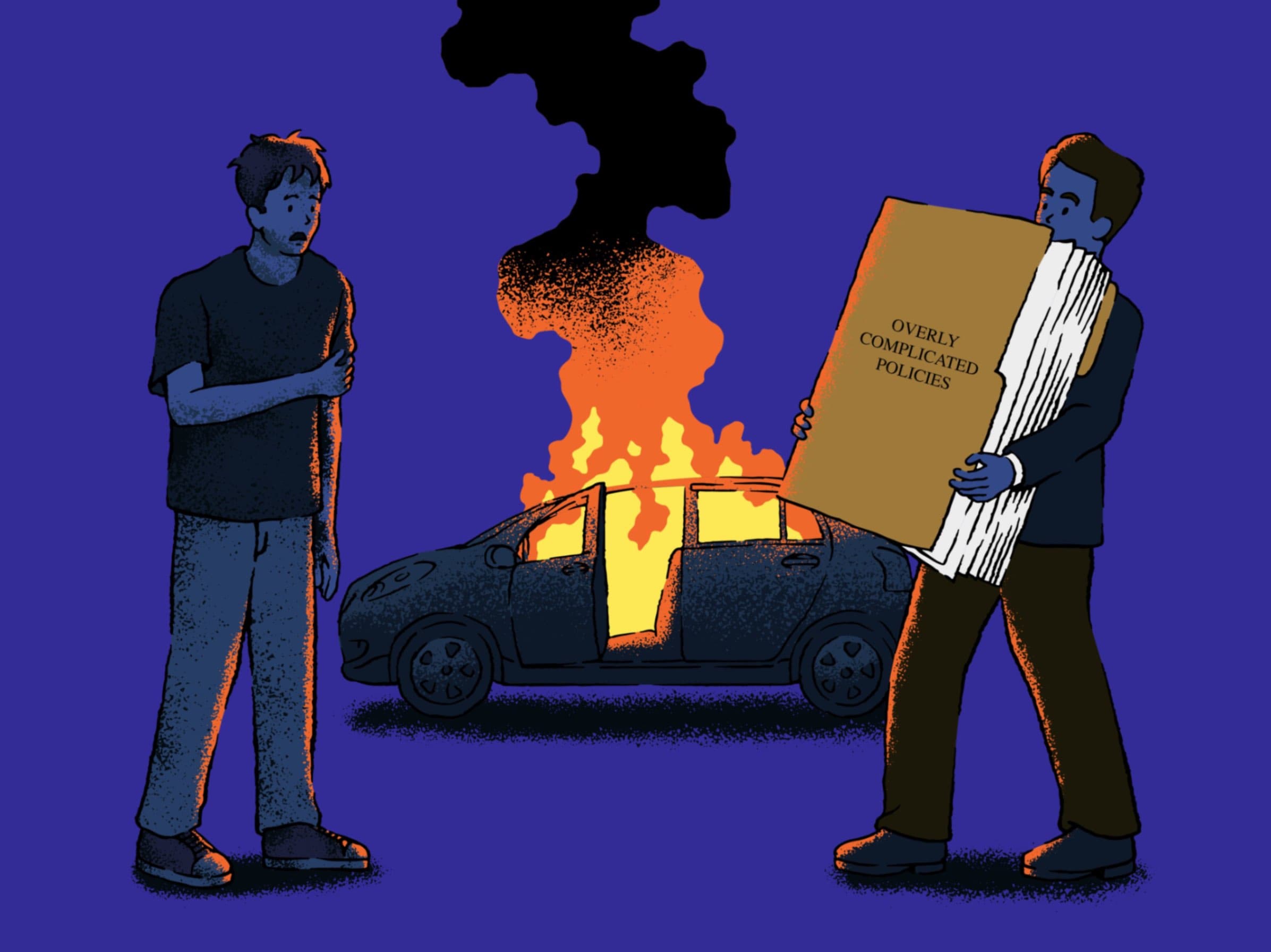
Updates Before Lawsuits: Making Policy Review a Culture, Not a Crisis Response
In municipal government, policy manuals often sit quietly on shelves or servers, reviewed during accreditation cycles or updated after major incidents. It is easy to treat them as administrative requirements- necessary, technical, and procedural.
They are far more than that.
Policy is protection.
When I was first appointed chief, one of my earliest tasks was reviewing the department’s organization and policy structure. What I found was not minor neglect—it was systemic drift. Several policies were outdated, and others bore little resemblance to our actual operations. One firearms qualification policy still required the use of .38 revolvers, despite the department having transitioned to semi-automatic pistols nearly a decade earlier.
It became clear that our written standards no longer reflected our practice. A significant portion of my first year was spent bringing policy back into alignment with reality.
While preparing to rewrite the department's policy, I came to understand that it serves three critical audiences simultaneously: officers, municipal leadership, and the courts. When written clearly and enforced consistently, policy provides direction, stability, and defensibility. When outdated or unevenly applied, it becomes a liability.
Officers rely on policy for clarity. In high-stress situations, they fall back on training and written standards. If guidance is vague, contradictory, or obsolete, uncertainty replaces confidence. That uncertainty can lead to hesitation—or worse, inconsistent application of authority.
For city managers and council members, policy represents institutional intent. It demonstrates that the municipality has defined standards for use of force, pursuits, internal investigations, supervision, and discipline. In moments of public scrutiny, those written standards matter.
But policy alone is not enough.
Courts and litigators do not simply ask whether a policy exists. They ask whether it is current, whether officers are trained on it, and whether leadership enforces it. A well-written manual that is ignored in practice offers little protection. In fact, it can amplify risk by exposing a gap between stated standards and actual conduct.
One of the most common weaknesses I encountered was policy drift. Over time, procedures would be amended informally, practices would evolve in response to staffing shortages, or supervisory enforcement would become inconsistent. The written document remained unchanged while operational reality shifted.
That gap is where exposure grows.
Effective policy management requires discipline. Regular review. Alignment with evolving legal standards. Clear documentation of revisions. Most importantly, visible enforcement. When supervisors treat policy as guidance rather than expectation, credibility erodes.
Municipal leaders play an important role here as well. Supporting periodic policy audits, ensuring access to updated legal resources, and resisting pressure to alter standards in response to isolated controversy all strengthen institutional protection.
It is also important to understand that strong policy protects officers.
Clear standards remove ambiguity. They allow officers to act decisively within defined boundaries. They provide reassurance that when actions are taken in accordance with training and written guidance, the municipality stands behind them.
In contrast, when policies are poorly maintained or selectively enforced, officers bear uncertainty—and cities bear risk.
The most stable municipal environments I experienced were those where policy review was routine rather than reactive. Updates followed legal developments, not lawsuits. Training accompanied revisions. Supervisors reinforced expectations consistently.
Policy is not paperwork created to satisfy accreditation or insurance requirements. It is the architecture of accountability.
When crisis comes—and in public safety it eventually does—municipal leaders will be asked what standards were in place, how they were communicated, and whether they were followed.
If the answer is clear, current, and documented, policy becomes protection.
If not, it becomes evidence.
Bibliography
U.S. Department of Justice, Office of Community Oriented Policing Services (COPS Office). Standards and Accountability in Policing. Available at: https://cops.usdoj.gov
International Association of Chiefs of Police (IACP). Model Policies and Policy Development Resources. Available at: https://www.theiacp.org
Lexipol. Law Enforcement Policy Management and Risk Mitigation. Available at: https://www.lexipol.com
Walker, S., & Archbold, C. A. The New World of Police Accountability. Thousand Oaks, CA: SAGE Publications.
Monell v. Department of Social Services, 436 U.S. 658 (1978). U.S. Supreme Court decision addressing municipal liability under 42 U.S.C. §1983.
More from 2 Topics
Explore related articles on similar topics