Why Real Growth and Success Feels Isolating at First
What if I tell you, as someone with vision, you do not fully belong where you came from, and you do not fully belong where you are going.
There is a phase of growth that almost no one prepares you for.
It is not the beginning, where everything feels possible, and motivation is high. It is not the breakthrough, where results validate your effort. It is the space in between. The awkward, disorienting phase where you have clearly separated yourself from the rhythm of everyday life, but have not yet been accepted into the rooms you are trying to grow into.
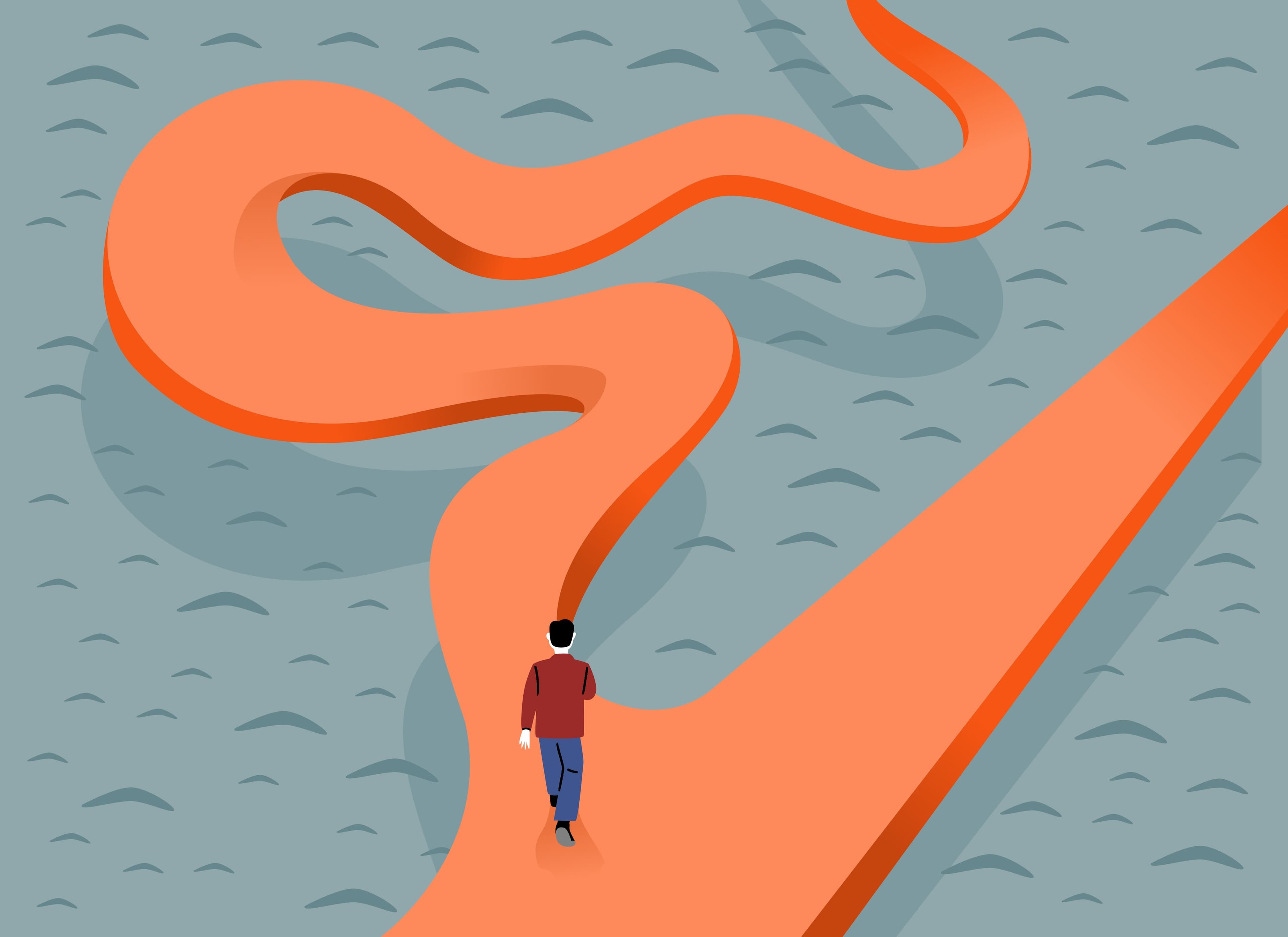
This is the middle zone.
And for many people, it is where progress quietly collapses.
At some point, you start to pull away from what most people would call normal. The routine, the predictable path, the day to day cycle that often gets labeled the rat race. You begin to think differently. You make decisions that others around you do not fully understand. Your priorities shift. Your tolerance for certain conversations, environments, and habits starts to shrink.
You are no longer fully aligned with the life you used to live.
But you are not fully established in the life you are building either.
That is where the tension begins.
Because the community you once had was built on shared norms. Shared schedules. Shared expectations. When those things change, even subtly, your sense of belonging starts to weaken. Conversations feel different. Your perspective feels out of place. You begin to notice that the things driving you no longer resonate in the same way with the people around you.
At the same time, the spaces you are trying to grow into have not fully opened up to you yet.
You are not quite recognized there. Not fully trusted. Not fully understood. You are still proving yourself. Still building. Still navigating what that next level even requires.
So, you end up in a strange position.
You do not fully belong where you came from, and you do not fully belong where you are going.
That is the awkward phase.
What makes this phase even more complex is that you are not alone in it, but it still feels isolating. There are others in this same space. People who are bold enough to step outside of the expected path. People who are driven, ambitious, and willing to take risks.
On the surface, it looks like a strong community.
But underneath, many of them are just as unsettled.
They are navigating the same uncertainty. The same identity shift. The same lack of stable belonging. Everyone is moving forward, but no one feels fully grounded. It becomes a collection of individuals who are confident in direction but unclear in position.
In many ways, it is a community of people in transition.
Alpha in mindset but still searching for footing.
And that creates a unique kind of instability.
Because while ambition connects you, it does not always anchor you. There is movement, but not always depth. There is energy, but not always clarity. Everyone is building, but not everyone knows what they are building toward yet.
This is the part people do not talk about.
We are wired for community. It is not optional. It is a fundamental human need. We look for belonging not just for comfort, but for validation, for alignment, for reinforcement that we are on the right path.
And in this middle zone, that reinforcement is inconsistent at best.
Sometimes you feel ahead. Sometimes you feel behind. Sometimes you feel like you are exactly where you need to be. And other times, you question whether you have drifted too far from stability without enough proof that it will pay off.
That uncertainty wears on people.
More than the work. More than the risk.
It is the lack of grounded community that creates the pressure.
And this is where many people retreat.
Not because they lack discipline. Not because they lack vision. But because the psychological cost of existing without a clear sense of belonging becomes too high. The pull of familiarity starts to outweigh the promise of possibility.
So they go back.
Back to environments where they are understood. Back to conversations that feel easy. Back to roles that are already defined. It may not fully satisfy them, but it restores something immediate. It restores connection.
And for many, that is enough.
But for those who stay in the middle zone, something different begins to develop.
They learn to operate without constant validation. They become more comfortable with ambiguity. They stop expecting immediate belonging and start focusing on long-term alignment. They begin to understand that this phase is not a detour. It is a filter.
It filters out the need for external approval.
It filters out dependency on familiar structures.
It forces you to build internal stability before external recognition arrives.
Over time, that changes how you move.
You become more selective about the spaces you enter. More intentional about the people you engage with. You stop trying to fit into environments prematurely, and instead focus on becoming the kind of person who naturally belongs when the time is right.
And slowly, things begin to shift.
The right rooms start to open. The right people start to appear. Not in large waves, but in precise alignments. Conversations become more grounded. Relationships become more reciprocal. The sense of belonging returns, but this time it is built on shared standards, not shared convenience.
That is when you realize the middle zone was never empty.
It was just temporary.
A necessary stretch between who you were and who you are becoming.
And while it may feel like a lack of community, it is actually a refinement of it.
Because not everyone is meant to meet you in that space.
And not everyone is meant to come with you out of it.
More from Professional Development and Training
Explore related articles on similar topics