What Does a Data Center in Memphis Have to Do With a Lesson Plan in Brooklyn?

The Two Classrooms
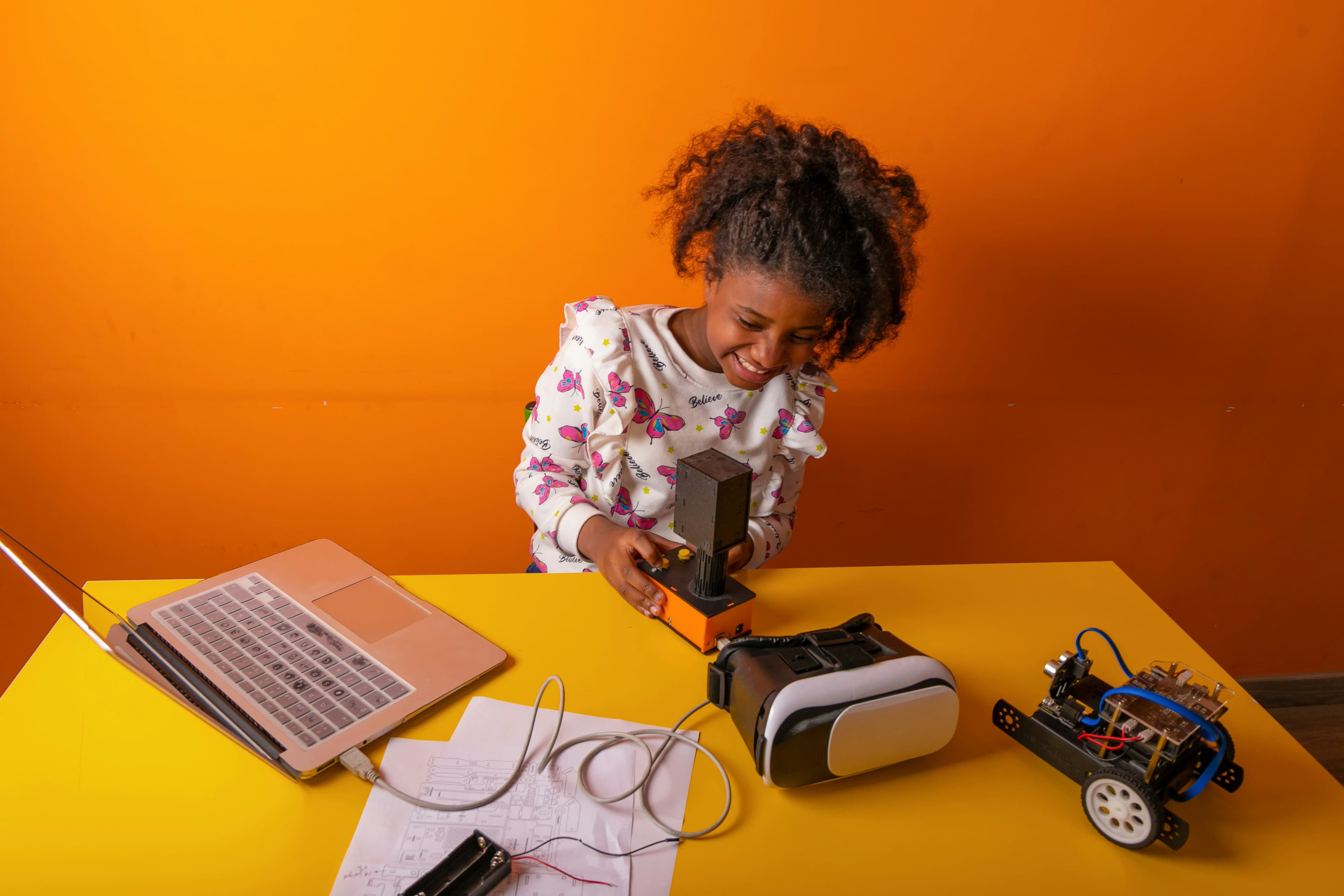
Picture two classrooms on the same Tuesday morning. In one, a suburban seventh grader is collaborating with a partner to prompt their AI tutor to explain the Pythagorean theorem three different ways, while their teacher, fresh off a district-funded workshop, uses another AI tool to draft tomorrow's differentiated lesson. Two miles away, in a Title I school, a teacher is also using AI, quietly, on her personal phone, to write parent letters in three languages because her class list has grown to thirty-four and her prep period vanished. Nobody trained her. Nobody told her which tools are safe. And her students have never been shown what AI is, how it works, or what it costs the planet to run.
Same technology. Same Tuesday. Two completely different futures.
Welcome to the AI equity gap, and it is widening in real time. According to a 2024 to 2025 RAND Corporation survey, only 13 percent of principals in high-poverty schools have any written policy or guidance on AI, compared to 25 percent in low-poverty schools. Meanwhile, a 2025 Gallup study found that 72 percent of teachers report little or no formal training in how to use AI at all. The tools are already in the building. The guardrails, in most buildings, are not.
What Equitable AI Actually Looks Like in a Classroom
Equitable AI is not about giving every student a Chromebook and calling it a day. It is about closing three gaps at once, and each of them is fixable.
The first is the access gap. Urban and suburban schools are nearly twice as likely to adopt AI tools as rural districts, largely because of broadband, vendor relationships, and innovation funding. Bridging this starts with district leaders lobbying state education agencies to route E-rate expansions, ESSER remainders, and any AI-specific state grants toward high-need schools first, not last. If your district has a shiny AI pilot in one building, ask a simple question at the next cabinet meeting. Which building got it, and why not the one across town?
The second is the training gap. Fewer than one in five teachers report receiving district-level professional development on AI, and about a third are unsure how student data is even handled by the tools they already use. Managers, this one is on you. Peer-led AI cohorts, taught by teachers for teachers, cost almost nothing and dramatically outperform vendor demos. Pair a tech-forward veteran with a nervous newcomer and give them a common problem to solve, like drafting IEP goals or generating tiered exit tickets. Confidence spreads faster than a district memo ever will.
The third is the exposure gap. Only 36 percent of AI-using teachers actually introduce those tools to their students. Read that again. The teacher is learning. The student is not. In wealthy districts, students are learning to prompt, critique, and even build with AI. In underserved schools, AI is more often used on students, for placement, alerts, or grading, than with them. If your goal is workforce readiness, and for many of us in NYC public education it explicitly is, this exposure gap is the one that will show up in résumés, college essays, and interview rooms a decade from now.
Teaching Students the Full Story, Including the Cost
Here is the part most curriculum guides leave out. AI is not conjured from the cloud. It runs on warehouses the size of small towns, and those warehouses drink, burn, and displace.
A single mid-sized data center can use up to 300,000 gallons of water a day. A large one can use as much as 5 million. By 2028, AI data centers in the United States could require up to 32 billion gallons of water a year, roughly what 360,000 households use indoors. Two-thirds of the data centers built or planned since 2022 sit in water-stressed regions like southern Arizona and the Colorado River Basin. A single modern AI center can consume the electricity of 100,000 homes, and one Lawrence Berkeley National Laboratory study projects data centers could account for up to 12 percent of all U.S. electricity by 2028.
The human cost is even more uncomfortable. A national review of roughly 700 U.S. data centers found that nearly half sit in census tracts with above-median environmental burdens, often near Black and low-income communities. In Memphis, residents and the NAACP filed a notice of intent to sue under the Clean Air Act over more than thirty natural gas turbines installed to power xAI's Colossus data center in a neighborhood already grappling with asthma.
Students deserve to know this. Not to shame them out of using ChatGPT, but to make them the kind of citizens who ask better questions than the adults who built the thing. Middle school lessons like the one from Lenny Learning already teach sixth through eighth graders to weigh AI's ecological footprint against its benefits. A social studies teacher can layer this into a unit on environmental justice. An ELA teacher can turn it into a persuasive essay. A math teacher can have students calculate the water cost of their class's weekly AI use. The lesson lands harder than any lecture on digital citizenship, because it is real, local, and personal
Aspiring educators, take note. The teachers who will stand out in the next five years are not the ones who can use AI fastest. They are the ones who can teach students to interrogate it.
Responsible Leadership: What School Systems Can Actually Do
Leaders, you are not being asked to become computer scientists. You are being asked to do what good school leaders have always done, which is set guardrails that make it safer for the adults in the building to do bold work.
Start with a one-page district AI policy in plain English. Not a forty-page vendor contract. One page. What tools are approved, what data cannot be entered into any AI, how families can opt out, and who to call when something goes wrong. Fewer than 15 percent of schools currently offer families an opt-out option. Being the district that does is a trust-builder, not a bureaucratic drag.
Next, run a bias and safety audit before you scale. Under 10 percent of districts have done any kind of audit for AI bias, fairness, or student safety. You do not need a consulting firm. You need three teachers, one parent, one student, and a rubric. Ask the tool to generate examples for a lesson on family, on immigration, on success. Look at what it produces. If the outputs would embarrass you at a community meeting, do not sign the renewal.
Third, protect student data as if it were your own child's. FERPA still applies, but FERPA was not written for large language models. Require vendors, in writing, to specify whether student inputs are used for model training. If they cannot answer plainly, that is your answer.
Finally, invite students into the governance. A student advisory panel on AI use is not a gimmick. It is the fastest way to learn what is actually happening on district Chromebooks at 10 p.m., and it teaches civic leadership at the exact moment students need it.
Balance, Not Replacement
None of this works if we forget why we became educators. A tool that can grade a hundred essays in ninety seconds is genuinely useful. A teacher who notices a student is not sleeping, is losing weight, or has stopped raising her hand is irreplaceable. Use AI to reclaim your time from the tasks that were never why you signed up. Then spend that reclaimed time on the human work no algorithm will ever do.
That is the actual promise. Not more technology. More teacher, for more students, more of the time.
Your Move
The AI conversation in American education is being written right now, in RAND surveys, in city council meetings about data center water permits, in the quiet decision your principal is about to make about which vendor gets a contract. You do not have to wait for a national framework to act. You already have the credential that matters, which is that a room full of kids will listen to you tomorrow.
So pick one thing. Draft the one-page policy. Start the peer cohort. Teach the water lesson. Ask your superintendent where the district AI plan is, and offer to help write it. If you are new to this field, walk into your first interview with a point of view on equitable AI and watch the room lean in.
The technology is not waiting. Neither should we. The two classrooms I described at the start of this article are down the street from each other in every city in America. Which one your students walk into on Monday is, more than ever, a choice the adults are making.
Make the better one.
References
Fardin, R. H. 2025. "AI in U.S. Classrooms 2025: Adoption vs. Accountability in 50 States." Unmiss, September 15, 2025. https://new.unmiss.com/ai-in-us-classrooms-study.
Lenny Learning. 2025. "AI and the Environment: Friend or Foe?" Lenny Learning Lesson Plan, March 31, 2025. https://www.lenny.org/lesson/ai-and-the-environment-friend-or-foe-cQLLUt.
National League of Cities. 2025. "Data Centers and Local Environmental Considerations." National League of Cities, May 23, 2025. https://www.nlc.org/article/2025/05/23/data-centers-and-local-environmental-considerations/.
Walker, Carla, and Ian Goldsmith. 2026. "7 Ways Data Centers Affect US Communities." World Resources Institute, February 17, 2026. https://www.wri.org/insights/us-data-center-growth-impacts.
Williams, Tyreeka, Michael Brooks, Maylee Vazquez, and Shirlene Coopwood. 2025. "From Access to Empowerment: School Counselors Supporting AI Literacy in Underserved K-8 Communities." International Journal of the Whole Child10, no. 2: 40–50. https://eric.ed.gov/?id=EJ1494270.