Twenty-Five Years Later, September 11 Still Feels Personal
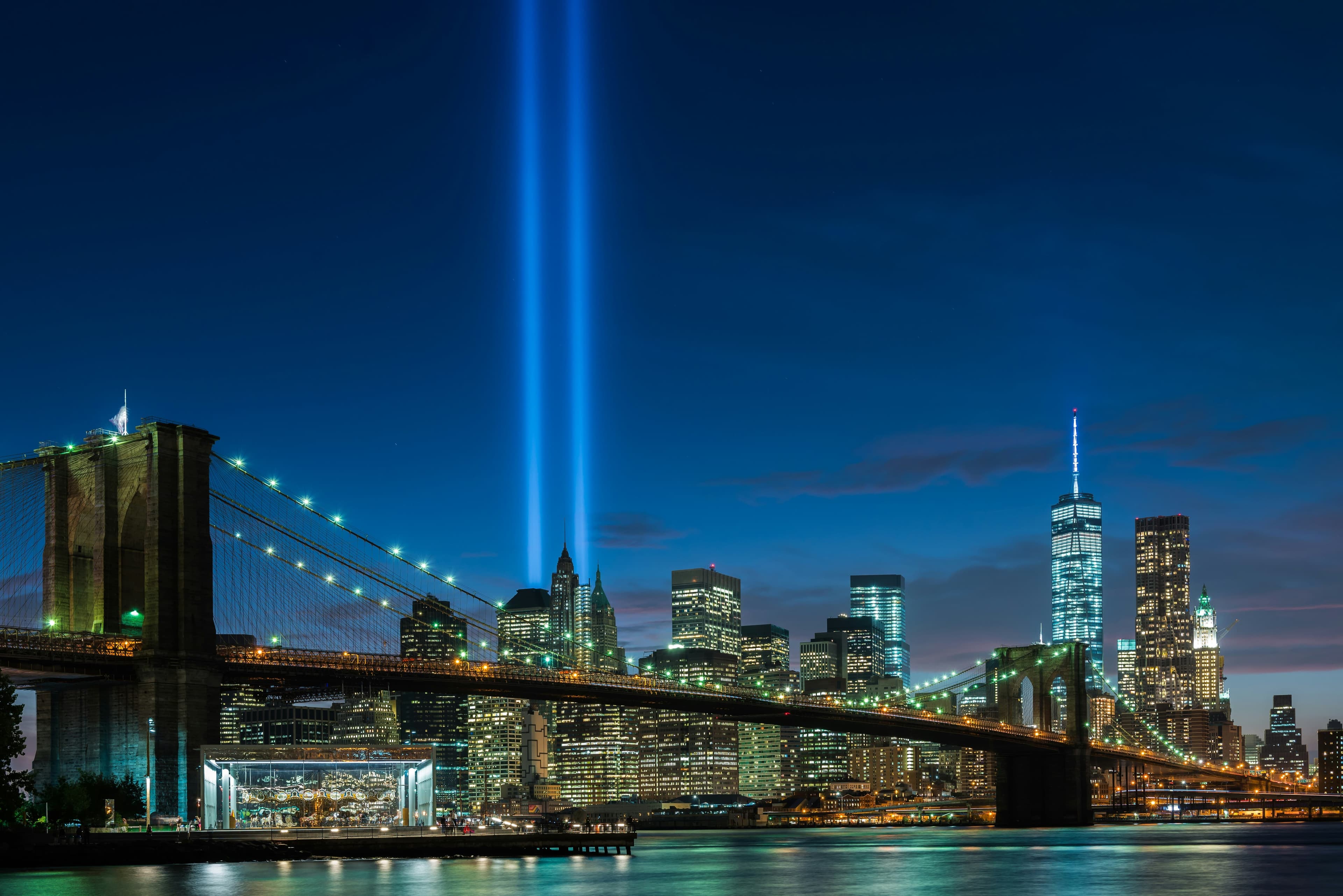
There are certain days in your life that divide time into before and after.
September 11, 2001, is one of mine.
I was 20 years old and a student at the University at Albany. I was living in Colonial Tower—on the 16th floor, if my memory after 25 years serves me correctly—with my roommate.
That Tuesday morning should have been an ordinary one.
Normally, both of us would have been getting ready to head downtown for our internships. I was interning with New York State Assembly Member Deborah Glick, whose district was in Lower Manhattan, extending into an area not far north of the World Trade Center.
Instead, my roommate turned on the television.
The first tower had already been hit.
His initial reaction was that whatever was on the screen looked like some kind of bad science-fiction movie.
It couldn’t be real.
Then, while we were watching, the second plane hit.
It was real.
And suddenly the world in which I had gone to sleep the night before no longer existed.
I Just Wanted to Go Back to Bed
Memory is strange.
Twenty-five years later, I don’t remember every conversation from that morning. I don’t remember every detail in perfect chronological order.
But I remember the feeling.
Fear.
Disbelief.
Confusion.
And an overwhelming desire to climb back into bed, pull the covers over myself and somehow wake up to discover that none of it had happened.
We were hearing reports about the planes and their flight paths, including that one had come from Boston and passed through the broader region on its way south. At that moment, sitting high up in a dormitory tower in Albany suddenly didn’t feel particularly comforting.
I was supposed to go to my Assembly internship that day.
I didn’t.
I was too nervous.
At 20, I wasn’t thinking about terrorism in the sophisticated language of national security, emergency management or public policy.
I was thinking like a 20-year-old watching thousands of people’s lives change on live television.
What is happening?
Is there more coming?
Is New York still under attack?
Is it safe to go anywhere?
And perhaps most frighteningly:
What happens next?
The World Trade Center Had Been a Place
One reason September 11 became so personal was that the World Trade Center wasn’t simply an image from television.
Earlier that year, I had taken the PATH train to the World Trade Center station on my way to a hearing at City Hall.
It was one of the relatively few times in my life that I had actually visited the World Trade Center complex.
I had no reason to think the experience was significant.
Why would I?
It was a train station.
It was a landmark.
It was part of Lower Manhattan.
It was there.
That is one of the things September 11 taught my generation: things that seem permanent sometimes aren’t.
A place I had casually passed through months earlier was suddenly the center of the world’s attention.
And then it was gone.
The Images That Never Left
There are images from that day that I wish I had never seen.
Twenty-five years later, I can still remember watching people fall from the buildings.
There are ways of describing that more gently.
But I don’t think we should.
They were human beings trapped so high above the ground, confronted with circumstances so unimaginable that some went out the windows.
I was 20 years old watching it happen.
Those images have never completely left me.
Neither has the smoke.
For weeks afterward, the destruction in Lower Manhattan remained visible from afar. The site smoldered. New York’s skyline had changed, but something deeper had changed with it.
The numbers we associate with September 11 are enormous.
But numbers can also make tragedy abstract.
One person falling from a building is not abstract.
One firefighter climbing a staircase is not abstract.
One police officer running toward danger is not abstract.
One family waiting for a telephone call that never comes is not abstract.
September 11 ultimately involved thousands upon thousands of individual human stories.
That is part of why it remains so difficult to comprehend.
Returning Downtown
Years later, Lower Manhattan became part of my professional life.
From roughly 2008 through 2011, I worked for the New York City Department of Health and Mental Hygiene at 22 Cortlandt Street, above the old Century 21 department store.
The World Trade Center site was right there.
From that vantage point, I watched the rebuilding evolve over approximately three years.
Construction sites normally aren’t emotional things.
This one was different.
The rebuilding was occurring on ground that had become almost sacred to New York.
Day after day, steel and concrete were gradually filling a void that everyone had become accustomed to seeing.
For someone working in government, there was another lesson in watching that happen.
September 11 was an act of destruction.
What followed required years of construction—not merely physical construction, but institutional and civic reconstruction.
Police officers.
Firefighters.
Emergency medical personnel.
Construction workers.
Engineers.
Transit workers.
Health professionals.
Sanitation workers.
Public administrators.
Elected officials.
Thousands of public employees and private citizens had roles in helping New York function, recover and rebuild.
Public service can seem mundane when everything is working.
September 11 showed what public service means when everything isn’t.
A Museum I Wasn’t Prepared For
Years later, I won a raffle through the Museum of Jewish Heritage that gave me a personal tour of the 9/11 Memorial & Museum.
By then, September 11 was history.
At least chronologically.
Enough time had passed that children born after the attacks were growing up learning about them in school.
I thought I knew what I was going to see.
I wasn’t prepared for how I would feel.
I cried.
I did not personally know anyone who died at the World Trade Center that day.
That fact has always made my emotional reaction somewhat difficult to explain.
This wasn’t my relative.
It wasn’t my friend.
It wasn’t my coworker.
I cannot—and would never—equate my experience with that of the families who lost someone.
Their September 11 is different from mine.
But I learned something in that museum:
An event doesn’t have to happen to you to become part of you.
September 11 happened to my city.
It happened during my formative years.
It happened while I was beginning to work inside New York government.
It happened at a place I had recently walked through.
And I watched it happen in real time.
That made it personal.
Twenty-Five Years Later
We have now reached a milestone that once would have seemed impossible.
Twenty-five years.
There are adults working in New York City government today who weren’t alive on September 11, 2001.
There are police officers, firefighters, teachers, nurses, analysts and public administrators serving New Yorkers who know that day primarily through photographs, video and stories told by people like me.
That realization makes me feel older than almost anything else does.
For my generation, there is no need to explain what “9/11” means.
Two numbers are sufficient.
We remember where we were.
We remember turning on televisions.
We remember trying to reach people by telephone.
We remember the uncertainty.
We remember the smoke.
We remember the photographs of the missing.
We remember the firefighters.
We remember the police officers.
We remember the people covered in dust walking north through Manhattan.
We remember a skyline that suddenly looked wrong.
And some of us remember desperately wanting to go back to bed and wake up in the world of September 10.
What September 11 Means to Me
Twenty-five years later, I think September 11 means several things to me.
It means vulnerability.
A 20-year-old assumes that the structures around him are permanent. September 11 taught me otherwise.
It means courage.
While I was afraid to leave my dorm room in Albany, people hundreds of miles south of me were running into burning buildings.
I have never forgotten that distinction.
It means public service.
My family has generations of government service behind it, and I have now spent more than two decades in New York City government myself. September 11 remains perhaps the most powerful example of what the words “public servant” can mean.
Sometimes public service means processing a purchase order, preparing a budget, teaching a class or maintaining a road.
Sometimes it means running upstairs while everyone else is running down.
It means resilience.
Years later, I stood at my office window on Cortlandt Street and watched New York rebuild.
And it means memory.
Because eventually there will be no one left who remembers September 11 firsthand.
That is how history works.
The responsibility then passes from witnesses to storytellers.
I Still Remember
I remember my roommate turning on the television.
I remember his disbelief at what he was seeing.
I remember watching the second plane hit.
I remember being afraid to go to my internship.
I remember being 20 years old and wanting desperately for the whole thing to be a bad dream.
I remember having passed through the World Trade Center earlier that year without ever imagining that doing so would someday become a meaningful memory.
I remember the people falling.
I remember the smoke.
Years later, I remember watching the site slowly rise again from my workplace across the street.
And later still, I remember standing inside the museum and crying for people I had never met.
That last part may be what September 11 ultimately means to me.
I didn’t lose someone that day.
But I lost something.
We all did.
A sense that certain things couldn’t happen here.
A certain innocence about the world.
A version of New York that existed until 8:46 on a Tuesday morning and then never existed again.
Twenty-five years later, New York has rebuilt.
Life moved forward.
I grew from a 20-year-old college student into a husband, a father and a career New York City public servant.
An entire generation has been born and reached adulthood.
But moving forward is not the same thing as forgetting.
Every September 11, somewhere inside me, I am still that 20-year-old kid on the 16th floor of Colonial Tower, staring at a television and hoping what I am seeing isn’t real.
And I don’t think that part of me will ever completely leave that room.




Join the discussion
Members can read and add comments on every article.