The Most Productive Thing You'll Do in Your Next Meeting Is Nothing

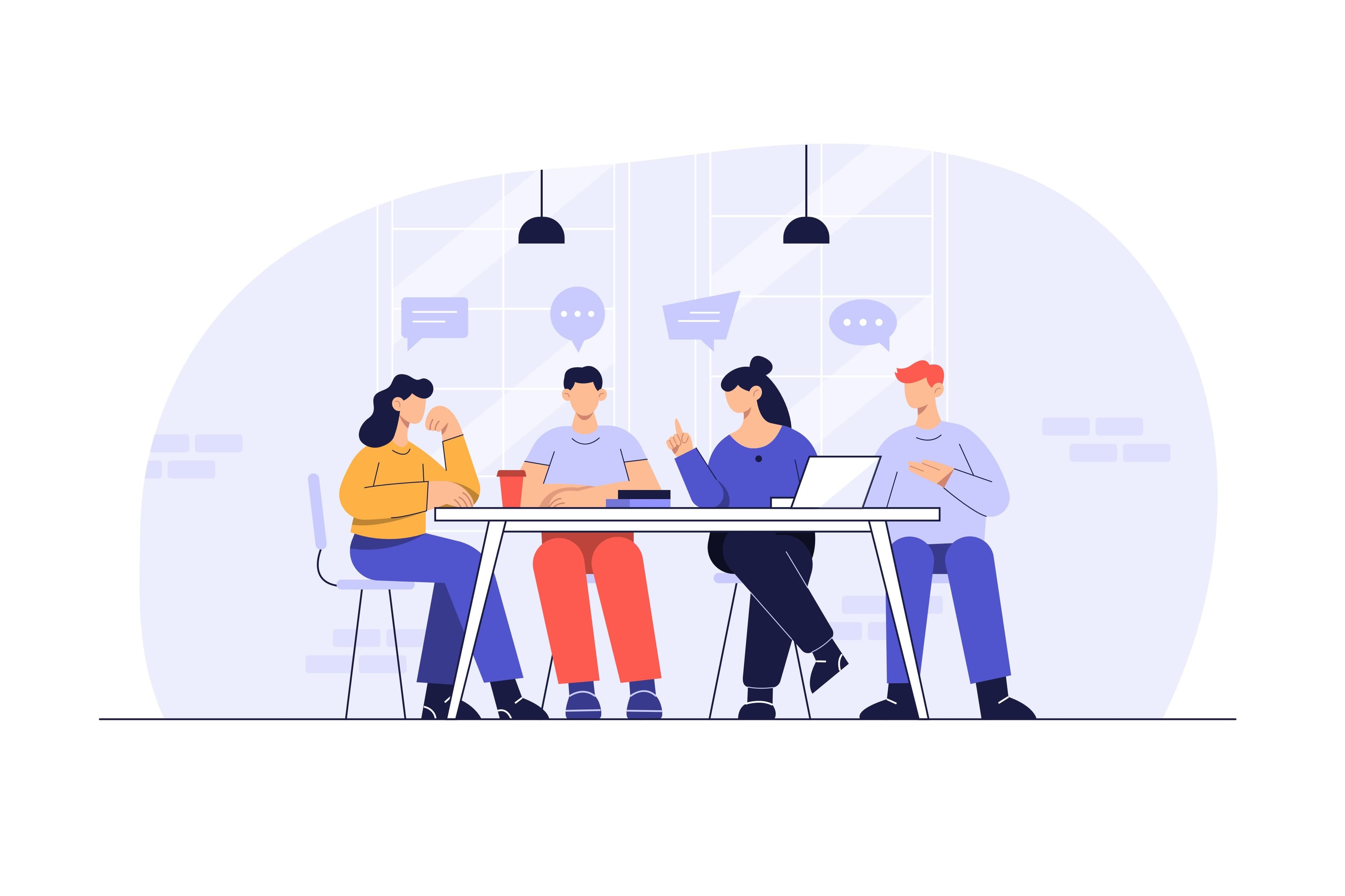
The CEO stands at the head of the table and asks the big question: "So, what's really driving this?"
Silence. One person studies his coffee. Another suddenly finds the ceiling tiles fascinating. Someone in the back is definitely on his phone. The CEO waits two full seconds, panics and answers her own question.
Then the bell rings, and 27 seventh graders stampede toward lunch.
The conference room was Room 214. The big question was about the theme of a short story. The CEO was me.
Different room, same silence. Whether you run a boardroom or third period, the pause after a question makes everyone squirm, and the person in charge usually rushes to fill it. The thinking ends before it ever began.
The One-Second Problem
Mary Budd Rowe spent nearly twenty years recording classrooms. She found that teachers typically wait one second or less for a student to start answering, then less than a second after the student stops before jumping in. When teachers stretched both pauses to three seconds or more, student answers grew between 300 and 700 percent longer, more of them were supported by evidence, and "I don't know" became far less common. In one set of studies, average answers grew from 7 words to 28.
Here is the uncomfortable part. Rowe found teachers gave students they saw as high achievers about two seconds to respond, and students they saw as low achievers less than one. We hand out thinking time like a prize to the people who already seem to have the answer.
Why Silence Feels Like Slacking
Silence makes adults nervous because it is invisible. A supervisor walking into a quiet room cannot see thinking. A manager running a meeting where time is money sees thirty quiet seconds as thirty seconds of nothing. We trust what we can measure, and talking is easy to count.
But a fast answer is not the same as a good one. The first hand up usually belongs to the quickest processor, not the deepest thinker. When speed wins every time, everyone else learns the question was never really meant for them.
Who Pays for the Rush
For some people, the pause is not a courtesy. It is access. Research has found that many children with ADHD show slower processing speed. A recent study of 504 children with ADHD linked processing speed to academic achievement and recommended giving students additional time to process. Multilingual learners and reflective thinkers benefit too.
I once asked a quiet fourth grader why a character lied, then made myself wait. Five seconds felt like a week. Then she said, "Maybe the truth would have hurt someone he loved." Nobody needed to rephrase anything.
The twist is that the pause helps everyone. Rowe's results held from elementary school through college. The fast thinkers improved too, because they finally had time to get past their first idea.
Silence Scales Up
This is not just a classroom trick. Jeff Bezos opened Amazon executive meetings with as much as 30 minutes of silent reading. He called it a "study hall" and defended it because otherwise executives, "like high school kids, will try to bluff their way through a meeting".
At a staff meeting, I tried a smaller version. I asked a question and said, "Write first. Talk in two minutes." The first person to speak was someone who almost never did, and her idea shaped the rest of the meeting.
How to Build a Culture of the Pause
Name the wait out loud. "Thirty seconds to think, no hands yet" turns awkward silence into an assignment. Protect the second pause, the one after someone answers, because Rowe considered it even more important than the first. Give the silence a job: jot a note, sketch an idea or rank the options. In meetings, send questions in advance or open with quiet writing before discussion. And if you observe classrooms or lead teams, count the pause as part of the work instead of a gap in it.
Give It Three Seconds
Tomorrow, ask one real question and count to three before anyone speaks. Then count again after the first answer. It will feel uncomfortable. Let it. The best idea in your room might be one breath away, waiting for someone brave enough to stop filling the silence.
References
Hulsbosch, A.-K., Van der Oord, S., & Tripp, G. (2025). Academic achievement in children with ADHD: The role of processing speed and working memory. Research on Child and Adolescent Psychopathology, 53(10), 1469–1484. https://doi.org/10.1007/s10802-025-01346-6pmc.ncbi.nlm.nih
Learman, S. (2026, April 24). Take 2 for teaching & learning: Why wait time still matters in today's college classroom. Central Michigan University, Office of Curriculum and Instructional Support. https://www.cmich.edu/blog/office-of-curriculum-and-instructional-support-blog/2026/04/24/take-2-for-teaching-learning---why-wait-time-still-matters-in-today-s-college-classroomcmich
Ptacek, R., Weissenberger, S., Braaten, E., Klicperova-Baker, M., Goetz, M., Raboch, J., Vnukova, M., & Stefano, G. B. (2019). Clinical implications of the perception of time in attention deficit hyperactivity disorder (ADHD): A review. Medical Science Monitor, 25, 3918–3924. https://doi.org/10.12659/MSM.914225pmc.ncbi.nlm.nih
Rowe, M. B. (1986). Wait time: Slowing down may be a way of speeding up! Journal of Teacher Education, 37(1), 43–50. https://doi.org/10.1177/002248718603700110journals.sagepub
Umoh, R. (2018, April 23). Why Jeff Bezos makes Amazon execs read 6-page memos at the start of each meeting. CNBC. https://www.cnbc.com/make-it/2018/04/23/what-jeff-bezos-learned-from-requiring-6-page-memos-at-amazon.html