Think Your Kids Are Too Young to Change the World? Science Says Otherwise
Picture this: Your six-year-old just lectured you about leaving the faucet running while brushing your teeth. Your tween refuses to buy fast fashion because they've researched microplastics. Your teenager organized a neighborhood clean-up instead of scrolling TikTok. Sound far-fetched? It's not. According to research, 81% of parents say their Generation Alpha children have already influenced their actions to be more environmentally aware. These kids aren't just our future- they're change-makers right now, and your kitchen table is ground zero for the revolution.
The truth is, our children are growing up in a world where environmental consciousness isn't optional; it's survival. Studies show that 72% of Generation Alpha kids believe their generation will find solutions to climate change. They're not waiting for permission to care. So why are we waiting to equip them? The most powerful environmental education doesn't happen in a classroom or at a protest rally- it happens in the daily rhythms of home life, where habits form and values take root.
Why Your Family is the Most Powerful Classroom
Here's something most parents don't realize: you're already teaching environmental lessons every single day. The question is whether you're teaching them intentionally. When kids see you toss a recyclable bottle in the trash, choose convenience over sustainability, or waste food without a second thought, they're learning. When they watch you repair instead of replace, compost kitchen scraps, or turn off lights in empty rooms, they're learning that too.
Research from the North American Association for Environmental Education reveals that students engaged in environmental education show improved outcomes not just in science, but in mathematics, reading, writing, critical thinking, and problem-solving. Environmental stewardship isn't just about saving the planet—it's about raising resourceful, thoughtful humans who can tackle complex challenges. And according to the Future of Jobs Report 2025, environmental stewardship ranks as one of the fastest-growing skills in the global workforce.
The families who participated in eco-challenge programs reported that their primary motivation wasn't just altruism—it was the desire to pass on green habits to their children and ensure they inherit a healthy planet. You're not just teaching your kids to recycle; you're showing them they have agency in a world that can feel overwhelming.
Start Small, Think Big: Strategies That Actually Work
Forget the guilt-inducing, all-or-nothing approach to sustainability. You don't need solar panels, a zero-waste lifestyle, or a PhD in environmental science. You just need to start where you are, with what you have. Here's how to make sustainability stick in a way that feels natural, not preachy.
Turn Trash into Treasure (Literally)
Kids love getting their hands dirty, and composting is the perfect gateway drug to environmental consciousness. Set up a small compost bin in your kitchen for fruit peels, coffee grounds, and vegetable scraps. Let your kids be the "compost monitors"—they'll carry those scraps to the bin like they're depositing gold. When that nutrient-rich soil helps grow tomatoes in your backyard (or even a windowsill herb garden), they'll witness the full circle of sustainability. One parent reported that their child started a compost bin project in third grade that eventually grew into a culture of sustainability across their entire school district.
Make Recycling a Game, Not a Chore
Nobody gets excited about sorting trash—unless you gamify it. Create a tracking chart where kids earn stickers or points for correctly sorting recyclables. Take them on a field trip to your local recycling center so they can see where materials actually go and how they're transformed into new products. When recycling becomes tangible rather than abstract, kids connect the dots between their actions and real-world impact. Schools that implement student-led "Green Teams" report that peer influence from these young environmental champions is more effective than adult-led instruction.
Transform Shopping into Strategy
Before your next shopping trip, sit down with your kids and make it a mission. Challenge them to find products with less packaging, choose items made from recycled materials, or select locally-grown produce. Give them agency: "Should we get the apples in the plastic bag or the loose ones we can put in our reusable bag?" This isn't about perfection—it's about awareness. Let them carry reusable water bottles and lunch containers to school, and actually explain why. When they understand that their Batman lunchbox is keeping plastic out of the ocean, they feel like the superhero.
Get Dirt Under Their Fingernails
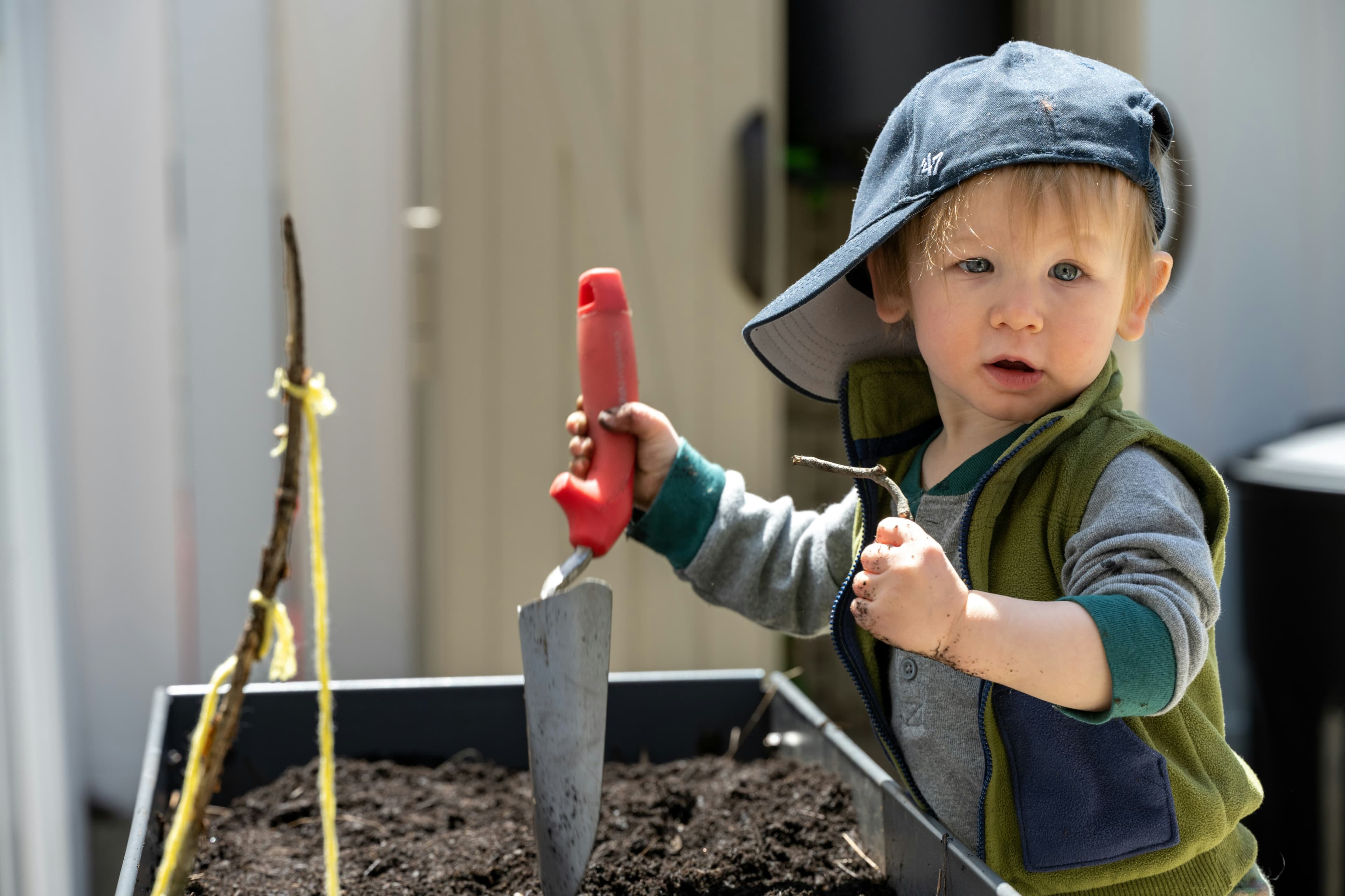
There is no better environmental education than a garden—even if it's just peas and sunflowers in a raised bed or pots on your apartment balcony. Kids who grow their own food learn about seasons, ecosystems, pollinators, water conservation, and the sheer satisfaction of eating something they nurtured from seed to salad. Have them keep a garden journal where they draw what they see, describe how things smell and feel, and track growth. This sensory education builds a relationship with nature that no lecture ever could.
Embrace the Beautiful Mess of DIY
Upcycling projects are where creativity meets conservation. Host a family "fashion show" using old clothes and fabric scraps to create new outfits. Build a bird feeder from a pinecone and peanut butter, or construct an insect hotel from twigs, leaves, and recycled materials. Create a solar oven from a pizza box and cook s'mores using the power of the sun. These projects aren't just fun—they're proof that waste is only waste if you waste it.
Make Energy Visible
Abstract concepts like "saving energy" don't resonate with kids until you make them concrete. Challenge your family to a "lights-off week" and track your electricity bill to see the difference. Teach them to unplug devices that aren't in use (phantom energy is real). Let older kids research your household's carbon footprint and brainstorm reduction strategies together. When they see numbers change based on their actions, they understand their power.
Get Outside and Get Messy
The single best way to raise environmental stewards is to let them fall in love with the environment. Go on nature scavenger hunts. Pick up litter at your local park and turn it into a community service project. Visit local nature centers, hiking trails, or beaches. Studies consistently show that time outdoors cultivates respect for nature and reduces reliance on material possessions. One father noted that outdoor time not only fostered new hobbies like gardening and hiking but also helped his child appreciate indoor toys longer, reducing consumption.
Plug Into Something Bigger
Don't underestimate your kids' desire to be part of something meaningful. Connect them with youth environmental organizations, attend community clean-up days, or support student-led climate initiatives at school. In Houston's East End, high school students trained as "Green Ambassadors" have transformed their community, turning a food desert into a thriving green space. An eight-year-old named Cole organized his elementary school to send 2,500 handmade postcards to McDonald's, successfully convincing the corporation to use more recycled packaging. When kids see that their voices matter, they use them.
Lead by Example (They're Watching You)
Here's the uncomfortable truth: your kids are your harshest critics and your most devoted fans. If you preach sustainability but live wastefully, they'll notice the hypocrisy. If you model imperfect but intentional choices—repairing instead of replacing, choosing reusables over disposables, supporting local businesses, reducing food waste—they'll absorb those values.
You don't need to be perfect. In fact, perfection is the enemy of progress. What matters is letting them see you try. Talk through your decisions out loud: "I'm bringing my own bags to the store because single-use plastic ends up in the ocean." "We're fixing this broken toy instead of buying a new one because it saves resources." These casual, consistent moments create a family culture of stewardship.
The Work That Matters Most
Environmental education isn't about loading guilt onto the next generation or turning childhood into an endless lesson plan. It's about empowering kids with the knowledge that they're not helpless in the face of massive global challenges. It's about teaching them that small, consistent actions compound into real change. It's about letting them experience the deep, primal satisfaction of caring for something beyond themselves.
Research shows that Generation Alpha is already more environmentally conscious than any generation before them—67% of children aged 6-9 want to make saving the planet their career mission. They're ready. The question is: are we ready to support them?
Your home is not too small. Your kids are not too young. Your impact is not too insignificant. Every reusable water bottle, every composted banana peel, every conversation about where our trash goes and why the bees matter—it all adds up. The future your children inherit will be shaped by the habits they build today, in your kitchen, in your backyard, in the daily rhythm of your family life.
So here's your challenge: Pick one strategy from this article. Just one. Start this week. Maybe it's setting up that compost bin, maybe it's a Saturday morning litter pick-up, maybe it's letting your kid choose the reusable produce bags at the grocery store. Start small, stay consistent, and watch what happens when you treat your children like the powerful change-makers they already are.
The planet doesn't need perfect families. It needs engaged ones. What will yours do next?
References
Busch Systems. "Education Ideas to Inspire K-12 School Students to Recycle." Busch Systems, March 1, 2026. https://www.buschsystems.com/recycling-education-inspire-k-12/.
Earth Day. "Preparing the Next Generation for a Changing World." Earth Day, January 22, 2026. https://www.earthday.org/preparing-the-next-generation-for-a-changing-world/.
EarthGen. "Success Stories." Accessed May 18, 2026. https://earthgenwa.org/success-stories/.
EarthShare New Jersey. "25 Fun Ways to Teach Kids Sustainability and Green Habits." Accessed May 18, 2026. https://www.earthsharenj.org/25-fun-ways-to-teach-kids-sustainability-and-green-habits/.
Good Buy Gear. "Sustainable Parenting: 12 Simple Ways to Raise Eco-Conscious Kids." March 27, 2023. https://goodbuygear.com/blogs/parenting/sustainable-parenting.
I'm The Chef Too. "10 Engaging Sustainability Projects for Kids." February 3, 2026. https://www.imthecheftoo.com/blogs/stem-for-kids/10-engaging-sustainability-projects-for-kids.
McCrindle. "The Future of Sustainability for Gen Alpha." October 11, 2022. https://mccrindle.com.au/article/topic/generation-alpha/the-future-of-sustainability-for-gen-alpha/.
Museum of Science, Boston. "Boston Museum of Science Survey Finds 'Generation Alpha' Taking Climate Change Into Their Own Hands." Press release, April 21, 2024. https://www.mos.org/press/press-release/climate-change-survey.
National Education Association. "The Importance of K-12 Environmental Education." May 18, 2025. https://www.nea.org/advocating-for-change/new-from-nea/importance-k-12-environmental-education.
Naturepedic. "Sustainable Parenting Hacks – Top 12 Tips." April 1, 2025. https://www.naturepedic.com/blog/sustainability-hacks-for-parents.
Project Learning Tree. "13 Inspiring Examples of Young Environmentalists Making a Difference." March 18, 2020. https://www.plt.org/story/young-environmentalists-examples/.
Recycle by City. "How to Motivate Your Family to Start Recycling." Eco Green Equipment, November 17, 2025. https://ecogreenequipment.com/how-to-motivate-your-family-to-start-recycling/.
Ramblers Way. "Simple Everyday Activities to Teach Kids Environmental Education." August 8, 2024. https://www.ramblersway.com/blogs/the-ramblers-way/simple-everyday-activities-to-teach-kids-environmental-education.
Save Money Cut Carbon. "EcoBabble: An At Home Guide for Teaching Sustainability to Children." December 10, 2020. https://www.savemoneycutcarbon.com/learn-save/ecobabble-an-at-home-guide-for-teaching-sustainability-to-children/.
More from Sustainability
Explore related articles on similar topics






Top Paying Jobs in Sustainability
Highest paying opportunities related to this article
ABOUT THE ROLE Prince William County is hiring its first-ever Sustainability Communications and Engagement Manager within the Office of Sustainability. This role serves as a bridge between technical expertise and public understanding. The manager will develop strategic communications, educational campaigns, and engagement initiatives to increase awareness of environmental sustainability programs, encourage community participation, and help stakeholders understand how these initiatives improve quality of life. The position supports the implementation of the County’s Community Energy and Sustainability Master Plan to meet Climate Mitigation and Resiliency goals. KEY RESPONSIBILITIES - Develop public communications and outreach materials focused on renewable energy, energy conservation, and natural resource protection - Create campaigns highlighting available incentives and programs for residents and businesses - Support the development of progress reports, including the county’s Environmental Sustainability Annual Report - Translate complex technical, scientific, or policy-related information into clear, accessible messaging for diverse audiences - Create engaging content across multiple channels, including websites, newsletters, social media, presentations, and reports - Plan and implement public engagement campaigns to build awareness and strengthen community partnerships - Write and edit communications products such as annual reports, media releases, feature stories, and educational materials - Collaborate with communications professionals, technical staff, and organizational leadership - Build relationships with community organizations, businesses, and industry partners to advance strategic initiatives - Track legislative or policy developments and prepare briefing materials for leadership - Manage multiple communications projects simultaneously while meeting deadlines in a fast-paced environment - Use analytics and audience feedback to evaluate and improve future outreach strategies - Pursue and secure funds or resources to support the implementation of strategic plans MINIMUM QUALIFICATIONS - High School Diploma or GED - 7 years of professional experience developing, facilitating, and delivering strategic engagement plans and communication programs that support programmatic initiatives, including developing reports, office publications, and outreach materials for internal and public audiences - Preferred: Bachelor’s Degree from an accredited four-year college or university in Communications, Marketing, Environmental Sustainability, or a related area SPECIAL REQUIREMENTS - May be required to attend meetings or events outside of standard work hours a few times a quarter SELECTION PROCESS - Applications will be reviewed based on the stated minimum and preferred qualifications, with a focus on the candidate's ability to act as a strategic communicator, translate technical information, and execute public outreach initiatives HOW TO APPLY - Submit an application through the Prince William County Government official employment portal - Prospective and current employees are encouraged to discuss potential reasonable accommodations with the employer by contacting Human Resources EMPLOYMENT DETAILS - Location: Prince William County, VA - Job Type: Full-Time - Department: Executive Management (Office of Sustainability) - Job Number: 202610773 - Grade: C51 - Opening Date: 08/25/2026 - Closing Date: 9/21/2026 at 11:59 PM Eastern Time - Work Schedule: Monday-Friday, 9:00 AM to 5:00 PM, 37.5 hours weekly; telework allowed two days a week, dependent upon business needs - Benefits: Virginia Retirement System (VRS), 401a and 457 retirement savings plans, paid annual, personal, and sick leave, paid holidays, optional group medical and dental health plans, optional group life insurance, Employee Assistance Program (EAP), career development opportunities, and eligibility for Public Service Loan Forgiveness (PSLF) - Employer: Prince William County Government
ABOUT THE ROLE The Sustainability Coordinator serves in the Office of Climate Action within the City Manager’s Office for the City of Alexandria. This role is responsible for implementing the goals of the Environmental Action Plan 2040 and the Energy and Climate Change Action Plan. The position manages voluntary-action programs like Eco-City Homes and Eco-City Business, engaging directly with the community to encourage individual and business actions that help the City achieve its ambitious goal of reducing greenhouse gas emissions by 80% to 100% by 2050. KEY RESPONSIBILITIES - Develop and execute outreach strategies to promote Eco-City Alexandria and manage the Eco-City Homes program. - Develop programs to incentivize and promote decarbonization by Alexandria businesses, including managing the Eco-City Business program. - Create community-focused programs, campaigns, and clear workplans to achieve participation goals. - Coordinate the planning and execution of community events, including the Eco-City Festival, farmers markets, and Community Cookouts. - Serve as the primary Grant Manager for local, state, federal, and philanthropic grants, including development, application, and ongoing management. - Coordinate with City departments to track and report progress on Environmental Action Plan 2040 goals. - Act as the City's liaison to external partners, including businesses, Alexandria City Public Schools, and MWCOG, to promote sustainability and participate in community-wide projects. - Monitor best practices and innovations in environmental sustainability from other jurisdictions for potential applicability in Alexandria. - Assist in coordinating the promotion of Solarize Alexandria to residents and businesses. - Provide information, support, and presentation materials on environmental matters to department management, the City Manager’s Office, and City Council. MINIMUM QUALIFICATIONS - Bachelor's degree in Environmental Science, Engineering, or an equivalent field. - At least five (5) years of professional experience in the environmental field. - Three (3) years of experience managing environmental resources across different environmental disciplines in a public or private setting. - Strong commitment to serving the needs of a diverse population. - Proficiency in implementing successful programs to improve institutional performance regarding sustainability issues. SPECIAL REQUIREMENTS - Substantial travel in and around Alexandria is required. - Preferred qualifications include extensive experience communicating environmental concepts to the community. - Preferred qualifications include a degree in a related technical field or communications, with experience developing environmental programs, managing budgets, and understanding municipal and state budget operations. - Applicants are strongly encouraged to attach an updated resume to provide a full understanding of their qualifications and background. SELECTION PROCESS - Comprehensive review of the submitted application and attached resume by the recruitment team. - Evaluation of the candidate's experience in environmental program management, community engagement, and grant management. - Standard municipal hiring procedures, which may include interviews and reference checks. HOW TO APPLY - Submit a complete application through the City of Alexandria's official employment portal. - Attach an updated resume to the application to assist the recruitment team in fully reviewing your experience. - Ensure the application is submitted before the closing date of 09/08/2026 at 11:59 PM Eastern. EMPLOYMENT DETAILS - Job Number: 2027-00520 - Department: City Manager's Office, Office of Climate Action - Job Type: Full-Time - Location: City Hall, 421 King Street, Alexandria, Virginia, 22314 - Opening Date: 08/25/2026 - Closing Date: 09/08/2026, 11:59 PM Eastern - The City of Alexandria is an Equal Opportunity Employer and values diversity in its workforce, providing consideration without regard to race, color, religion, national origin, sex, age, marital status, personal appearance, sexual orientation, gender identity, family responsibilities, political affiliation, genetic information, military status, or disability.
ABOUT THE ROLE The Nevada Department of Wildlife is recruiting a Biologist 3 for the Biodiversity Division. This position focuses on non-game wildlife management in the western region and involves working with various taxa, including mammals, birds, bats, and reptiles. The role includes conducting surveys, monitoring efforts, species and habitat management, and data analysis. The incumbent will collaborate across the state to implement the State Wildlife Action Plan and assist with endangered species management and recovery actions. KEY RESPONSIBILITIES - Supervise and participate in wildlife, botanical, and habitat studies, surveys, and inventories. - Organize and implement field surveys using various techniques such as field observation, aircraft, electroshocking, and population marking. - Analyze data using mathematical and statistical formulas to calculate population status, prepare maps, and evaluate trends. - Provide survey data and analysis for land management planning processes and review resource use documents. - Manipulate fish and wildlife populations and habitats, including trapping, tranquilizing, radio collaring, and transporting animals. - Investigate wildlife damage on public and private lands and recommend mitigation courses of action. - Draft species management plans and develop season and harvest recommendations. - Coordinate activities with federal and state agencies, special interest groups, and the public. - Prepare technical reports, press releases, and correspondence, and appear before regulatory and advisory boards. MINIMUM QUALIFICATIONS 1. Bachelor's degree from an accredited college or university in biology, wildlife management, or a closely related field and three years of professional wildlife management experience. 2. Two years of experience as a Biologist II in Nevada State service. 3. An equivalent combination of education and experience as described above. SPECIAL REQUIREMENTS - Must be comfortable with physically demanding outdoor work, camping in remote places, hiking long distances, and exposure to inclement weather. - Regular travel is required. - Must possess effective communication and interpersonal skills to interact with outside agencies, private industry, and the public. - Working knowledge of ecology, survey techniques, statistical concepts, animal capture and restraint methodology, animal pharmacology, and animal anatomy. - Ability to operate and maintain specialized equipment such as 4-wheel drive vehicles, boats, snowmobiles, optical instruments, and animal marking equipment. - Ability to write clear technical reports, present information to various audiences, and use computer software for word processing, spreadsheets, and database management. SELECTION PROCESS The recruitment is continuous and may close without further notice depending on the number of applications received. Applicants are encouraged to apply as soon as possible. HOW TO APPLY Applicants should apply immediately due to the continuous nature of the recruitment. For direct inquiries or correspondence, contact the recruiter Kristin Bowling at klbowling@ndow.org. EMPLOYMENT DETAILS - Employer: State of Nevada (NV) - Department of Wildlife - Location: Fallon, NV - Job Type: Full-Time - FLSA Status: Non-Exempt - Bargaining Unit: D - Salary Grade: 35 - Job Number: 2026-03401 - Opening Date: 08/05/2026 - The State of Nevada is an equal opportunity employer dedicated to building diverse, inclusive, and innovative work environments. All applicants are considered without regard to race, color, national origin, religion, age, disability, sex, sexual orientation, gender identity, genetic information, or compensation.
ABOUT THE ROLE Reporting to the Sustainable Community Schools Manager, the Sustainable Community Schools Coordinator is responsible for implementing the Sustainable Community Schools Initiative in a cohort of schools. This initiative is a joint partnership between Chicago Public Schools and the Chicago Teachers Union. The coordinator supports a shared leadership model, providing operational support, training, and program analysis to ensure equitable resources and world-class learning experiences for students. KEY RESPONSIBILITIES - Implement and guide schools through the Sustainable Community Schools pillars and principles, track activities, and monitor funding allocations - Provide operational support for school-based staff and work with key stakeholders, including principals, parents, students, vendors, and community-based organizations - Develop and maintain strong, empathetic relationships with school leaders, staff, partners, students, and families - Meet with the Lead Partner Agency regularly to provide hands-on coaching to school Resource Coordinators - Ensure the development of a school-based leadership team and regularly meet with school principals to ensure program delivery meets community needs - Provide program support, guidance, professional development, and ongoing training on required program tools such as Cityspan and the Foundations tool - Review, approve, and oversee service delivery plans and budgets, and monitor service plan compliance and data entry - Review and monitor data in Cityspan for accuracy, respond to audit requests, and support schools in compiling annual implementation binders - Become trained and certified in the Program Quality Checklist tool to observe programs, provide feedback, and make improvements - Work with other departments to ensure alignment with re-engagement strategies, social-emotional learning supports, and school-based interventions MINIMUM QUALIFICATIONS - Bachelor's degree from an accredited college or university - Minimum of five years of relevant work experience coordinating programs and analyzing program data SPECIAL REQUIREMENTS - Master's degree is preferred - Experience in urban education or related fields is preferred - Ability to conduct multiple projects concurrently, both independently and in a team environment - Strong service and support orientation towards schools and school communities - Strong analytical and project management skills with exceptional verbal, written, and negotiation skills - Ability to work with minimal supervision outside of a formalized, central office setting - Familiarity with non-profit organizations and school-community partnerships - Must establish and maintain Chicago Residency within six months of hire and maintain residency throughout employment with the district SELECTION PROCESS 1. Application evaluation based on candidate qualifications and alignment with district core values 2. Interview process as determined by the hiring department HOW TO APPLY 1. Submit an application through the official Chicago Public Schools careers portal 2. Ensure all required educational and professional documentation is attached EMPLOYMENT DETAILS - Position Type: Full-time, Exempt, Non-Union Position - Location: 42 West Madison Street, Chicago, IL - Benefits: Comprehensive health coverage including medical, dental, vision, and behavioral health; retirement and pension plans; flexible spending accounts; paid leave, sick leave, vacation days, and parental leave
ABOUT THE ROLE The Horticulturist will oversee three key program areas within the Landscape Management Division of the General Services Department for the City of Charlotte. This role involves applying landscape design expertise to manage the city's median renovation program, serving as the designated Bee City Ambassador to ensure compliance with the national program and oversee pollinator gardens, and contributing to environmental education programming to engage the community. Occasional evening and weekend work may be required. KEY RESPONSIBILITIES - Oversee and manage the median and city properties renovation program, including project planning, design development, budget, and execution. - Develop and prepare landscape construction specifications, review plans and contracts, and manage documentation for landscape-related work. - Lead and manage the Bee City certification program for the City of Charlotte, ensuring full compliance with program requirements. - Supervise the maintenance and care of existing pollinator gardens on city property. - Design and implement a citywide flower planting and maintenance program. - Provide leadership and guidance to landscape staff on projects, contractor performance, and horticultural best practices. - Conduct plant inspections and maintain detailed records of contractor performance, invoices, and work documentation. - Educate staff and the public on the importance of pollinators and sustainable landscaping practices. - Collaborate with city and state agencies, community organizations, homeowner groups, and private businesses. - Manage the plant holding nursery to ensure proper care and storage of plants for future projects. MINIMUM QUALIFICATIONS 1. Bachelor's degree in Horticulture, Botany, Biology, Forestry, Landscape Architecture, Plant Science, or a related field, with at least one year of relevant work experience. 2. OR an Associate's degree in Horticulture, Arboriculture, Forestry, or a related field, with two years of relevant experience. 3. OR a High School diploma or equivalent, with five years of experience in a related field. 4. OR an equivalent combination of education, work experience, and relevant industry certifications. SPECIAL REQUIREMENTS - Preferred qualifications include: N.C. Licensed Landscape Contractor, ISA Certified Arborist, or NC Pesticide applicators license (Turf and Ornamentals, Right-of-Way, and Aquatics), or the ability to obtain any of these within one year of hire. - Final candidates must pass a pre-employment drug-screening test and physical examination. - Comprehensive background checks are required, including reference, social security, education, criminal conviction, credit history, sex offender registry, and motor vehicle records checks. SELECTION PROCESS - The selection process may include an application review, skills test, and/or participation in other assessments. - Background checks will be conducted in compliance with federal and state statutes, requiring candidate authorization prior to obtaining reports. HOW TO APPLY 1. Apply online through the City of Charlotte careers portal. 2. Self-service application kiosks are available at the Human Resources Department lobby: 700 East 4th Street, Suite 200, Charlotte, NC 28202 (Monday through Friday, 9:30 a.m. to 3:30 p.m. EST, excluding official City holidays). 3. For questions about the application or hiring process, email Careers@ci.charlotte.nc.us. 4. Reasonable accommodations for the application process can be requested by contacting the department or filling out the Innovation and Technology ADA request form. EMPLOYMENT DETAILS - Employment Type: Full Time - Department: General Services Department (GS Landscape Mgmt) - Job Requisition ID: JR104426 - Location: Charlotte, NC - Application End Date: September 8, 2026
ABOUT THE ROLE This position is responsible for reviewing, developing, and managing Total Maximum Daily Load (TMDL) analyses for the Watershed Assessment Branch. The incumbent serves as a subject matter expert on TMDL and hydrodynamic modeling, assisting in developing novel approaches to managing existing and future pollutant loads. The role also involves reviewing permits, Watershed Implementation Plans, and Pollution Control Strategies to ensure goals are realistic and achievable. KEY RESPONSIBILITIES - Drafts, develops, and modifies engineering designs, plans, and specifications. - Reviews permit applications, blueprints, and designs to ensure compliance with specifications and regulations. - Applies principles of science and mathematics to research and develop solutions to technical problems. - Plans and conducts field studies, surveys, research and development projects, inspections, and investigations. - Tests or evaluates materials, equipment, systems, and facilities. - Plans and coordinates engineering projects and develops cost estimates for project time and materials. - Reviews, analyzes, and reports on the status of projects and regulatory conformance. - Provides technical guidance and training to technical staff. MINIMUM QUALIFICATIONS - Possession of a Bachelor's Degree or higher in Environmental Engineering OR official notice of passing the Fundamentals of Engineering (FE) examination in the assigned engineering discipline. - At least four years of experience in Environmental Engineering. - Knowledge of engineering project management, including planning, scheduling, staffing, coordinating, controlling, monitoring, evaluating, and reporting on the status of engineering projects. SPECIAL REQUIREMENTS - Must possess a valid driver's license that is not suspended, revoked, canceled, or disqualified from driving. - Preferred experience using watershed and hydrologic modeling systems such as SWAT, HSPF/BASINS, HEC-HMS/HEC-RAS, and/or WASP/QUAL2K/EFDC. - Preferred experience using statistical and geospatial analysis software such as R, SAS, advanced MS Excel, and/or ESRI GIS. - This position is eligible for telework and alternative work schedules according to the State of Delaware's policy. SELECTION PROCESS - The application and supplemental questionnaire are evaluated based on a rating of education, training, and experience as they relate to the job requirements. - Applicants must provide complete and accurate information, including dates of employment, job titles, job duties, educational providers, and course content. HOW TO APPLY 1. Submit an application and supplemental questionnaire online at StateJobs.Delaware.gov. 2. Ensure all contact information is current, as future correspondence will be sent via email. 3. Monitor the My Applications tab at StateJobs.Delaware.gov to view all correspondence. EMPLOYMENT DETAILS - Employer: Delaware Department of Natural Resources and Environmental Control (DNREC). - Must be legally authorized to work in the United States; the State participates in the Federal E-Verify system. - DNREC does not provide sponsorship for holders of H-1B Visas. - All new hires are required to report to the Statewide New Employee Orientation (SNEO) on their first day of employment in Kent or New Castle County. - Comprehensive benefit package available; details can be found at dhr.delaware.gov/benefits/. - The State of Delaware is an Equal Opportunity employer and provides accommodations for applicants with disabilities.
ABOUT THE ROLE The City of Jersey City is seeking a Sustainability Manager to assist in the analysis and evaluation of the effectiveness of new or modified program objectives and operations within the Division of Sustainability. Under the direction of management, this role involves collecting data, conducting site visits, managing contracts and projects, and serving as the secretary to the Jersey City Environmental Commission. The position requires a high level of professionalism when interacting with city officials, stakeholders, and the public. KEY RESPONSIBILITIES - Collect data, conduct site visits, and check program expenditures. - Work with the Director, Foresters, and stakeholders to gather information on programs, goals, objectives, and problems. - Manage contracts and projects, including contract drafting, contractor management, payment processing, grant writing, and grant management. - Create reports, generate ideas, and collaborate on Division initiatives. - Field incoming phone calls, emails, and other communications from city officials or the public and respond professionally. - Attend external meetings and events as necessary. - Serve as the secretary to the Jersey City Environmental Commission, managing email invites and meeting minutes. - Analyze and evaluate program objectives, policies, procedures, progress, and resource utilization. - Identify problem areas, trends, accomplishments, deficiencies, and other significant factors. - Evaluate organizational programs, prepare reports, and maintain essential records and files. MINIMUM QUALIFICATIONS 1. Possession of a bachelor's degree from an accredited college or university. 2. Four years of professional experience in the review, analysis, and evaluation of operating programs in an agency or organization. SPECIAL REQUIREMENTS - Appointees must possess a driver's license valid in New Jersey. - Must eventually pass and qualify for the applicable Civil Service title. - Subject to residency requirements set forth by the NJ First Act. SELECTION PROCESS Candidates must eventually pass and qualify for the applicable Civil Service title. HOW TO APPLY To apply, candidates must fill out the Employment Application provided by the City of Jersey City. EMPLOYMENT DETAILS - Department: Department of Infrastructure – Division of Sustainability - Location: Jersey City, New Jersey - Equal Opportunity: The City of Jersey City is an Affirmative Action/Equal Employment Opportunity Employer.
ABOUT THE ROLE The Ipswich Electric Light Department is seeking a customer-focused professional to help residents navigate the path toward greater energy efficiency, electrification, and clean energy. This role makes a direct difference by advancing Ipswich's energy and sustainability goals while connecting community members with vital resources. KEY RESPONSIBILITIES - Help customers turn energy goals into actionable projects. - Connect people with programs, incentives, financing opportunities, contractors, and resources. - Facilitate energy projects that save money, improve efficiency, and support a sustainable future. - Build relationships, solve problems, and coordinate projects within the community. MINIMUM QUALIFICATIONS - Customer-focused and community-minded professional. - Ability to build relationships, solve problems, and coordinate projects. - Strong communication skills to help customers navigate energy efficiency and clean energy options. SPECIAL REQUIREMENTS - Position is classified as Exempt. - Must be able to commit to a schedule of 35+ hours per week. SELECTION PROCESS - Review of submitted Town of Ipswich Employment Applications and resumes. - Evaluation of candidates based on their ability to support sustainability and community-focused goals. HOW TO APPLY - Complete a Town of Ipswich Employment Application, which is available online at www.ipswichma.gov. - Submit the application and resume using one of the following methods: 1. Email: hr@ipswichma.gov 2. Mail or In Person: Town of Ipswich – Human Resources, Ipswich Town Hall, 25 Green St., Ipswich, MA 01938. EMPLOYMENT DETAILS - Community: Ipswich, MA (Northeast Region) - Position Type: Full-time - Operational Area: Conservation and Sustainability - Reports to: Sustainability Program Manager - Appointing Authority: Electric Light Manager