The Fishbowl Effect: Why Talent Alone Will Never Be Enough
The Fishbowl Effect: Why Talent Alone Will Never Be Enough
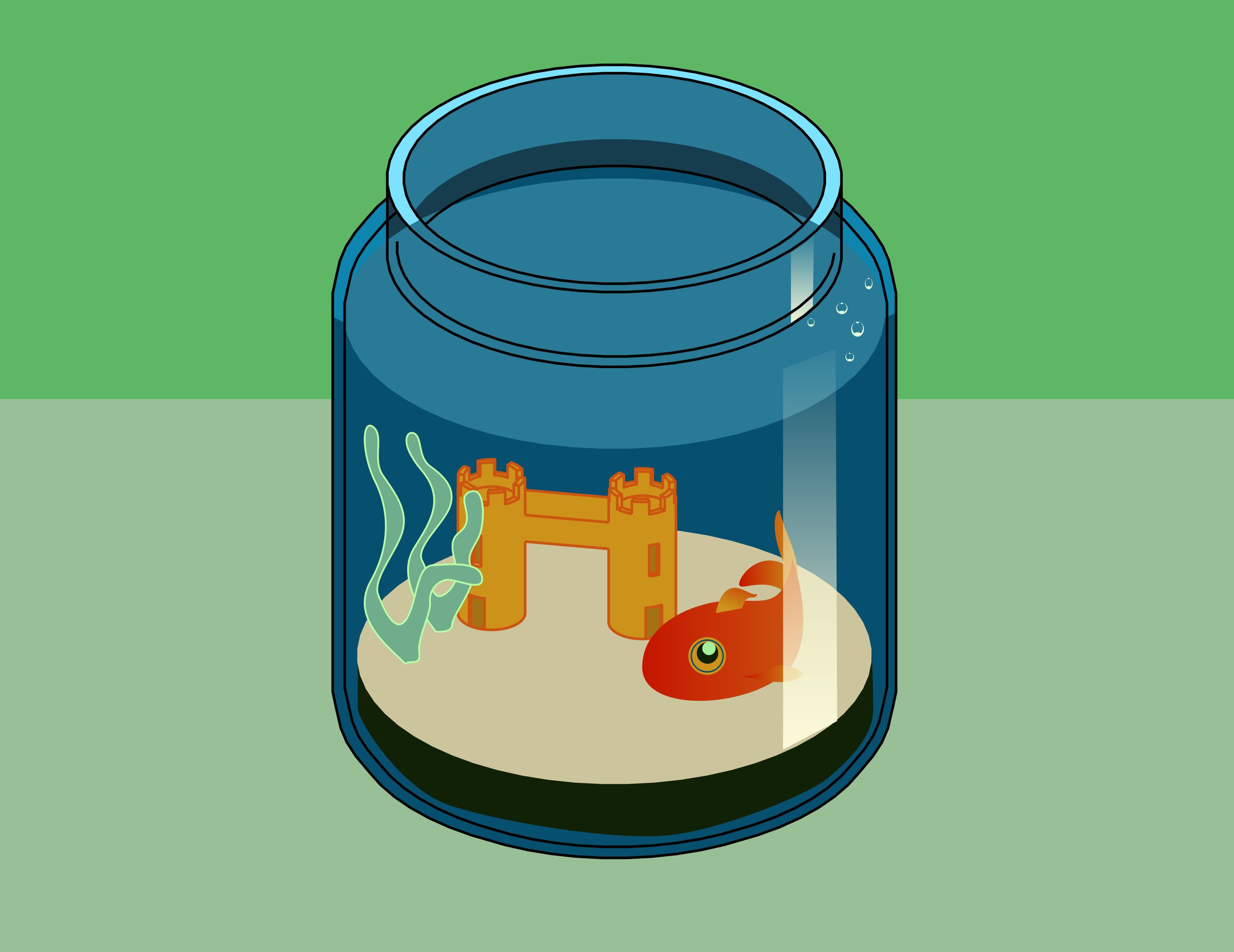
The “fishbowl effect” is often used as a metaphor for personal growth, but it is more than just a motivational concept; it reflects a deeper truth about environment, expectations, and human potential. The common claim is simple: a goldfish will grow only as large as its environment allows. Place it in a small bowl, and it remains small. Place it in a pond, and it expands dramatically. Whether or not the biological claim is perfectly precise, the underlying principle holds undeniable weight in human development: environment shapes outcomes.
In human terms, the “bowl” is not glass; it is social, cultural, and institutional. It is the combination of people we interact with, the norms we absorb, and the expectations placed upon us. These forces quietly define what feels possible, acceptable, and worth striving for. While effort, discipline, and ambition are essential, they do not operate in isolation. They are either amplified or constrained by the environments in which they exist.
Consider the role of expectations. In a low-expectation environment, mediocrity becomes normalized. Showing up late, delivering average work, or avoiding accountability becomes acceptable because it is common. Over time, individuals internalize these standards, not out of laziness, but out of adaptation. Humans are wired to calibrate themselves to their surroundings. If no one around you is pushing boundaries, it becomes difficult to justify pushing your own.
In contrast, high-performance environments create a different gravitational pull. When excellence is the baseline, individuals rise to meet it. Standards are not just stated; they are modeled consistently. In these environments, effort is reinforced, growth is expected, and stagnation feels out of place. The same individual who plateaued in one setting may thrive in another, not because they changed fundamentally, but because the environment demanded and supported more from them.
The same individual who plateaued in one setting may thrive in another...
This dynamic extends beyond professional settings into personal networks. The people we spend the most time with shape our thinking in subtle but profound ways. Conversations influence priorities. Habits become contagious. Even ambition can be socially transmitted. If those around you are focused on growth, learning, and impact, you are more likely to adopt those orientations yourself. If they are complacent or risk-averse, those tendencies can quietly become your own.
Importantly, the fishbowl effect is not just about limitation; it is also about expansion. Many individuals underestimate their potential simply because they have never been placed in an environment that reveals it. When someone transitions into a more demanding or inspiring setting, they often discover capabilities they did not know they had. This is why exposure matters. Access to new ideas, higher standards, and more ambitious peers can fundamentally reshape what a person believes is possible.
Access to new ideas, higher standards, and more ambitious peers can fundamentally reshape what a person believes is possible.
However, there is a tension worth acknowledging. Changing environments is not always easy or immediate. Careers, family obligations, and structural constraints can anchor individuals in suboptimal settings. This is where intentionality becomes critical. While one may not be able to completely replace their environment overnight, one can begin redesigning aspects of it. This might include seeking out new professional networks, consuming higher-quality content, or engaging in communities that reflect the standards they aspire to reach.
Leadership plays a central role in shaping these environments. In organizations, leaders effectively design the “bowl” in which others operate. They set expectations, reinforce behaviors, and define what success looks like. A leader who tolerates inconsistency or low standards creates an environment where growth is stunted. Conversely, a leader who cultivates clarity, accountability, and continuous improvement creates an environment where individuals can expand beyond their perceived limits. The secret sauce is to build your people to the point they can move on and flourish in new environments- that is true leadership.
...a leader who cultivates clarity, accountability, and continuous improvement creates an environment where individuals can expand beyond their perceived limits. The secret sauce is to build your people to the point they can move on and flourish in new environments- that is true leadership.
This insight is particularly relevant in civic and public sector contexts. Government institutions often operate within deeply entrenched cultures that can either inhibit or enable innovation. When bureaucratic inertia dominates, even the most capable individuals struggle to drive change. But when public institutions foster environments of experimentation, collaboration, and accountability, they unlock the potential of their workforce and improve outcomes for the communities they serve.
The fishbowl effect also challenges the notion of purely individual achievement. While personal responsibility is important, it is incomplete without acknowledging the structural and environmental factors that shape opportunity. Success is rarely just about working harder; it is often about working within or intentionally moving toward an environment that multiplies effort rather than suppresses it.
For individuals seeking growth, the implication is clear: audit your environment with the same rigor you apply to your goals. Ask whether your current “bowl” is expanding your thinking or containing it. Evaluate the standards you are surrounded by, the conversations you engage in, and the expectations that define your daily life. If they are not aligned with where you want to go, then change, gradual or immediate, is necessary.
Ask whether your current “bowl” is expanding your thinking or containing it.
For organizations and leaders, the mandate is equally clear: design environments that elevate people. This requires more than motivational language; it demands consistent standards, intentional culture building, and a commitment to developing others. When done effectively, the results are multiplicative. Individuals grow, teams perform at higher levels, and institutions become more capable of fulfilling their missions.
Ultimately, the lesson of the fishbowl effect is both humbling and empowering. It reminds us that we are not as independent from our surroundings as we might like to believe. At the same time, it offers a pathway to growth: change the environment, and you change the trajectory. Whether in a small bowl or a vast pond, the size of what we become is rarely accidental; it is shaped, reinforced, and limited by the world we inhabit.