Sitting Still Is Overrated: Movement is Where the Curriculum Begins
By: Lisa Genaro
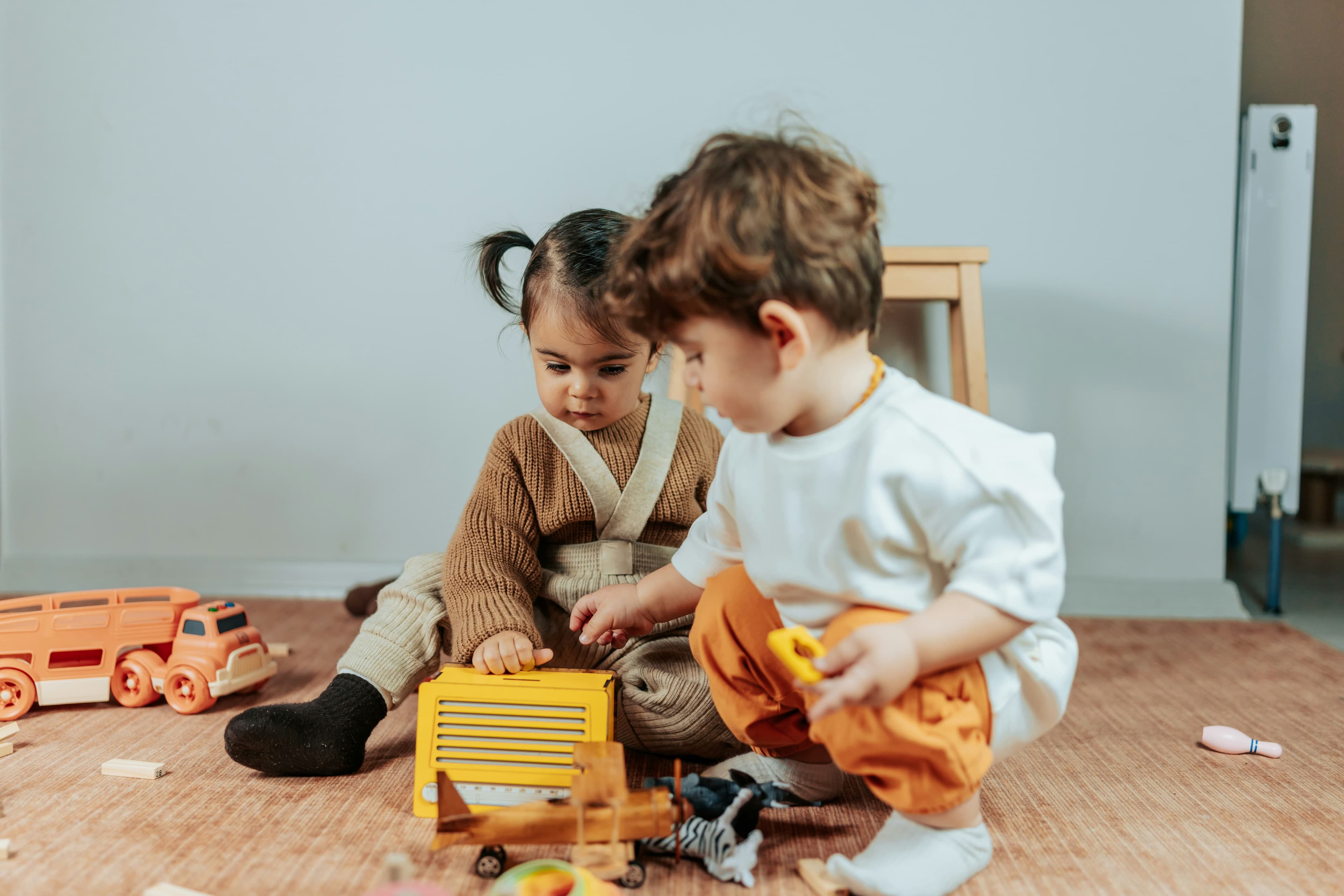
I have spent years watching young children learn, and some of the best moments have happened when there was very little for me to do except pay attention. A child spends twenty minutes building a tower, watches it fall, and starts again. Two children turn the kitchen area into a restaurant and spend most of their time deciding who is in charge. Someone gets frustrated. Someone walks away. Eventually, they figure it out, usually with a little help and a very strong opinion about who gets to hold the menu.
There is a lot happening in those moments. Children are learning patience, language, cooperation, and how to manage disappointment. But because there is no worksheet to bring home, we sometimes overlook how much work they have actually done.
Sometimes I feel like I am constantly explaining my classroom—why it looks chaotic, why it is always so busy, and why, for much of the day, most of my children are not sitting down. They are moving between activities, carrying blocks, rolling playdough, and having conversations that everyone apparently needs to hear. I understand that it can look like a lot. Some days, it sounds like a lot, too. But spend a few minutes watching what they are doing, and that busyness starts to make sense.
Children were never meant to be robots. Their bodies need to move, and movement is part of how young children explore and learn. They need opportunities to climb, stretch, balance, build, and use their hands. Of course, we work on listening, following directions, and coming together as a group. Those skills matter. But sitting still is not the only way to show that a child is paying attention, and a quiet room is not the only place learning happens.
That is one reason Finland’s emphasis on play and movement resonates with me. It makes room for the way young children naturally engage with the world. I wish I spent less time explaining why my classroom is busy and more time showing people what is happening in that busyness. Watch the child rebuilding a tower, negotiating a role in pretend play, or figuring out how to connect two pieces of a train track. There is purpose there, even when every chair is empty.
I still make homemade playdough in my classroom using the same recipe I have used for years. And yes, it gets messy. But while the children squeeze, roll, flatten, and pull it apart, they are strengthening the muscles they will eventually use to write. They have ideas to try, tools to share, and things to talk about. There may be nothing to send home—and probably a fair amount to clean up—but that does not mean there was nothing learned.
That connection between play and learning is what I appreciate about the Finnish approach. We want children to become confident writers, but we sometimes rush past the experiences that help them get there. Before we ask them to hold a pencil, we can let them work with their hands. We can introduce new skills while still giving them time to explore their own ideas. A table full of playdough may look simple, but after years in the classroom, I know how much can happen around it.
Here, we spend a lot of time preparing children for what comes next. Preschool is preparation for kindergarten. Kindergarten is preparation for first grade. Somewhere along the way, we have to ask when children get to enjoy the age they actually are. Being four is already a full-time job. There are friendships to figure out, feelings to manage, and jackets that somehow turn inside out every single day.
I understand why parents worry. They want their children to do well, and they hear so much about what children should know before kindergarten. It is easy to become concerned when someone else’s child is reading and yours is still more interested in carrying rocks around in their pockets. But one skill does not tell us everything about a child’s development. I want to know whether a child can ask for help, try something difficult, share an idea, or recover when something does not go their way. Those things matter, too.
A classroom centered on play requires thoughtful teaching. We plan, observe, introduce vocabulary, ask questions, and notice who needs support. An argument over a toy can become a lesson in expressing feelings and listening to another person. Of course, that does not mean I stand there admiring the learning while two children argue over the same toy truck in a room full of toy trucks. I help them work through it. That is part of teaching.
We also have to recognize when to give children a little more time. Sometimes the hardest thing for an adult to do is wait. We can solve the disagreement faster or build the tower so it stays up. But children need a chance to try before we do everything for them.
Some of the biggest accomplishments in my classroom would look fairly ordinary to someone passing by. A child asks a friend to play. Another tries again instead of giving up. A child who has been watching an activity from a distance finally decides to join. These are the things I get excited about because I know how much they can mean.
Children develop differently, and we see that every day. One learns letters quickly, while another can build something I would never have thought to create. One speaks confidently in a group, while another needs time to feel comfortable. Our job is to understand those differences and help each child move forward without making them feel as though they are already behind.
We can introduce letters, numbers, and early writing while still protecting time for play. We can have expectations and give children room to grow into them. What concerns me is how easily the pressure for visible results can take over. A completed worksheet is easy to show someone. Explaining how a child learned to handle frustration takes a little more conversation, but it is a conversation worth having.
When I think about what I want children to take from my classroom, I hope they leave curious, confident, and willing to try. I hope they know they can ask questions and make mistakes. I hope school feels like a place where they belong.
There is plenty of time ahead for deadlines, grades, and worrying about what comes next. Right now, they are learning how to be part of a classroom, how to be a friend, and how to do things for themselves. That deserves our time and attention.
Let them play. Let them make a mess. Let the kids be kids.