Put Down the Worksheet. Take Students to Broadway
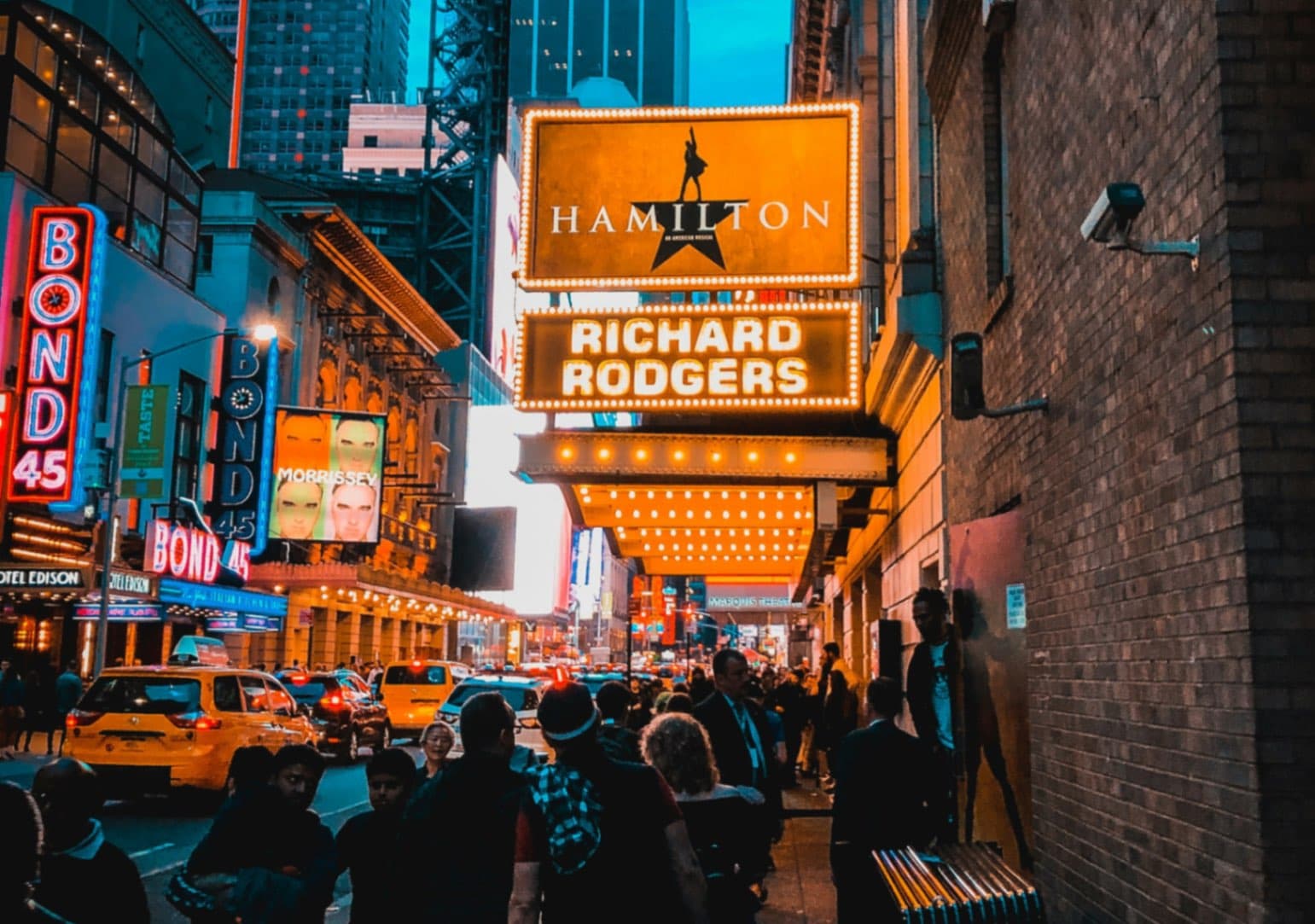
I have seen Hamilton twice. And yes, I paid to see it twice. I am an avid Broadway goer. I try to see at least two shows a month, and when I really love something, I will happily go back. Some people don't understand that. You already saw it. Why would you see it again? Because the second time, I wasn't watching the same show. I noticed different words, different characters, and different choices. I walked out thinking about history, ambition, immigration, politics, power, and legacy. Somewhere in all of that, the teacher in me started thinking, "This is exactly what we keep saying we want children to do in school." Think. Not memorize. Not fill in another bubble. Actually think.
Now, let me be clear: I am not a high school teacher. Put me in a preschool classroom and I am completely at home. Hand me twenty-five teenagers and ask me to lead a debate about the American Revolution, and we may all need a minute. But that's exactly my point. I don't have to teach high school to recognize an incredible learning opportunity when I see one. Hamilton gives teachers a way to take history off the page and turn it into something students can question, debate, and actually feel connected to. Most students will eventually encounter Alexander Hamilton in a textbook. They will learn about the Revolutionary War, George Washington, Thomas Jefferson, and Aaron Burr. Then imagine that same student walking into a Broadway theater. The lights go down, and American history starts rapping. Suddenly Hamilton isn't simply a name to memorize. He's an immigrant. He's brilliant, arrogant, and ambitious. Aaron Burr isn't simply "the man who shot Hamilton." He's complicated. And history becomes complicated too. That's where learning gets interesting.
That is why expanding young people's access to Broadway and the performing arts should be viewed as much more than a nice field trip. Organizations such as TDF have been doing this work for years. TDF reports that its education programs bring approximately 12,000 New York City public-school students to theater and dance performances annually at no cost to schools or students, with educational experiences that can include workshops and discussions. That isn't simply arts enrichment. That's education. Why did Lin-Manuel Miranda choose hip-hop to tell this story? Why is Burr so important to the way we understand Hamilton? Whose perspective are we hearing? Whose perspective might be missing? And then there is the question at the heart of the show: Who gets to tell your story? Again, I don't teach teenagers, but give a good high school teacher that question and imagine where the conversation could go—history, writing, identity, perspective, bias, and legacy.
Broadway also does something our classrooms don't always leave enough room for: there isn't necessarily one correct answer. Twenty-five students can watch the exact same performance and walk out having noticed twenty-five different things. One hears the music. Another notices the costumes. Someone becomes fascinated with the lighting. Another questions the history. And maybe the student who barely raises their hand suddenly has a lot to say. Teachers know that student. Sometimes the child we think isn't interested simply hasn't been given the thing that interests them yet.
I understand the power of theater personally, too. I saw the original CATS when I was a child. Years later, as an adult, I saw CATS: The Jellicle Ball. I remembered the music, the costumes, and, more than anything, the feeling of seeing that theatrical world as a child. Then I experienced The Jellicle Ball as an adult and watched something familiar become something completely different. The production reimagined CATS through ballroom culture, opening conversations about culture, identity, community, dance, fashion, representation, and New York history. In 2026, TDF partnered with the production on an accessibility initiative designed to bring more than 3,000 people to the theater at low or no cost, including more than 2,000 students attending for free through TDF programs.
Underneath that production is an incredible lesson for students: Here is something that already exists. What happens when another generation is brave enough to rethink it? That is creativity, but it is also critical thinking. We constantly tell students to "think outside the box," yet sometimes we hand them the box, tell them exactly what belongs inside it, and then wonder why they struggle to think differently. The arts do the opposite. Here is the original. Study it. Understand it. Respect what came before you. Now, what would you do with it?
I experienced CATS one way as a child and an entirely different way as an adult. That is part of the magic of theater. Art doesn't have to remain frozen in the generation that created it. It can evolve. It can introduce new voices and make us reconsider something we thought we already understood. Sometimes innovation begins by looking at something that has been sitting in front of everyone for years and asking, What if we looked at this differently? That question doesn't only create artists. It creates thinkers. And eventually, it creates leaders.
This is why schools shouldn't treat Broadway as the reward after the learning. Broadway can be part of the learning. Before students see Hamilton, let them investigate the actual history. Afterward, let them fact-check the show. What really happened? What was changed? Why? What perspectives are missing? Let them rewrite a scene, design a costume, create a marketing campaign, write a review, or research the people working backstage. One theatre ticket can touch history, ELA, music, art, economics, design, technology, communication, and public speaking. Nobody had to convince the students they were learning. They were already doing it.
There are children growing up a subway ride away from Broadway who have never stepped inside a Broadway theater. Think about that. They live in one of the greatest cultural cities in the world, yet that world can still feel like it belongs to somebody else. That is why access matters. When students enter a theater, I don't only want them looking at the actors. Look up. Someone designed those lights. Someone built that set. Someone engineered the sound. Someone designed those costumes. There are musicians, stage managers, choreographers, carpenters, electricians, writers, producers, marketers, and technicians behind every production. Maybe the student sitting in Row G doesn't want to become an actor. Maybe she wants to design the stage. Maybe he becomes fascinated by sound engineering. Maybe another student starts writing. We have no idea what one experience might unlock.
We spend so much time talking about preparing students for the future. We talk about innovation, leadership, creativity, and "outside-the-box thinking. "But we cannot demand imagination from students while giving them fewer opportunities to experience things that ignite it. Creativity isn't only for artists. Imagination isn't only for writers. Perspective isn't only for actors. Those are leadership skills.
I have seen Hamilton twice. I saw CATS as a child and then watched another generation completely reimagine it as an adult. Those experiences remind me why the arts matter. Good art makes us look again. It makes us question. It makes us curious. Sometimes it takes something we thought we understood and makes us see it completely differently. Isn't that exactly what education is supposed to do?
So yes, let's get more New York City students into Broadway theaters. But let's stop talking about it as though we're simply giving them a ticket to a show. We're exposing them to possibility. The next great playwright might be sitting in that audience. So might the next engineer, teacher, entrepreneur, or mayor. We have absolutely no idea.
Give them the seat and let's find out.