Mispronounced Names, Missed Identities: Lessons in Classroom Inclusion
In my years as an early childhood educator, I have navigated some awkward and embarrassing parent teacher conferences. The one that hurts me the most is the one in which a mother very kindly and lovingly corrected my pronunciation of her daughter's name. I had the first two syllables correct, but I had unrecognizably mangled the third, thereby changing the child's name completely.
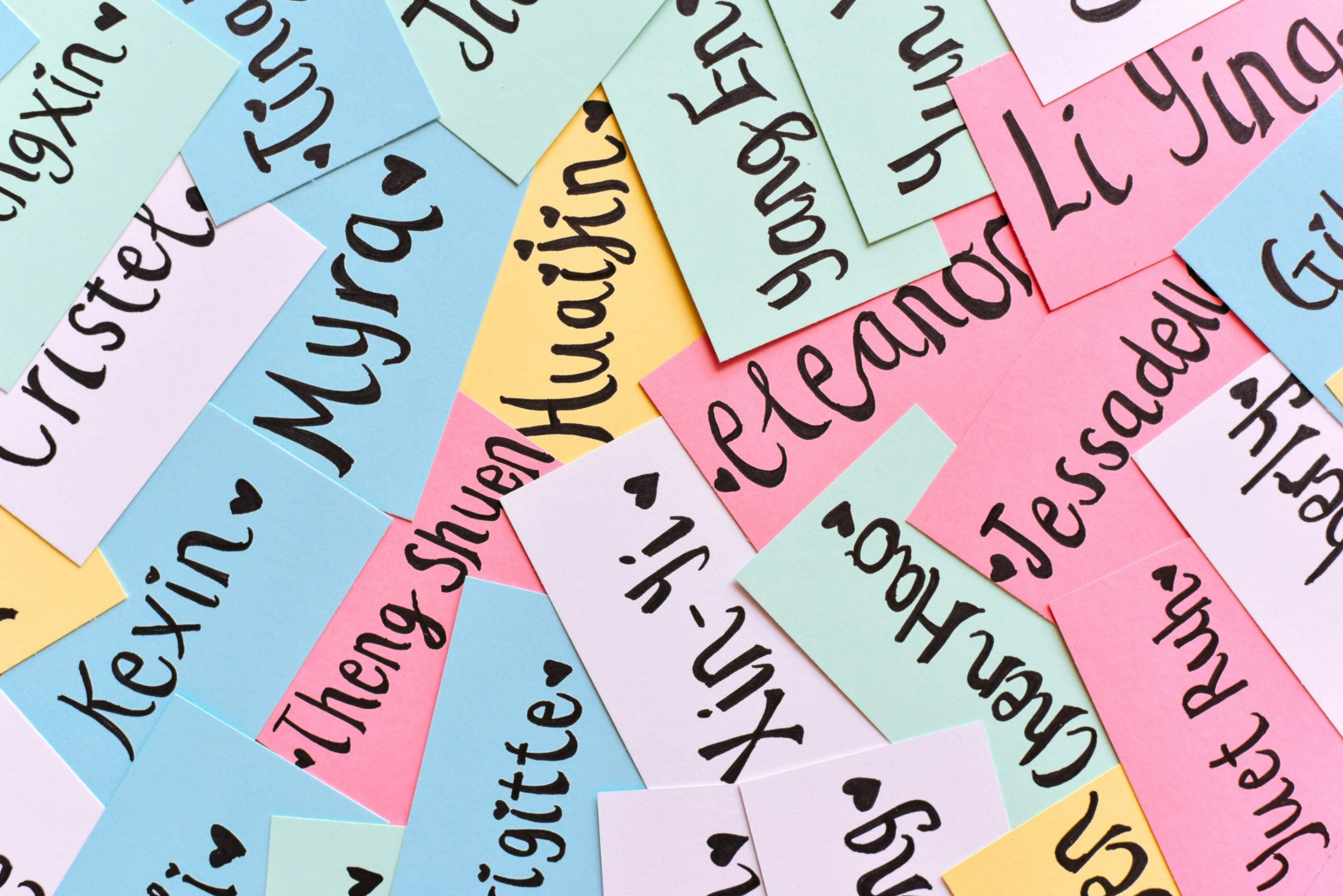
I was perhaps most mortified because the first unit of study in my classroom every year is Learning Our Beautiful Names. It is a practice in which I take great pride. Our names are our identity. They are sacred, special, chosen and worthy of celebration. I dedicate the beginning of the school year to ensuring that everyone knows everyone's name in our class. It is a cornerstone of how I build community in my classroom. And I had missed the mark. Big time.
In that moment, I understood the value of correct pronunciation and intentional celebration of students’ names. Names are not only identifiers—they are vessels of cultural history, personal identity, and familial legacy. Mispronouncing or neglecting the significance of a name can inadvertently cause harm, while consistently honoring names fosters belonging and dignity (Kohli and Solórzano 2012).
When names are honored, students are more likely to feel seen and valued, which contributes to stronger engagement and academic performance.
Drawing upon my day-to-day experiences as an early childhood educator trained in the Responsive Classroom (RC) model and the Capturing Kids’ Hearts (CKH) framework, I now utilize culturally inclusive approaches that emphasize social-emotional learning (SEL), community-building, and student engagement—core competencies that extend beyond the classroom and into broader public service contexts.
As a practitioner trained in the Responsive Classroom approach to teaching and classroom management, we begin each day in my class with a morning meeting comprised of 4 components: Greeting, Share, Activity, and Today's News and Announcements. The morning meeting takes around 10 minutes of instructional time and sets the tone and agenda for the day ahead. On the very first day of school, I will begin the Morning Meeting by introducing each student by name and instructing the remainder of the class to chorally greet each student with "Good morning (name)." Each student hears their name spoken aloud by their teacher and their classmates - every day, without exceptions.
As we progress through the year, our greeting ritual will become more complex and allow for student choice, student leadership, and inclusion of greetings in the home languages of the students. The one thing that does not change is that every day, every student hears their beautiful name spoken aloud and hears a greeting to welcome them to another day of learning. Likewise, when a student is absent, we acknowledge their name and absence and hope they will return soon to our class. Every single morning, we focus on naming one another and wishing one another well. We make no exceptions, every day begins with a morning meeting and every morning meeting begins by greeting everyone in the room by name. We are glad each student is here today and we notice and acknowledge those who are absent.
My school utilizes the Capturing Kids Hearts program. The sharing component of the RC model in which I am trained is complemented by the daily practice of Good Things. In this 1-3 minutes, students quickly share out a good thing in their life. We coach this to be experience based and it does not take long for students to begin to notice the Good Things in their lives. I saw a rainbow on the way to school. We had ice cream for dessert last night. My cat cuddled with me on the sofa. Gratitude is contagious and builds a different aspect of community. We know who we are as a class - our names and what makes us happy. Both practices help us to define ourselves as a unique collective of unique individuals. We still acknowledge and process loss and the "not good things" that students bring into the classroom, but we hold a sacred space to recognize and acknowledge "good things" at the start of each day. It does not take long for students to begin actively seeking out good things to share. Our classroom is a place where we belong and where we name and notice good things.
It was several weeks into the school year when parent teacher conference time came around. We had moved past "Our Beautiful Names" and were beginning to dig into our curriculum content. I was well prepared. I had the students' work samples, benchmark scores, and some notes in front of me. I began to confidently discuss a student's academics when her mother very kindly and gently stopped me in my tracks. "What did you call her? That's not her name." I mortified to learn that I was mispronouncing a student's name. It was a simple, honest mistake, but one that weighed on me. I was not so worried about having made a mistake. I was heartsick to think she had not felt safe and confident enough to correct me. Instead of letting me know that I was erroneous in my pronunciation, this precious child had simply assumed a new identity and was being called by everyone in her new environment by the wrong name. It became my responsibility to acknowledge my mistake, apologize both to the student and the class, and to require everyone to unlearn and relearn this child's name in order to respect her true identity.
The conversations that rose out of my public apology and correction strengthened my conviction in starting the new year with a celebration of names. The students were understanding and forgiving of my mistake. They, too, wanted to say her name correctly. We all slipped up...we had to course correct after weeks of saying it wrong, but we got there. And I hope they all took away a sense of strength in their identity as individuals with beautiful names and as a members of a community that practices gratitude, and is not too proud to acknowledge and correct the very human mistakes we all make, even when we are trying our very best to do better.
I reflect upon a particularly humbling experience during a parent-teacher conference, where a student’s mother gently corrected the mispronunciation of her daughter’s name. Despite a classroom culture centered on identity and belonging, I had unknowingly altered the student’s identity by mispronouncing her name. More troubling was the realization that the student had not felt comfortable correcting the mistake herself. It was as if she was willing to let others redefine her, internalizing the deeply disturbing message: 'I'm who you say I am, not who I thought I was'. This prompted my sincere public apology and a recommitment to intentional name use—an act that became a turning point for the classroom culture and my practice.
1. Centering Identity Through Names
At the beginning of each academic year, we implement a unit called “Learning Our Beautiful Names.” The goal is to ensure that every student’s name is known, pronounced correctly, and celebrated. This practice is more than a courtesy—it is a direct application of culturally relevant pedagogy, which emphasizes recognizing and incorporating students’ cultural references into learning environments (Ladson-Billings 2009).
Research shows that mispronouncing students’ names can result in feelings of marginalization and diminish a student’s sense of belonging (Kohli and Solórzano 2012). When names are honored, students are more likely to feel seen and valued, which contributes to stronger engagement and academic performance. For public sector professionals, this principle translates into honoring individual identities as a practice of equity and respect in any setting where client interaction or community engagement occurs.
2. The Responsive Classroom Morning Meeting
One of the cornerstone practices in our classroom is the Morning Meeting, a daily ritual inspired by the Responsive Classroom approach. It consists of four components: Greeting, Share, Activity, and Morning Message. Each day begins by greeting every student by name, which reinforces recognition and inclusion. Students also acknowledge the absence of peers, creating a culture of collective care and awareness (Center for Responsive Schools 2020).
Empirical evidence supports the effectiveness of Morning Meetings. They have been associated with improved student behavior, increased academic engagement, and enhanced classroom community (Rimm-Kaufman and Sandilos 2011). These benefits are not limited to education. In public organizations, similar rituals—such as daily check-ins or team huddles—can promote team cohesion and morale, especially in emotionally demanding fields like social work or community health.
3. Emotional Literacy and Gratitude Practices
Complementing the RC model is the CKH framework’s “Good Things” practice, where students share positive experiences each morning. This activity cultivates a mindset of gratitude and encourages students to reflect on aspects of life that bring them joy. These simple, structured moments support emotional literacy and foster a positive psychological climate (Froh, Sefick, and Emmons 2008).
CASEL identifies self-awareness and social awareness as critical SEL competencies (CASEL 2023). By engaging in daily gratitude practices, students not only learn to express themselves but also listen attentively to others, enhancing empathy and interpersonal skills. These are competencies that translate well into any public service environment where emotional intelligence and human connection are essential for effective service delivery.
4. Accountability, Apology, and Community Repair
Intentional decisions to publicly acknowledge and correct the mispronunciation of a student’s name exemplifies a commitment to accountability and integrity. This act of public apology and the collective relearning process modeled humility and created a teachable moment for the entire class. It reinforced the idea that everyone, including the teacher, is responsible for maintaining a respectful and inclusive environment.
Restorative justice principles, often used in education and justice systems, emphasize repairing harm and restoring relationships (Zehr 2015). These actions align with these principles, demonstrating how acknowledging mistakes can lead to stronger community bonds. Implementing restorative practices in public settings can help rebuild trust and foster a culture of continuous learning and shared responsibility.
Key Takeaways
Names matter deeply. Correctly learning and pronouncing names is a fundamental act of respect and identity affirmation. This principle is applicable across all public service settings where human dignity is central.
Routine rituals build community. Daily practices like Morning Meetings and gratitude sharing create a sense of belonging and emotional safety. These are scalable to team-based environments in government or nonprofit organizations.
Gratitude promotes well-being. Encouraging reflection on positive experiences enhances emotional resilience and promotes prosocial behavior, benefiting both individuals and communities.
Accountability strengthens integrity. Owning mistakes and making public corrections can build trust and demonstrate ethical leadership in any public-serving institution.
Modeling vulnerability is powerful. Leaders who admit errors and take corrective action model behaviors that build inclusive, responsive, and values-driven communities.
References
CASEL (Collaborative for Academic, Social, and Emotional Learning). 2023. What is SEL? https://casel.org/what-is-sel/.
Center for Responsive Schools. 2020. Responsive Classroom: Morning Meeting Book. Turners Falls, MA: Center for Responsive Schools.
Froh, Jeffrey J., Robert Sefick, and Robert A. Emmons. 2008. “Counting Blessings in Early Adolescents: An Experimental Study of Gratitude and Subjective Well-Being.” Journal of School Psychology 46 (2): 213–33.
Kohli, Rita, and Daniel G. Solórzano. 2012. “Teachers, Please Learn Our Names! Racial Microaggressions and the K–12 Classroom.” Race Ethnicity and Education 15 (4): 441–62.
Ladson-Billings, Gloria. 2009. The Dreamkeepers: Successful Teachers of African American Children. 2nd ed. San Francisco: Jossey-Bass.
Rimm-Kaufman, Sara E., and Lia E. Sandilos. 2011. “Improving Students’ Relationships with Teachers.” American Psychological Association. https://www.apa.org/education-career/k12/relationships.
Zehr, Howard. 2015. The Little Book of Restorative Justice. Revised and Updated Edition. New York: Good Books.