I Became a Principal in 1986: The Job Description Hasn't Stopped Growing
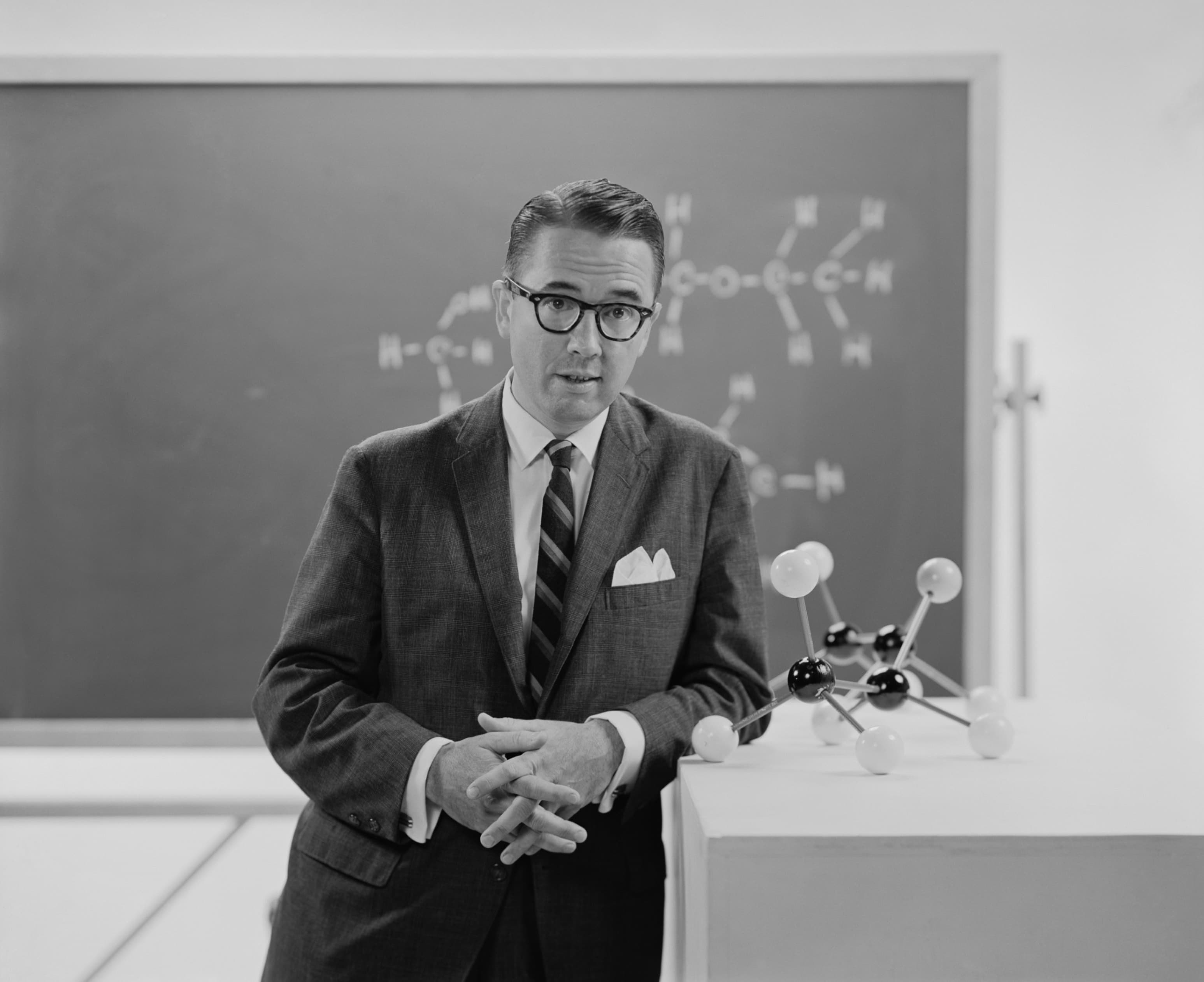
In 1972, the loudest thing in my school was the mimeograph. Purple ink stained my fingers, a smoking lounge sat two doors down from the teachers' room, and the biggest Tuesday crisis was a jammed filmstrip projector.
Fast forward to a random Tuesday last spring. Before the coffee cooled, the principal who now fills this role likely answered a parent email at 6:47 a.m. about a TikTok fight that had not happened yet, refereed a debate over whether ChatGPT counts as plagiarism, revised an active-shooter drill, and still had two teacher observations before lunch.
Same building. Same age of kid. Entirely different job.
If you are eyeing school leadership, or already sitting in the chair wondering if your exhaustion is normal, pull up a seat. Here is what my years in public education has taught me, and what I wish somebody had slipped under my door the night before I opened my first principal's office in 1986.
The Job Quietly Tripled. The Day Did Not.
I inherited my first principalship in the long shadow of A Nation at Risk, the 1983 federal report that warned of a "rising tide of mediocrity" in American schools (National Commission on Excellence in Education 1983). Overnight, principals stopped being building managers and became instructional reformers. Then came No Child Left Behind. Then Race to the Top. Then a pandemic. Then culture wars. Then AI.
Each wave added responsibilities. None ever quite removed the old ones.
The receipts are ugly. Nearly one in five principals leaves their school every year, climbing to 21 percent in high-poverty schools (Learning Policy Institute and NASSP 2023). One in two now expects to exit the profession within three years (NASSP 2022). That is not weakness. That is a role that keeps growing while the school day stays exactly 6.5 hours long.
The Family at the Kitchen Table Isn't the Family the Handbook Imagined
Principal-prep in the 1980s was designed for a Norman Rockwell demographic. In 1970, 92 percent of American children lived with two parents, and married couples ran 71 percent of households. By 2022, married couples ran just 47 percent (U.S. Census Bureau 2024). Grandparents, guardians, blended households, and cohabiting partners now raise the kids who fill our hallways.
Which means a permission slip that asks for "parent signature" is not neutral. A single Tuesday-at-6-p.m. back-to-school night is not equity. A discipline call that reflexively asks for "Mom or Dad" can wound a kid who lives with an aunt.
New leaders, this is your first mindset shift. Assume nothing about who is picking up the child. Ask. Then rebuild your calendar, your paperwork, and your emergency protocols around the family you actually have, not the one the 1975 policy manual sketched.
Politics Used to Stop at the Front Door. Now It Livestreams.
In 1986, school board meetings were sleepy affairs where the fiercest debate was cafeteria mystery meat. Today, they are livestreamed, weaponized, and clipped for social media before the gavel drops. In Crook County, Oregon, a superintendent was pushed out less than six months into her tenure over a national-scale fight about parental rights and curriculum (Oregon Public Broadcasting 2025). She is not the exception. She is the new baseline.
Book bans, pronoun policies, immigration anxieties, religious accommodations, and viral parking-lot videos all now land on the principal's desk, often before homeroom. A misstep that in 1986 earned a stern phone call today earns a viral post before dismissal.
My hard-won counsel: get clear on your convictions before the storm arrives, because the storm always arrives. Write down what you believe about children, safety, equity, and families. When the pressure hits, you will not have time to figure it out. You will only have time to act from what is already inside you.
Technology Went From Servant to Sparring Partner
In 1972, technology meant the ditto machine. In 1986, I was thrilled about one Apple IIe in the library. In 2013, we were still bickering about cell phones. Today, artificial intelligence tops the list of state EdTech priorities for the very first time (SETDA 2025).
Meanwhile, pandemic relief funds have expired, budgets are shrinking, and districts are juggling hundreds of edtech tools while parents ask, reasonably, which ones are actually teaching their child (Lightspeed Systems 2025). Researchers now describe school leaders as catalysts, curators, champions, cultivators, and connectors of AI (Ghamrawi et al. 2025). Translation: your job is no longer to master the tool. Your job is to build a culture that can absorb the next tool, and the one after that, without losing sight of the kid in front of you.
Pick one AI use case per semester. Learn it deeply with your teachers. Evaluate it honestly. Do not chase every shiny thing, and please do not fake fluency. Kids can smell that from the back of the auditorium.
What I'd Slip Into 1986 Me's Briefcase
Four notes, and the ink would still be wet.
First, the loneliest part of leadership is not criticism. It is the decisions no one else can make for you. Build a personal board of directors early. Two peers in other buildings, one honest mentor, one friend outside education entirely. Call them before you are drowning, not after.
Second, protect your instructional core like it is oxygen. Budgets, buses, boilers, and board politics will eat every waking hour if you let them. A recent systematic review of nearly forty years of burnout research found that the leaders who lasted were the ones who stayed connected to teaching and learning, not the ones who mastered compliance (DeMatthews et al. 2024). Block classroom time every week and defend it like a starting quarterback defends the pocket.
Third, you are now a talent scout. About 411,500 U.S. teaching positions are either vacant or filled by educators not fully certified for the role, roughly one in eight (Learning Policy Institute 2025). Recruit like a college coach. Retain like a marriage counselor. Coach like a life depends on it, because one does.
Fourth, take care of your body. This job grades you on stamina. The cup does not refill in the school parking lot at 9 p.m. Sleep. Move. Eat food that grew from dirt. The kids need you here for the long game.
The Hardships Nobody Warns You About
Because false optimism has never helped anyone.
You will be second-guessed in public by people who have not spent five minutes in your building. You will make a call that hurts one family to protect twenty, and the one family will hate you, and you will lie awake wondering. You will lose a colleague to burnout and feel it in your chest for months. You will have to release a teacher who is genuinely trying but genuinely not right for children. You will grieve with families in ways no course prepared you for.
You will also be told, sometimes to your face, to smile more, worry less, and stop taking things so personally. Ignore that. Take it personally. Not to the point of destruction, but to the point of caring. The day school leadership stops feeling personal is the day you should hand in your keys.
The Ball Is in Your Hands
I started in 1972 believing a good school could change a life. Fifty-four years later, I know a good school leader can change a hundred lives at once, and a great one can change the trajectory of a neighborhood. That truth survived the mimeograph. It will survive the algorithm.
So here is the ball.
Veterans, mentor someone this year. Not eventually. This year. Pick one aspiring principal or brand-new AP and tell them what worked and what wrecked you.
Early-career readers, stop wondering. Shadow a principal. Ask hard questions. Sit through a board meeting. Then decide with your eyes wide open.
American public education does not need more people who want the title. It needs more people who want the work.
Which one are you?
References
DeMatthews, David E., David S. Knight, and Pedro Reyes. 2024. "Principal Burnout: A Systematic Review." SSRN Working Paper. https://papers.ssrn.com/sol3/papers.cfm?abstract_id=5096001.
Ghamrawi, Norma, Tarek Shal, and Najah A. R. Ghamrawi. 2025. "Effective School Leadership Enactment of GAI: A 5C's Framework for Integration." Frontiers in Education 10 (June). https://www.frontiersin.org/journals/education/articles/10.3389/feduc.2025.1561414/full.
Learning Policy Institute. 2025. "2025 Update: Latest National Scan Shows Teacher Shortages Persist." August 4. https://learningpolicyinstitute.org/blog/2025-update-latest-national-scan-shows-teacher-shortages-persist.
Learning Policy Institute and National Association of Secondary School Principals. 2023. Understanding and Addressing Principal Turnover: A Review of the Research. Palo Alto, CA: Learning Policy Institute. https://eed.communities.ed.gov/sites/default/files/2024-09/NASSP_LPI_Principal_Turnover_Research_Review_REPORT.pdf.
Lightspeed Systems. 2025. "2025 CoSN EdTech Leadership Report: 3 Urgent Challenges Facing Districts." May. https://www.lightspeedsystems.com/en_uk/blog/2025-cosn-edtech-leadership-report-3-urgent-challenges-facing-districts-and-how-lightspeed-is-meeting-the-moment/.
National Association of Secondary School Principals. 2022. Survey of America's School Leaders and High School Students. Reston, VA: NASSP. https://www.nassp.org/wp-content/uploads/2024/03/NAESP-NASSP-2024-Federal-Legislative-Agenda.pdf.
National Commission on Excellence in Education. 1983. A Nation at Risk: The Imperative for Educational Reform. Washington, DC: U.S. Department of Education. https://e4e.org/sites/default/files/a_nation_at_risk_1983.pdf.
Oregon Public Broadcasting. 2025. "Crook County School Board Ousts Superintendent After 6 Months." January 7. https://www.opb.org/article/2025/01/07/crook-county-oregon-education-school-activism-melissa-skinner-superintendent-parents/.
State Educational Technology Directors Association (SETDA). 2025. "New Report: Artificial Intelligence Tops List of State EdTech Priorities for the First Time." https://www.setda.org/news/press-releases/press-release-2025/press-release-new-report-artificial-intelligence-tops-list-of-state-edtech-priorities-for-the-first-time/.
U.S. Census Bureau. 2024. "Census Bureau Releases New Estimates on America's Families and Living Arrangements." May 30. https://www.census.gov/newsroom/press-releases/2024/families-living-arrangements.html.