From the Edge: A Rookie Cop's Life-Changing Lesson in Harlem
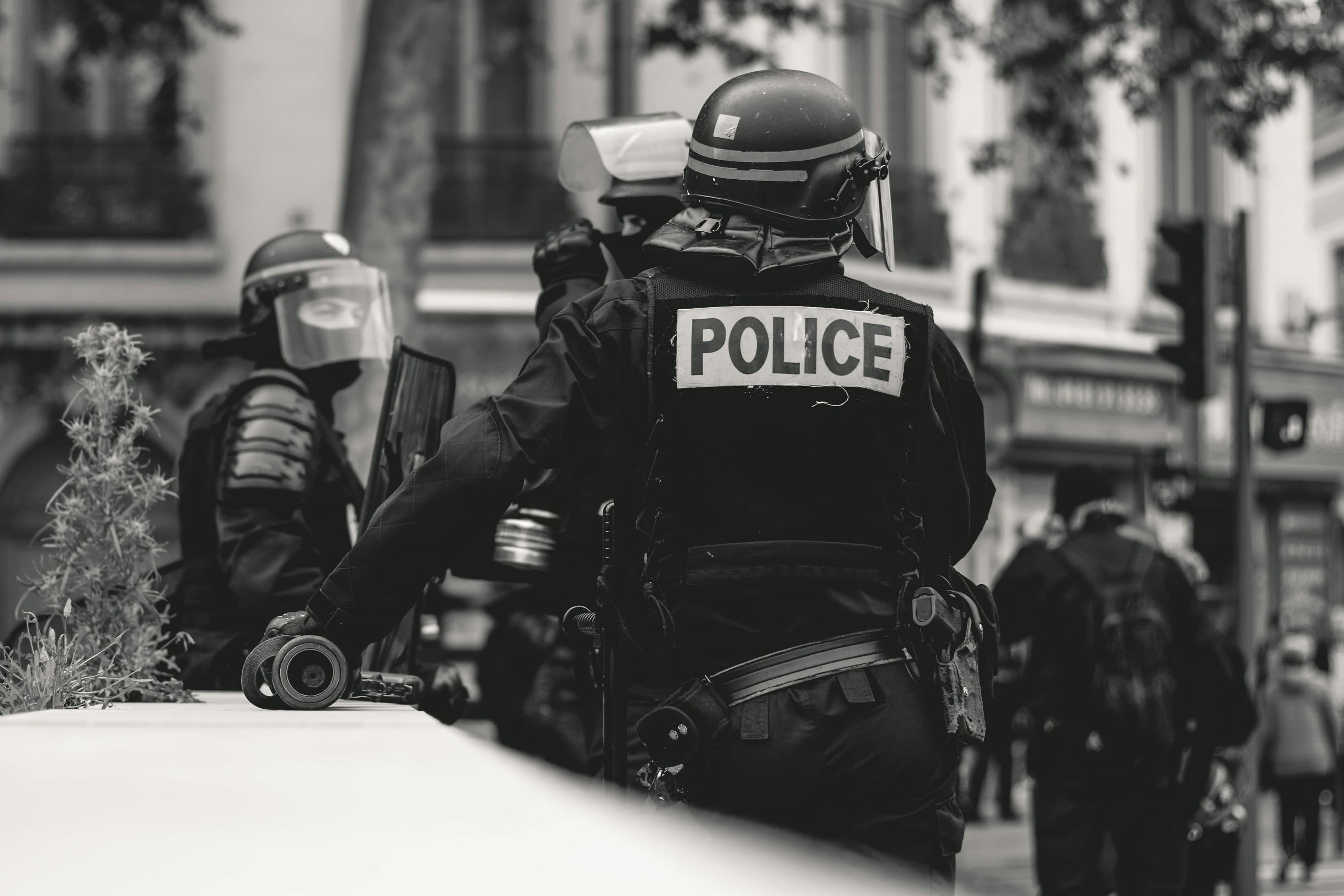
I’m a retired NYPD Detective. Over the course of my career, I had the honor of being named NYPD Detective of the Year and led numerous narcotics investigations, both nationally and internationally, spanning the Caribbean and South America. But despite the accolades and accomplishments, nothing shaped me more than a lesson I learned as a rookie cop in Harlem.
One afternoon, my partner—who is now an NYPD Major Case Homicide Detective—and I responded to a 911 call for an emotionally disturbed young man on the roof of 620 Lenox Avenue, Savoy Park Apartments. We were on the 4x12 shift (3 PM to 11:30 PM), the busiest hours of the day. As we rushed up the stairwell of the 15-plus-story building in the heart of Harlem, the sounds of the city filled the air. When we reached the roof entrance, we found a young man kneeling, sobbing uncontrollably.
At first, I felt relief—at least he was on solid ground. I approached, speaking gently, trying to calm him down. But as I got closer, he suddenly screamed, “My brother! My brother! He’s going to jump!”
I swung open the door to the roof, and there he was—perched on the very edge. My heart pounded. This was my rookie year, and I was still fresh out of the Army, just months removed from serving. I took a step forward, making eye contact. The moment he saw me, he turned away and, without hesitation, stepped off the edge.
Instinct took over. I lunged, grabbing hold of him as his body dropped in front of me. The force nearly pulled me over with him. He was thin, but his weight was impossible to hold for long. I could feel myself slipping. My grip burned. My body tilted further over the edge.
Then, I felt a sharp pull on my gun belt—my partner had made it to the roof just in time. He pulled with everything he had, dragging me back inch by inch. What lasted only seconds felt like an eternity. And then, finally, together, we pulled the young man to safety.
We stood there, breathless. Then, without ceremony, we went back to our shift as if nothing had happened. Just another night on patrol.
A few weeks later, I received a notice to report to an office in downtown Manhattan. As a rookie, I naively assumed the department had heard about the rescue and wanted to recognize our efforts. I arrived at the office on Rector Street, noticing other officers there, but I had no idea what was coming.
Without warning, I was bombarded with questions. What was I doing on that rooftop? Why was I there at that time? Confused, I listened as they informed me that multiple complaints had been filed—alleging that I had been hanging a kid off the roof of the building.
My heart dropped.
I scrambled through my NYPD memo book, searching for my notes from that night. Panic set in. I had no preparation, no representation—just my word against the allegations. The union delegate sat across from me, expressionless. In that moment, I felt just like I had on that rooftop—dangling over the edge, about to fall. But this time, no one was reaching to save me.
“Perception is reality.”
To those who filed the complaint, their perception was that a cop was dangling a kid off a roof. They hadn’t heard the desperate 911 call. They hadn’t seen the chaos unfold. They hadn’t felt the weight of that young man slipping from my grasp. That was my reality. But their perception was about to become mine.
Thankfully, the young man came forward and told the truth. His mother had died just days before, and he and his little brother had been forced to move in with their abusive father. Overwhelmed by grief and fear, he had wanted to end his life. But instead of letting go, the NYPD saved him.
That night stayed with me for the rest of my career. It taught me a lesson that no award or accolade ever could—perception may shape reality, but truth will always stand on its own.
This experience underscores the complex relationship between law enforcement actions and public perception. The incident on the rooftop and the subsequent interrogation taught me that while officers may act with the best intentions, the interpretation of those actions by the public and within the judicial system can differ dramatically, influenced by broader societal attitudes towards police.
Research supports the notion that public trust in police is significantly shaped by both the reality and the perception of police behavior. According to a study by Tyler and Wakslak, the legitimacy of law enforcement is critically dependent not just on the effectiveness of police actions but also on their alignment with community values and expectations (Tyler, Tom R., and Cheryl J. Wakslak. "Profiling and Police Legitimacy: Procedural Justice, Attributions of Motive, and Acceptance of Police Authority." Criminology 42, no. 2 (2004): 253-281.).
This aligns with my own experience, where the initial public perception was heavily against my actions, viewed through a lens of suspicion and fear rather than one of understanding the context and the split-second decisions that had to be made. It was only through the truthful testimony of the young man involved that the narrative was corrected, illustrating the precarious balance officers must maintain between decisive action and public approval.
For those in municipal management and related fields, this story serves as a poignant reminder of the challenges faced in urban governance, particularly in the domains of law enforcement and public relations. Managing these challenges requires not only adherence to protocols and training but also a deep commitment to engaging with community perspectives and concerns.
Effective communication and community engagement are essential in shaping a more positive public perception. Programs that enhance transparency, such as body-worn cameras and public reporting of police activities, can play a significant role in this regard. A study by Yokum et al. demonstrated that the use of body-worn cameras reduced reports of police misconduct and use of force, highlighting the potential of technology to bridge gaps in trust and perception (Yokum, David, Anita Ravishankar, and Alexander Coppock. "Evaluating the Effects of Police Body-Worn Cameras: A Randomized Controlled Trial." The Journal of Criminal Law and Criminology 108, no. 4 (2018): 511-538.).
Fostering a culture of empathy and understanding within police forces can also mitigate conflicts arising from misperceptions. Training programs that emphasize de-escalation techniques and mental health awareness can equip officers with the skills needed to handle complex social interactions more effectively, potentially reducing the incidence of confrontations misinterpreted by the public.
Ultimately, my experience as a rookie cop in Harlem taught me that while perception can temporarily distort reality, truth and integrity stand resilient. For those of us involved in the intricate tapestry of municipal management and public safety, it is imperative that we continuously strive to align our actions with both the letter and the spirit of justice, ensuring that our efforts to protect and serve are understood and respected by the communities we serve.
Citations:
Tyler, Tom R., and Cheryl J. Wakslak. "Profiling and Police Legitimacy: Procedural Justice, Attributions of Motive, and Acceptance of Police Authority." Criminology 42, no. 2 (2004): 253-281.
Yokum, David, Anita Ravishankar, and Alexander Coppock. "Evaluating the Effects of Police Body-Worn Cameras: A Randomized Controlled Trial." The Journal of Criminal Law and Criminology 108, no. 4 (2018): 511-538.