Chaos and Chocolate Milk: Confessions of an Overconfident New Teacher
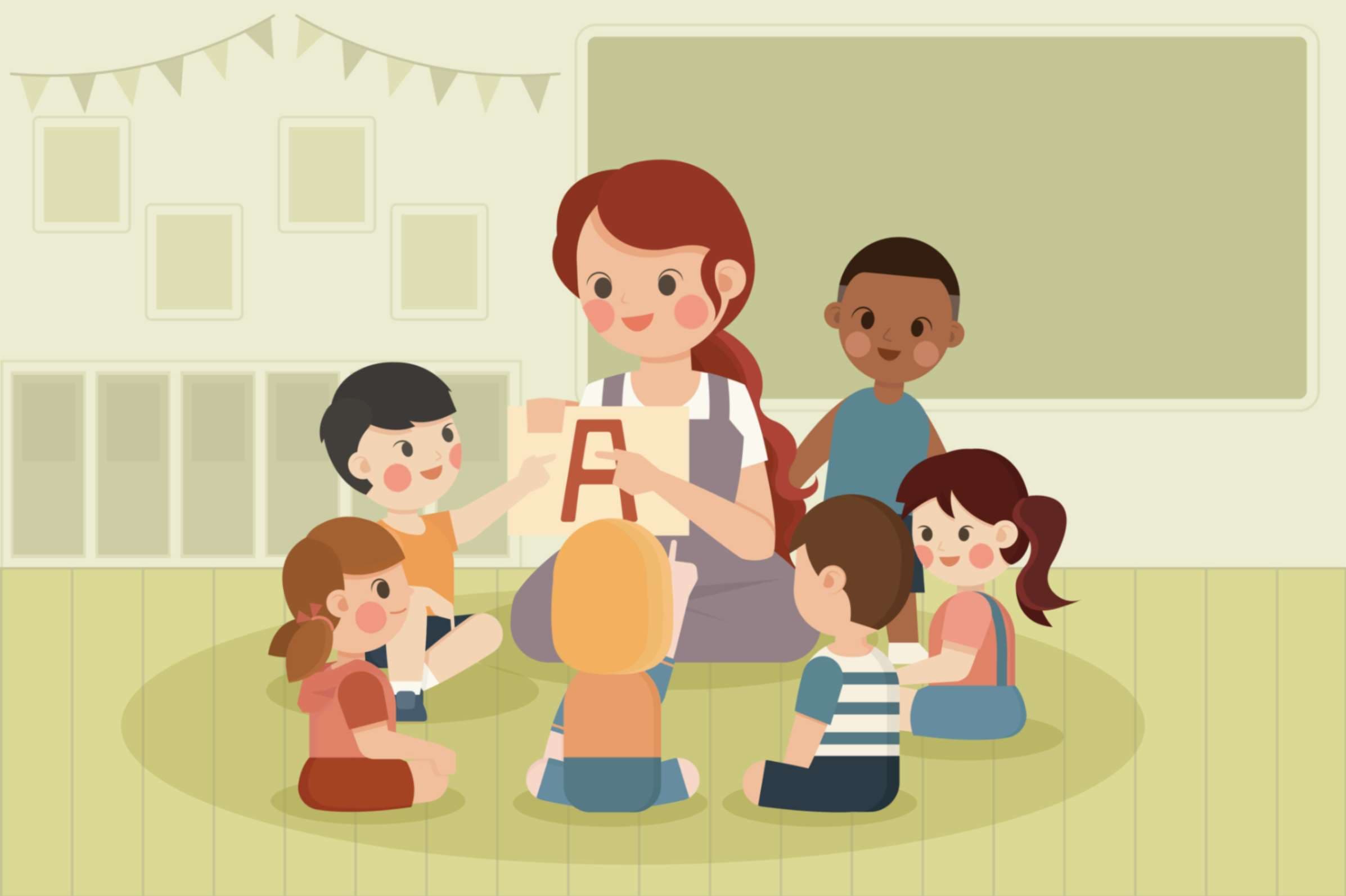
My first year teaching: I was not merely a teacher. I was a visionary. I believed I was about to singlehandedly dismantle educational inequity, fix the district’s test scores, and turn my fourth graders into a cohort of future Fortune 500 CEOs. Every student would read at least three grade levels above. Riley, who once stapled her sleeve to her math journal, would one day win a Pulitzer. Isabella, who thought the moon was made of cheese, would become a NASA engineer. Bentley, who only responded to questions with dinosaur sounds, would be a TED Talk sensation. I was delusional, but my bulletin boards were impeccable.
I rehearsed my “teacher voice” in the mirror. I had a clipboard for every conceivable situation, including “Unscheduled Fire Drill Protocol” and “Emergency Glitter Spill Response.” I even had a catchphrase I used to signal transitions: “Time to sparkle and shine!” My students, understandably, looked at me like I was a malfunctioning karaoke machine. But I was convinced that if I just performed hard enough, if I smiled wide enough, and if I laminated enough behavior charts, I would mold them into ideal students and become the teacher featured in district newsletters. Spoiler alert: That did not happen.
The Great Humbling: Chaos, Glitter, and Realization
About six weeks in, the glitter started to peel. Literally. I discovered that no amount of positive affirmations could compete with a classroom of 25 energetic elementary students in a building where the AC worked about as reliably as a vending machine in the Sahara. Riley declared she was allergic to math. Isabella threw regular tantrums because the lunchroom ran out of chocolate milk. Bentley attempted to eat a glue stick during reading group. I began to question if I had chosen the right profession or if I had simply wandered into a reality show called “America’s Most Overconfident Educators.”
That first year taught me that teaching is not about controlling every variable. It’s about learning to ride the chaos with grace, empathy, and a fair amount of caffeine. According to Linda Darling-Hammond, teacher effectiveness improves significantly not just with content knowledge, but with relationship-building and adaptability over time¹. I realized I didn’t need to be "Mr. Perfect" with pre-scripted lessons and a clipboard for every occasion. I needed to be the adult who listened, who adjusted, and who admitted when he didn’t have all the answers.
Embracing Authenticity in the Classroom
Fast forward to now. My wardrobe is slightly less color-coordinated, but still quite fabulous. My “teacher voice” sounds a lot more like my actual voice. And my catchphrase has been downgraded to a simple, “Let’s try that again, friends.” I still keep a clipboard, but now it usually holds a half-eaten granola bar and a crumpled note from Bentley that says, “You’re not that bad.” These days, I measure success not by how many students recite the multiplication table in unison, but by how many feel safe enough to try, fail, and try again.
I’ve learned to share more of myself with my students. When I was new, I thought vulnerability would undermine my authority. Research shows the opposite: teachers who demonstrate authenticity and emotional transparency build stronger relationships with students, resulting in increased engagement and academic outcomes². I tell them when I’ve had a hard morning. I admit when I forget how to do mental math. They see me as a human being, not a machine with a dry-erase marker. And in return, they show up more fully too.
Practical Shifts That Changed Everything
One of the most important shifts I made was moving from a rigid, performance-based classroom culture to one that values flexibility and student voice. In my first year, I would have panicked if a student challenged a classroom rule. Now, I see it as an opportunity for discussion. When Isabella questioned why we couldn’t do math outside “because the sun helps us think better,” I didn’t dismiss her. We took our clipboards to the playground. It was chaotic. A bee joined our group. Bentley named it “Scary Buzz.” But we got through the lesson, and more importantly, the students felt heard.
Additionally, I began integrating restorative practices instead of relying solely on behavior charts. Research from the New York State Education Department shows restorative approaches improve school climate and reduce suspensions³. When Riley had a meltdown over a paper cut, instead of issuing a demerit, we had a circle talk. It turned out she was worried about her grandmother’s surgery. That moment would have been lost if I stuck to my original, punitive system. Now, our classroom runs on empathy, not efficiency.
Advice for New Educators: Let Go of the Performance
To any new teacher reading this while laminating a “No Talking!” sign and sipping their third iced coffee of the day: take a breath. You do not have to be the perfect teacher. You do not need to fix every student or have cleverly themed bulletin boards. You just need to be present, consistent, and willing to learn. The students will remember how you made them feel, not how many color-coded anchor charts you had.
Build your routines, yes. Plan your lessons, absolutely. But don’t be afraid to deviate when a teachable moment arises. If a student brings up a topic that isn’t on your pacing guide but sparks curiosity, follow it. The best lessons often come unplanned. And remember, your growth matters too. As you evolve, so will your teaching. Just like my journey from clipboard-toting idealist to slightly frazzled but deeply committed educator, your path will be one of trial, error, and transformation. And if Bentley ever invites you to his imaginary dinosaur club, say yes. You won’t regret it.
Bibliography
Darling-Hammond, Linda. 2000. “Teacher Quality and Student Achievement: A Review of State Policy Evidence.” Education Policy Analysis Archives 8(1): 1-44. https://doi.org/10.14507/epaa.v8n1.2000.
Jennings, Patricia A., and Mark T. Greenberg. 2009. “The Prosocial Classroom: Teacher Social and Emotional Competence in Relation to Student and Classroom Outcomes.” Review of Educational Research 79(1): 491-525. https://doi.org/10.3102/0034654308325693.
New York State Education Department. 2019. “Restorative Practices Implementation Guide.” https://www.nysed.gov/common/nysed/files/programs/sss/restorativepracticesguide.pdf.
More from Education
Explore related articles on similar topics