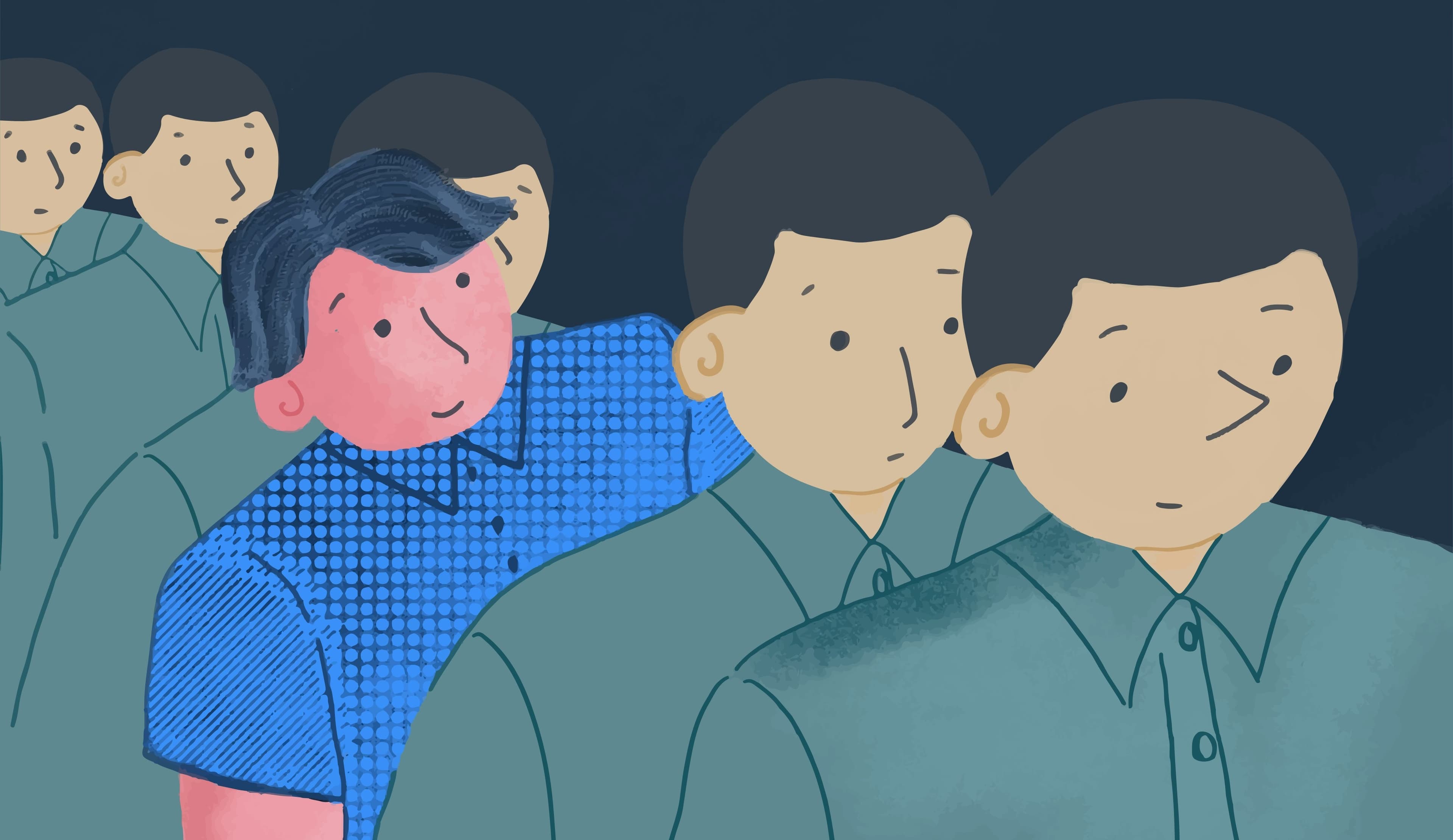
Breaking the Rules: Not Recklessly, but Intentionally
Breaking the Rules: The Neuroscience of Creating Your Own Path
There is a quiet lie most people are taught from an early age: follow the rules, do what’s expected, be realistic, and everything will work out. On the surface, it sounds responsible, safe, even intelligent. But beneath that advice is a system that conditions people not for fulfillment, but for conformity.
To be clear, these are not rules in the sense of laws or policies. These are social expectations. Linear paths. Unwritten agreements about what a “normal” life should look like, how fast you should move, what choices are acceptable, and what success is supposed to be.
If you want to be successful, truly successful, not just comfortable, you will eventually have to break those rules.
Not recklessly, but intentionally.
Because every time you play the game of life according to social expectations instead of personal alignment, you are training your brain to stay small.
When you consistently choose what you “should” do instead of what you actually want to do, your brain begins to optimize for predictability over possibility. This activates what neuroscientists often refer to as survival-based processing, patterns designed to minimize risk, conserve energy, and avoid uncertainty. These loops are efficient, but they are not expensive. They keep you functioning, but they rarely allow you to grow into something greater.
Over time, this creates a neurological ceiling. You become wired for mediocrity, not because you lack ability, but because you have conditioned your brain to avoid the very behaviors that lead to extraordinary outcomes. You are reinforcing familiarity instead of expansion, and repetition instead of transformation.
Playing it safe is not neutral. It is a form of training.
And it pulls you further away from your authenticity, the state where you are most creative, most energized, and most magnetic to opportunities and people. Authenticity is not just about self-expression. It is a biological advantage that changes how you think, act, and attract outcomes.
When you start making decisions based on your own internal compass instead of external expectations, your brain shifts. You begin activating exploratory networks rather than repetitive survival loops. This is where momentum begins to build in a completely different way.
Exploration is tied to dopamine, not the shallow, instant-gratification kind, but the deeper, goal-directed motivation system that drives curiosity, persistence, and long-term reward. When you choose your path, especially when it involves uncertainty, your brain releases dopamine in anticipation of discovery. That chemical signal reinforces effort and encourages forward movement. It tells your brain that what you are doing matters and that you should keep going.
This is why people who take aligned risks often appear more energized, more focused, and more resilient. They are not just motivated. They are neurologically engaged in what they are building.
At the same time, you begin strengthening your prefrontal cortex, the part of your brain responsible for decision-making, planning, and self-regulation. When you stop outsourcing your choices to societal norms and start making them yourself, you are quite literally training yourself to become the authority in your own life.
You are no longer reacting to expectations. You are directing your own trajectory.
That shift is powerful because one of the strongest predictors of long-term well-being is not success, status, or income. It is the feeling of agency, the belief that you have control over your own life and your own direction.
When you follow everyone else’s rules, that sense of agency disappears. You may be achieving milestones, but they do not feel like yours. You may be progressing, but not in a direction that reflects who you actually are. That disconnect creates a subtle but persistent dissatisfaction that no external achievement can fully resolve.
This is also where creativity begins to collapse.
Creativity, by definition, requires deviation from established patterns. It requires the willingness to step outside of what is approved, expected, or already proven. You cannot innovate while staying perfectly within the lines. You cannot discover anything new if your decisions are constrained by what already exists.
This is why every visionary looks irrational before they look successful.
From the outside, breaking the rules often appears reckless, delusional, or naive. But from the inside, it is a process of alignment. It is choosing a path that has not yet been validated but feels internally true.
That gap between vision and validation is where most people quit. Not because they lack talent, but because they are still operating under a rulebook that discourages deviation and rewards conformity.
Neurologically, this resistance is reinforced by the brain’s default mode network, the system responsible for self-referential thinking, habitual patterns, and mental autopilot. When left unchecked, this network keeps you looping through the same thoughts, the same behaviors, and the same identity, even if those patterns are no longer serving you.
Breaking the rules disrupts that loop.
It forces your brain to reassess, adapt, and re-engage with the present moment. You move from passive repetition into active creation. You stop living on autopilot and start making deliberate choices about who you are and where you are going.
This is where real growth accelerates.
But it also requires discomfort.
Because choosing your own path removes the safety net of external validation. There is no guaranteed approval, no predefined roadmap, and no certainty of outcome. Yet that uncertainty is exactly what expands your capacity.
It builds cognitive flexibility. It strengthens resilience. It increases your tolerance for ambiguity, all traits that are consistently linked to high performers, founders, and innovators.
Following the rules might get you a stable life.
But stability and fulfillment are not the same thing.
If you look around, it becomes clear that living normally does not guarantee happiness. Many people who followed the rules exactly as they were taught still feel unfulfilled, disconnected, or stuck in lives that do not reflect who they truly are.
That frustration often turns outward.
It shows up as criticism, skepticism, or negativity toward people who choose a different path. Not because those people are wrong, but because they represent a level of freedom that others have not given themselves permission to pursue.
People are not reacting to your failure. They are reacting to your deviation.
And deviation challenges a system built on uniformity.
If life is a game, then it is important to understand how the game is actually won.
The people who create extraordinary outcomes are not the ones who follow the rules perfectly. They are the ones who question them, bend them, and when necessary, rewrite them entirely.
They see rules as starting points, not boundaries. They understand that most systems were designed for efficiency, not individuality, for predictability, not potential.
And they choose differently.
This does not mean ignoring structure or abandoning discipline. It means being intentional about which rules you accept and which ones you reject. It means recognizing that someone else’s path, even if it works for them, is not necessarily yours.
Because you cannot use someone else’s map to find yourself.
At some point, you have to step off the path that was given to you and create one that reflects your own identity, your own values, and your own vision.
That is where the risk is.
But it is also where the reward is.
Because when your actions align with who you actually are, your brain, your behavior, and your outcomes begin to reinforce each other. You build momentum that feels natural instead of forced. You become more decisive, more creative, and more confident, not because you are pretending, but because you are aligned.
And that is the real shift.
Success is not just about what you achieve. It is about who you become in the process.
And who you become is shaped by the choices you make when you stop playing by rules that were never meant for you.
More from Professional Development and Training
Explore related articles on similar topics