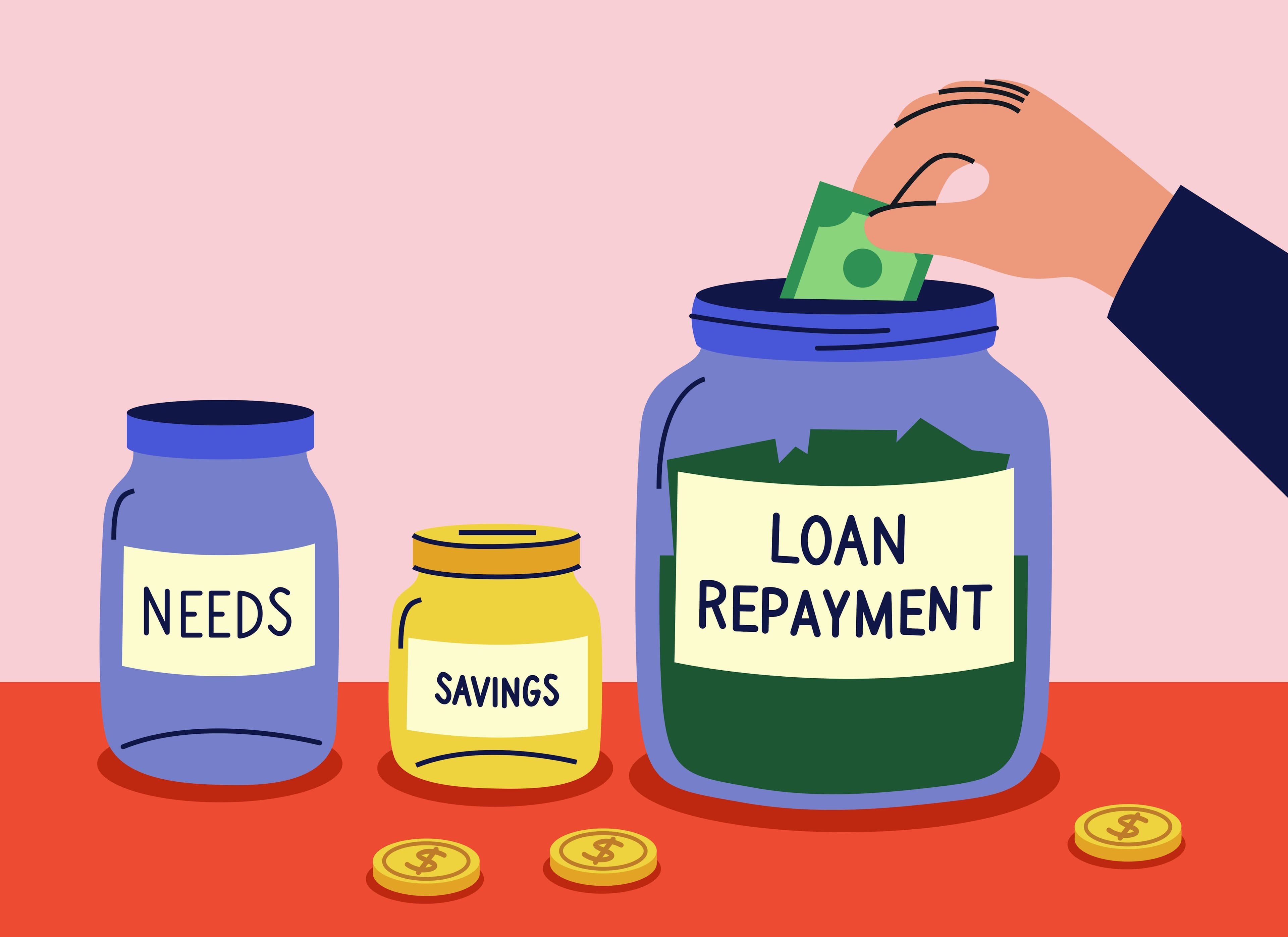
After 20 Years Managing Public Money, I Still Ask the Same Question: What Are We Getting for It?
I have spent a significant portion of my career looking at spreadsheets.
Capital budgets. Expense budgets. Contracts. Purchase orders. Vendor quotes. Forecasts. Invoices. Funding plans.
I actually like this stuff.
My professional interest in finance developed early in my New York City government career. At the Department of Health and Mental Hygiene, I worked in capital budgeting, helping manage a large portfolio of public-health infrastructure and technology investments. I later moved into technology budgeting, procurement and financial management. Today, at the Department of Correction, much of my work sits at the intersection of technology, procurement, contracts, capital planning and budget.
Outside government, I have spent years investing and owning real estate.
Somewhere along the way I also earned an MBA with coursework in finance—even though one of the finance classes that ultimately influenced me quite a bit was also one in which I earned a C.
The grade isn’t necessarily the lesson.
All of those experiences have shaped a fairly simple philosophy about money:
I don’t care only what something costs. I want to know what we’re getting for the money.
That is how I approach my own investments.
It is how I approach real estate.
And it is how I think government should approach taxpayer dollars.
My Favorite Budget Question Is “Why?”
I probably ask some variation of this question more than people around me would prefer:
Why?
Why are we buying this?
Why this quantity?
Why this vendor?
Why does it cost this much?
Why are we renewing it?
Why did the price increase?
Why do we still need it?
Why can’t we compete it?
Why can’t we use something we already own?
Why can’t we structure it differently?
Why are we replacing something that still works?
Those aren’t necessarily objections.
They’re questions.
There is an important difference.
Sometimes there is an excellent answer. A system is reaching end of support. Equipment has become unreliable. Cybersecurity requirements have changed. Capacity has increased. A service is operationally critical. Competition isn’t practical for legitimate technical reasons.
Fine.
Then let’s document that and move forward.
But “we bought it last year” isn’t enough of an answer for me.
Neither is “that’s what the vendor quoted.”
Procurement Taught Me More About Finance Than Some Finance Classes Did
One advantage of working in IT procurement is that you see pricing up close.
And pricing is fascinating.
The first price is not necessarily the market price.
The renewal price is not necessarily the appropriate price.
A discount from list price is not necessarily a bargain.
And a vendor telling you something costs $1 million does not establish that its economic value is $1 million.
Government sometimes treats procurement primarily as a compliance exercise:
Did we use the correct method?
Did we obtain the required approvals?
Did we have the necessary competition?
Did we complete the forms?
Those things matter. After more than two decades in government, I certainly understand why those controls exist.
But I think procurement professionals should also think like financial analysts.
What are the alternatives?
What did we pay previously?
What does the market tell us?
What happens if we wait?
Can we reduce the quantity?
Can we separate necessary components from desirable ones?
What leverage do we have?
If I can save the City money while obtaining the same operational result, I consider that part of the job.
The paperwork isn’t the objective.
The outcome is the objective.
I Believe in NPV Because Money Has Alternatives
One financial concept I probably use more than most government managers is net present value.
NPV sounds academic until you start using it to make actual decisions.
I use it personally.
If someone proposes that I spend $20,000 improving a property, my question isn’t simply whether the improvement is good.
I want to know what happens if I don’t spend the $20,000.
Could I invest it?
Could I pay down debt?
Could I make a different improvement?
What cash flow will this expenditure produce?
How long will the asset last?
How much maintenance will it require?
When do I recover the investment?
That’s opportunity cost.
Government money has opportunity costs too.
If an agency spends $10 million on one project, that same $10 million isn’t available for something else.
That doesn’t mean we shouldn’t spend it.
It means the expenditure should survive comparison with the alternatives.
Sometimes Spending More Is the Fiscally Conservative Decision
People sometimes equate fiscal discipline with buying the cheapest thing.
I don’t.
I will gladly recommend spending more when the economics support it.
If something costs 15 percent more but lasts twice as long, show me.
If preventive maintenance reduces the probability of a catastrophic failure, quantify it.
If better equipment reduces labor requirements, calculate the savings.
If replacing an obsolete system materially reduces cybersecurity or operational risk, include that in the analysis.
If spending $100,000 today reasonably avoids $500,000 tomorrow, spending the $100,000 may be the fiscally conservative decision.
That’s why I dislike budget discussions framed entirely around whether spending went up or down.
The amount spent tells me very little without knowing what we received.
Real Estate Made Finance Personal
Owning property reinforced that lesson because real estate provides immediate feedback when you make bad financial decisions.
There is very little theoretical about a leaking roof.
Or an HVAC system that stops working.
Or a vacancy.
Or insurance.
Or property taxes.
Or a contractor’s estimate.
Real estate has taught me to distinguish between maintenance, improvement and vanity.
Some expenditures protect the asset.
Some increase its value.
Some increase cash flow.
Some reduce future expenses.
And some just make you feel good about having spent money.
Government has versions of all five.
The difficult part is distinguishing among them.
Cost Shifting Is Not Necessarily Cost Savings
I was reminded of this in a very personal way while attending my high school homecoming recently.
I ran into a teacher I hadn’t seen since I graduated 27 years ago. My wife asked him how the school district had changed since I was a student.
His answer caught my attention.
He said the district was run more “corporate” today.
My first reaction to that word wasn’t necessarily positive, so I was interested in what he meant. He explained that the administration had become much more mindful and cautious about how it spent taxpayer money.
As someone who now lives in the same school district I attended—and pays the taxes that support it—part of me was very happy to hear that.
That’s exactly what I want from public administrators.
But the parent in me immediately thought about the school-supply lists we receive.
Among the supplies we were recently expected to provide were 90 No. 2 pencils, along with other seemingly basic classroom supplies.
Ninety pencils!
I understand asking families to purchase backpacks, personalized items or certain materials students will individually use. I also recognize that school districts face their own budget pressures.
But there is a legitimate question about where fiscal responsibility ends and cost shifting begins.
If a public organization reduces its expenditure by transferring the same necessary expense directly to the people who already finance that organization through taxes, has it actually become more efficient?
From the organization’s balance sheet, perhaps.
From the taxpayer’s household balance sheet, not necessarily.
Cost shifting is not necessarily cost savings.
That distinction matters far beyond pencils.
Government can reduce an agency’s expenses by imposing a fee.
It can reduce staffing by making citizens perform more administrative work themselves.
It can defer maintenance and make a future administration pay for the repair.
It can transfer responsibility from one agency to another.
The spreadsheet may show savings.
The taxpayer may simply be paying somewhere else.
That’s why I keep returning to the same question:
What did we actually save—and who ultimately paid the bill?
That teacher’s comment left me encouraged that my school district is thinking carefully about taxpayer money.
As a taxpayer, I want that.
As a parent buying 90 pencils after already paying substantial property taxes, I also want government to remember that efficiency shouldn’t simply mean finding increasingly creative ways to hand taxpayers the bill twice.
Savings Need to Be Real
That leads to something I’ve become increasingly particular about: how government defines “savings.”
Suppose a vendor initially quotes $1 million and ultimately accepts $800,000.
Did we save $200,000?
Maybe.
What if the fair market price was $700,000?
What if we reduced the scope?
What if the original proposal included things we didn’t need?
What if we would never actually have purchased it for $1 million?
There is a difference between negotiated savings, avoided costs, budget reductions, quantity reductions and simply not spending money we never needed to spend.
The distinction may not produce as attractive a PowerPoint slide.
It produces better financial management.
Government Should Think More About What It Already Owns
One of my recurring questions in technology procurement is whether we need to purchase something new at all.
Do we already have licenses?
Can existing equipment perform the function?
Can something be upgraded?
Can an existing contract satisfy the requirement?
Are we paying for subscriptions nobody is using?
Is equipment sitting somewhere unused while another unit requests more?
The least expensive procurement is frequently the one we don’t have to conduct.
This is where finance, procurement and asset management should intersect much more closely.
Before asking taxpayers to buy something else, government should know what it already owns.
Public Money Changes the Standard
There is one major difference between my personal investing and my government work.
If I make a bad investment with my own money, I bear the loss.
Government employees manage money belonging to millions of other people.
That should make the standard higher, not lower.
Every government expenditure ultimately represents somebody’s taxes.
Somebody worked for that money.
A family could have saved it.
A business could have invested it.
A homeowner could have paid a mortgage with it.
Government collected part of it because society determined that public purposes required shared resources.
That creates an obligation.
Not an obligation to spend as little as possible.
An obligation to spend intelligently.
Twenty Years Later, I Still Want to Know What We’re Getting
After more than two decades in government, my philosophy about public finance isn’t particularly complicated.
Ask questions.
Challenge assumptions.
Compare alternatives.
Understand the lifecycle.
Negotiate.
Measure outcomes.
Calculate opportunity cost.
Spend more when spending more creates greater value.
Spend less when spending more doesn’t.
And don’t confuse exhausting a budget with accomplishing a mission.
Government exists to provide public services, not generate investment returns. Some of the most important things government does will never produce positive financial cash flow.
A firehouse doesn’t need to turn a profit.
Neither does a public school.
Neither does a correctional facility.
Neither does a public-health program.
But that doesn’t exempt any of them from financial discipline.
Finance doesn’t tell government what its values should be.
Finance tells us what those values cost, what we’re giving up to pay for them and whether there might be a better way to accomplish the same objective.
I’ve looked at enough budgets, contracts, vendor quotes, property expenses and investment decisions over the years to know that the biggest number isn’t necessarily the biggest problem.
Sometimes the most important question is still the simplest one:
What are we getting for the money?