Why the Best Preschool Classrooms Look Like a Disaster

Paint on the Floor. Glitter in Their Hair. Learning Everywhere.
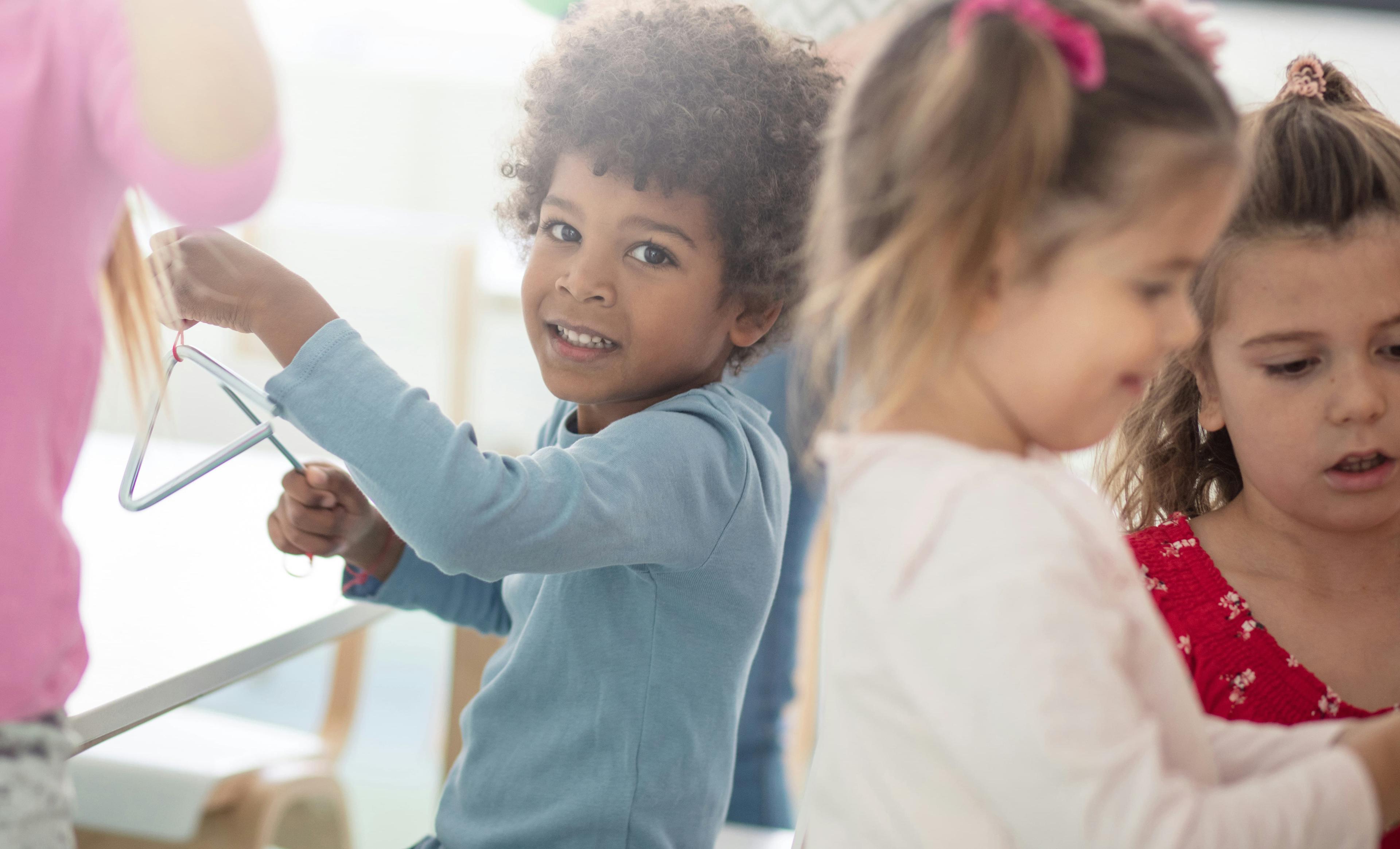
Walk into the best preschool classroom, and your first thought probably won't be, "Wow, it's so clean." It'll be, "What happened here?" Paint covers the tables. Clay is stuck under tiny fingernails. Blocks are scattered across the rug. Glitter has somehow found its way into everyone's hair- including the teacher's. To me, that's not a disaster. That's a classroom where children are truly learning.
If I had a dollar for every time I've heard a teacher say, "We can't do that- it'll make too much of a mess," I could probably buy every preschool classroom in New York a new art easel. And honestly, I understand why. Teachers are balancing lesson plans, assessments, parent communication, licensing requirements, classroom sanitation, and somehow getting twenty preschoolers out the door wearing the right jackets. Cleaning up paint, glitter, and sensory materials can feel like one more impossible task. But somewhere along the way, we've started confusing a clean classroom with an effective one.
After nearly twenty years in early childhood education- and with a background in Applied Behavior Analysis (ABA)- I've learned that children don't learn best sitting quietly in perfect rows. They learn by touching, moving, creating, experimenting, and yes, making a mess. The irony is that we often expect children to regulate themselves before we've given them the sensory experiences that help develop self-regulation in the first place. Every year I hear the same concerns: children can't focus, can't sit still, and struggle to manage big emotions. At the same time, many classrooms have quietly reduced or eliminated messy play because it's inconvenient.
That's a mistake. Messy play isn't just fun- it's essential. When children squeeze clay, finger paint, pour water, tear paper, dig through sensory bins, or mix colors, they're strengthening fine motor skills, building coordination, increasing attention, developing sensory processing, and learning to tolerate different textures. These experiences also support self-regulation, problem-solving, creativity, and the foundational skills they'll later use for writing and reading. In other words, what looks like "just making a mess" is actually building the brain.
I often joke that my classroom isn't just my classroom- it's my second home. The truth is, for many children, it's their home away from home. It's where they're safe to explore, make mistakes, ask questions, solve problems, and create without worrying about getting dirty.
One afternoon after school, I reached into my pockets and laughed. In one pocket was dried slime. In the other was glitter. Most people would probably think I needed to do a better job cleaning up. I thought, We had a really good day. Somewhere between the finger painting, homemade play dough, sensory bins, and open-ended art, children were experimenting, collaborating, solving problems, and discovering the world through every one of their senses.
Too often, we've become focused on products instead of processes. Walk into many classrooms and you'll see twenty identical crafts hanging on the wall. If every project looks exactly the same, chances are the teacher did most of the creating- not the children. Real art is messy. It's unpredictable. It's creative. That's where imagination grows.
The answer isn't eliminating the mess. It's embracing it. Give teachers the time and support to clean up. Encourage process art instead of Pinterest-perfect projects. Recognize that a little paint on the floor might mean a child discovered something new that day.
The best preschool classrooms don't look perfect. They look lived in. They look loved. They look like places where children were given permission to wonder. Children won't remember spotless classrooms. They'll remember the teacher who let them paint, build, explore, create, and believe that their ideas mattered.
The paint washes off. The learning doesn't.

Join the discussion
Members can read and add comments on every article.