Why Is Your City Still Running Traffic Lights Like It's 1995?
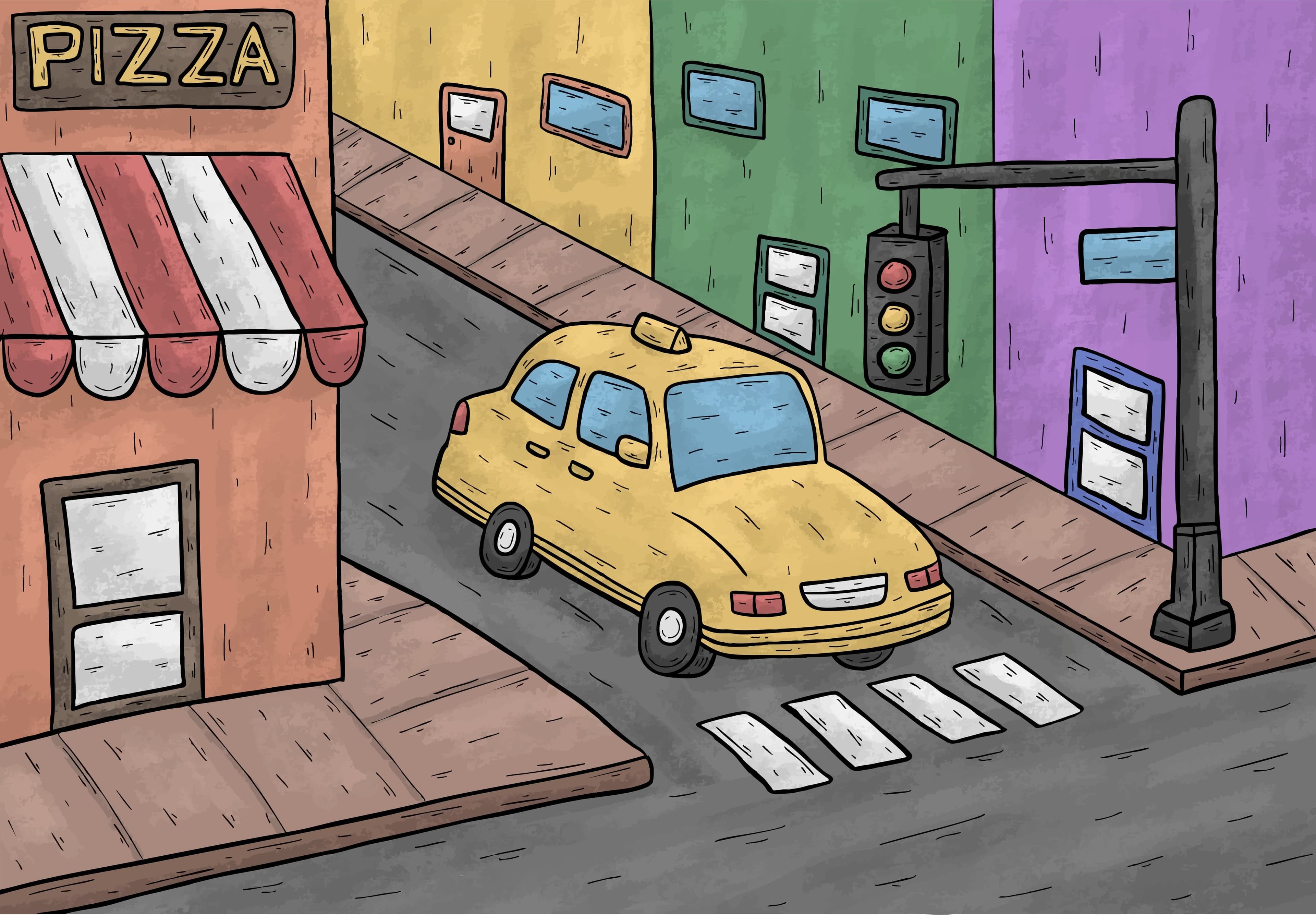
It is 11:47 p.m. The avenue is empty. Not a headlight for blocks. And there you sit, foot on the brake, staring down a red light that has no idea it is the only thing awake on the street. It is faithfully following a timing plan someone programmed years ago for a rush hour that ended six hours ago.
Now multiply that moment by every intersection in America. In 2025, the typical U.S. driver lost 49 hours to congestion, more than a full work week, at a cost of about $894 per driver and $85.8 billion nationwide. Chicago drivers lost 112 hours.¹ New Yorkers lost 102, and the country as a whole burned through roughly 4.7 billion hours sitting in traffic.² That is not just a commute problem. That is an economy idling at the curb.
Here is the good news. In a growing number of cities, the fix is not more lanes or more concrete. It is smarter decisions about the infrastructure we already own. And artificial intelligence is turning out to be remarkably good at making them.
Integrating AI into Traffic Management Strategies
Think of a traditional traffic signal as a drummer who memorized one song and plays it no matter who walks into the room. An AI-driven signal is more like a DJ reading the crowd. It notices the stadium letting out, the fender bender on the corridor, the school pickup line that backs up every weekday at 2:45, and it adjusts the beat.
Pittsburgh was one of the first cities to put that idea on the street. In 2012, Carnegie Mellon researchers installed a system called Surtrac at nine intersections in the East Liberty neighborhood. Each intersection built its own timing plan in real time and shared its expected traffic with its neighbors, like a relay team passing the baton instead of each runner sprinting alone. The results were hard to ignore: travel times fell by more than 25 percent, stops dropped 31 percent, time spent waiting fell more than 40 percent, and emissions dropped 21 percent.³
Boston took a lighter-touch route. Through Google's Project Green Light, AI studies anonymized driving trends and recommends timing tweaks for lights the city already has. City engineers can put a recommendation in place in as little as five minutes using existing equipment.⁴ Boston has now retimed 114 intersections across 20 neighborhoods, cutting delay by an average of 13.5 percent and unnecessary stops by 20 percent. At Beacham Street and Maffa Way in Charlestown, delay dropped 24 percent, and drivers there are expected to save up to 14,000 gallons of fuel a year.⁵ Notice who still has their hands on the wheel: the AI recommends, and Boston's traffic engineers decide. As Michael Lawrence Evans, the city's director of emerging technology, put it, "What started as a pilot has now expanded into a practical AI tool supporting the City's traffic engineers across every neighborhood."⁵
Then there is Bellevue, Washington, which pointed AI at a harder question: not how to move faster, but how to stop people from getting hurt. Franz Loewenherz, a principal transportation planner there, explained the old problem bluntly. Crashes are "rare and random, and it often takes five-plus years for a pattern to emerge. During that time, you have all of these people being injured." So Bellevue used AI to analyze footage from its existing traffic cameras at 40 intersections. In a single week, the system flagged 20,000 near misses and found that cyclists were 10 times more likely than drivers to be involved in one, despite making up just 0.1 percent of road users. At one problem intersection, a $10,000 change to the left-turn signal cut critical near misses by 60 percent.⁶
The lesson across all three cities is the same. AI did not replace the people who know the streets. It gave them better eyes. The technologists bring the model, and the city staff bring the local knowledge: which corner floods, which block has a senior center, which "shortcut" every rideshare driver secretly uses. Neither side gets far without the other.
Addressing Challenges in AI Adoption
If AI traffic tools work this well, why isn't every city using them? Two words: trust and money.
Start with trust. Half of Americans say they are more concerned than excited about the growing use of AI in daily life, and 61 percent say they want more control over how it is used in their lives.⁷ Cities have learned the hard way what happens when they get ahead of their residents. In December 2025, Cambridge, Massachusetts, ended its contract for AI-powered license plate cameras after the vendor installed two additional cameras without the city's awareness during a pause. The city called it a "material breach of our trust."⁸ Cambridge was not alone. According to a database from the Institute for Justice, 105 local governments have canceled or declined to renew their license plate reader contracts since the start of 2025.⁹
A signal-timing tool that studies anonymized traffic patterns is a very different animal from a camera that logs your license plate. But residents will not sort out that difference on their own, and they should not have to. The practical move is to settle data rules before anything goes live and then say them out loud. Publish a plain-language "data card" for every AI tool that answers four questions: what it collects, how long it keeps it, who can see it, and how the city would turn it off. Then write those same answers into the vendor contract, along with clear terms on data ownership, retention limits, no resale, and audit logs the city can actually review.
Now the money. AI sounds expensive, and some of it is. But some of the best wins above came cheap. Bellevue's fix cost $10,000, and Boston's improvements ran on the signals it already had. For bigger projects, the U.S. Department of Transportation's SMART grants program has offered $100 million a year from fiscal year 2022 through fiscal year 2026, with Stage 1 grants of up to $2 million for planning and prototyping and Stage 2 grants of up to $15 million for scaling what works.¹⁰ Because that authorization window is closing, leaders should start lining up partners, baseline data, and a ready-to-go project now, so they can move quickly on whatever funding comes next. Universities, regional planning agencies, and neighboring towns all make strong partners, and splitting costs across a corridor is often easier than funding one city's piece alone.
Training and Development for AI Literacy
Handing a city new AI tools without training is like handing a teenager the keys to a sports car and skipping driver's ed. Unfortunately, that is close to where much of the public sector sits. In one 2025 survey, 62 percent of U.S. state and local employees said they had never received AI training. Deloitte found that when workers feel confident using AI, their daily use rises more than 2.6 times and their weekly time savings nearly double.¹¹ Strategy is lagging too: only 37 percent of public-sector employees say their organization has a clear AI strategy, compared with 53 percent in the private sector.¹²
The fix is not one giant training for everyone. A city council member, a traffic engineer, and a 311 call-center representative need very different things. The council member needs to ask sharp questions before approving a contract. The engineer needs to test whether a recommendation actually holds up on the street. The frontline staffer needs to explain to an anxious resident, in two sentences, what the new camera on the corner does and does not do.
Whatever the role, every public employee working near an AI tool should be able to ask three questions without flinching:
What data is this system using, and what is it missing?
How will we know if it is working, and who checks?
Who could this decision help, and who could it leave behind?
For leaders, the most adaptable strategies are small and steady: a monthly "AI case of the month" lunch where staff pick apart a real deployment from another city, a partnership with a local college (the Pittsburgh and Carnegie Mellon relationship is the model), and pairing seasoned engineers with newer analysts so street knowledge and data skills flow both ways. For people early in their careers, this is a real opening. Many offices do not yet have someone who can translate between the technologists and everyone else. That person could be you.
Ensuring Ethical Implementation of AI
Here is the part of Pittsburgh's story that rarely makes the highlight reel. After Surtrac launched, people on foot and on bikes noticed something: they were "waiting longer at corners, while cars were idling less." The system's cameras were trained mainly on vehicles, so it got very good at serving vehicles. Nick Ross, then Pittsburgh's chief traffic engineer, said plainly, "The initial system was very good at moving cars. But it had some of the inherent flaws that have been identified about adaptive systems." To their credit, the developers went back and rebuilt the system to count pedestrians, buses, bikes, and scooters, and even prototyped an app called PedPal that lets pedestrians with disabilities ask a signal for more time to cross.¹³
That story holds the most important rule of ethical AI: it optimizes what you measure. If you only count cars, you will build a city for cars. If you only measure the neighborhoods with the most sensors, you will improve the neighborhoods that already had the most attention.
So define success with the community, not just for it. Before launch, decide whose time counts and how: drivers, bus riders, kids walking to school, wheelchair users at the crosswalk. After launch, compare results by neighborhood and by mode of travel, and publish them. Give oversight committees real seats for residents, disability advocates, and transit riders, not just vendors and department heads. And make public input feel human. A walking audit of a dangerous intersection or an open house at the traffic management center will teach residents more, and build more trust, than any slide deck.
Looking Ahead: Adopting AI for Future Urban Challenges
Traffic is just the opening act. The same approach that retimes a signal can route snowplows, predict which water main is likely to break next, and plan garbage pickup around actual need instead of the calendar. Cities that learn to use AI well on their streets are building the muscles they will need for everything else.
The path forward is not a moonshot. It is a series of small, visible wins. Boston started with a pilot and grew to 114 intersections. Pittsburgh started with nine. Bellevue started with one week of footage. Each city began with a real problem, measured honestly, shared the results, and scaled what worked. That is a strategy any city, of any size, can borrow.
So the next time you are stuck at that midnight red light, remember that somebody gets to decide whether it stays that way.
If you lead a team, pick the one intersection everyone complains about and ask your staff what it would take to measure it this quarter. If you are just starting your career, become the person in the room who asks, "What data is this using, and who does it leave out?" Either way, the tools are ready, the examples are real, and the signal has changed.
The light is green. Your move.
References
INRIX. 2025. "Traffic Is Back: Insights from the 2025 INRIX Global Traffic Scorecard." INRIX Blog, December 2025. https://inrix.com/blog/traffic-is-back-insights-from-the-2025-inrix-global-traffic-scorecard/.
CNBC. 2025. "U.S. Drivers Lost 49 Hours, More Than a Full Work Week, to Traffic in 2025." CNBC, December 8, 2025. https://www.cnbc.com/2025/12/08/inrix-most-congested-us-cities.html.
Smith, Stephen F., Gregory J. Barlow, Xiao-Feng Xie, and Zachary B. Rubinstein. 2013. "Smart Urban Signal Networks: Initial Application of the SURTRAC Adaptive Traffic Signal Control System." In Proceedings of the Twenty-Third International Conference on Automated Planning and Scheduling, 434-442. https://scispace.com/pdf/smart-urban-signal-networks-initial-application-of-the-4iq1hyubct.pdf.
Google. 2025. "Our Project to Reduce Traffic Emissions with AI Has Expanded to More Than 100 Intersections in Boston." The Keyword (Google Blog), May 22, 2025. https://blog.google/company-news/outreach-and-initiatives/sustainability/project-green-light-boston-expansion/.
City of Boston. 2025. "Mayor Wu Announces Expansion of Project Green Light Signal Optimization Program." Boston.gov, May 22, 2025. https://www.boston.gov/news/mayor-wu-announces-expansion-project-green-light-signal-optimization-program.
Baruchman, Michelle. n.d. "Bellevue Uses AI Technology to Identify Problem Intersections and Make Them Safer." Seattle Times. Accessed October 21, 2026. https://www.seattletimes.com/seattle-news/transportation/bellevue-uses-ai-technology-to-identify-problem-intersections-and-make-them-safer/.
Kennedy, Brian, Eileen Yam, Emma Kikuchi, Isabelle Pula, and Javier Fuentes. 2025. "How Americans View AI and Its Impact on People and Society." Pew Research Center, September 17, 2025. https://www.pewresearch.org/science/2025/09/17/how-americans-view-ai-and-its-impact-on-people-and-society/.
Boston.com. 2025. "Cambridge Ends Contract for License Plate Cameras After 'Breach of Trust.'" Boston.com, December 11, 2025. https://www.boston.com/news/local-news/2025/12/11/cambridge-ends-contract-for-license-plate-cameras-after-breach-of-trust/.
The Independent. 2026. "More Than 100 Cities Have Turned Off Their Flock Cameras." The Independent. Accessed October 21, 2026. https://www.independent.co.uk/news/world/americas/us-cities-turn-off-flock-cameras-outcry-b3040365.html.
U.S. Department of Transportation. n.d. "SMART Grants Program." Accessed October 21, 2026. https://www.transportation.gov/grants/SMART.
Mariani, Joe, Lucy Melvin, Chris Foss, Josh Rachford, and Samantha Roberts. 2026. "Making AI Training Work in Government: A Framework for Tailored Learning." Deloitte Insights, May 6, 2026. https://www.deloitte.com/us/en/insights/industry/government-public-sector-services/tailored-ai-training-for-government.html.
Gallup. 2026. "AI Adoption Rapidly Growing in Public Sector." Gallup Workplace. Accessed October 21, 2026. https://www.gallup.com/workplace/702983/adoption-rapidly-growing-public-sector.aspx.
Simek, Peter. 2022. "The Future of Open City Streets Could Start with Smarter Traffic Lights." Popular Science, April 12, 2022. Reprinted by Carnegie Mellon University. https://www.cmu.edu/ambassadors/july-2022/pdf/ps_open-streets.pdf.