What a Town of 573 People Can Teach a Fortune 500 Boardroom
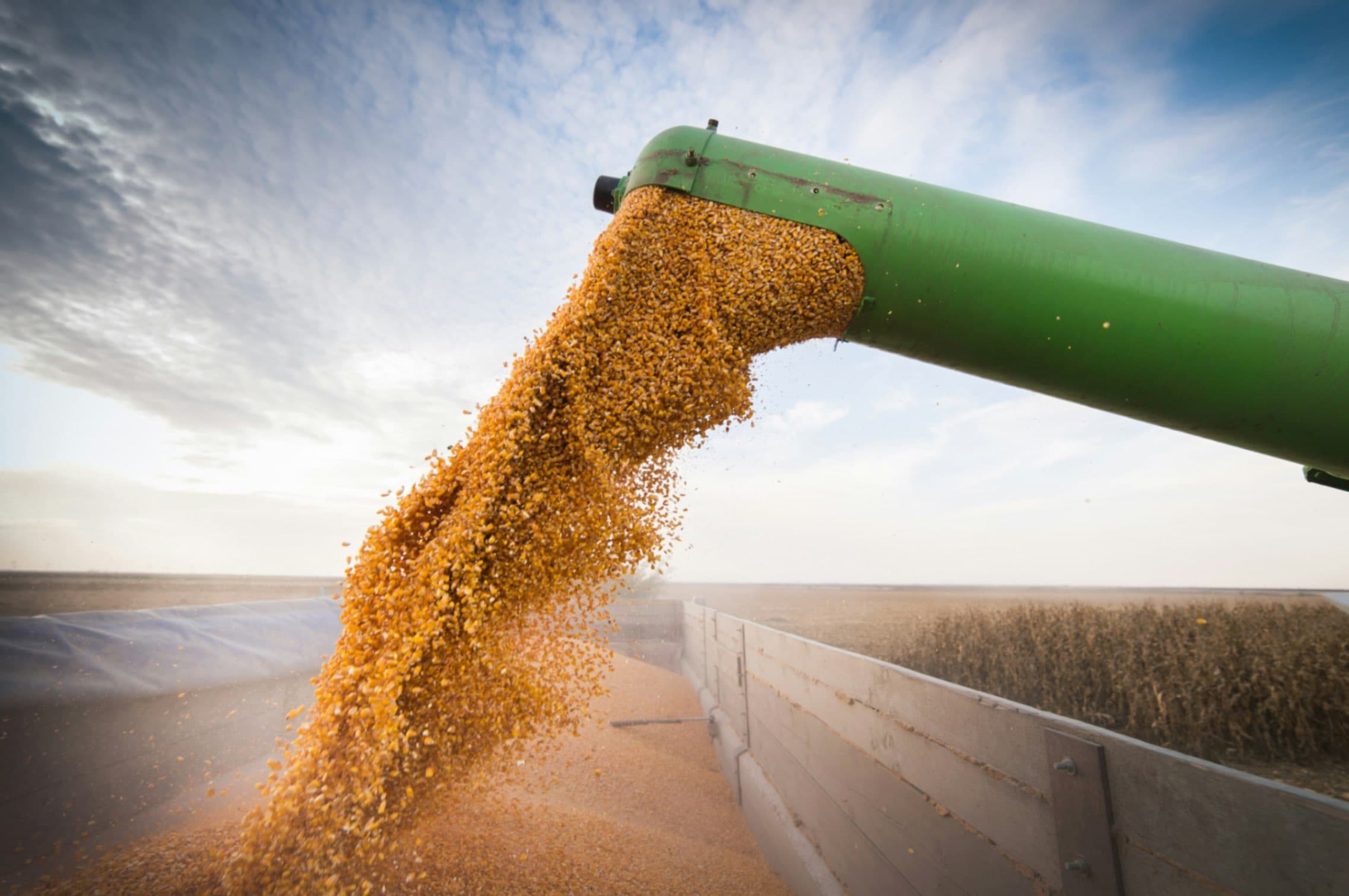
Picture a wheat truck at 5:47 a.m., headlights fogged with dust, easing over a cracked shoulder outside Billings, Oklahoma. The driver taps his brakes not because of traffic, but because a pothole the size of a laundry basket has been eating tires for three harvests running. Behind him, seven more trucks wait their turn. Every minute that convoy loses is a minute the grain elevator does not fill, a minute the buyer in Enid does not get his contract, and a minute the whole town's paycheck gets a little thinner.
This is what infrastructure actually looks like when you strip away the press releases. Not ribbon cuttings. Not shovels in the dirt. A guy named Wade, a cup of gas station coffee, and a stretch of asphalt that decides whether North Central Oklahoma eats this year.
Where Exactly is Billings, Anyway
Billings is a town of roughly 573 people tucked into the northwest corner of Noble County, Oklahoma, about thirty-five miles from Enid and Ponca City (World Population Review 2025; Oklahoma Historical Society). It sits on State Highway 15, five miles west of Interstate 35, in country that has grown wheat, sorghum, and cattle since the Cherokee Outlet land run of 1893. The population is roughly 80 percent White, 7 percent Native American, and 12 percent multiracial, with a median household income of about $47,188 and a poverty rate near 28 percent (World Population Review 2025). The median age hovers around 47 (Wikipedia), which is another way of saying the people who know these roads best have been driving them for four decades.
Oklahoma is a state where a single university wheat breeding program adds an estimated $5.81 million per year in producer revenue (Cambridge University Press 2026), and where corn alone produced 60.4 million bushels in the most recent state overview (USDA NASS 2025). None of that value reaches a buyer without a road under it.
The Farm-to-Market Bet
Billings has chosen a strategy that sounds almost old-fashioned. Rather than chasing headline projects, the town is resurfacing aging asphalt and rebuilding drainage along the corridors that carry the harvest from field to elevator. It is the civic equivalent of fixing the arteries before adding another gym membership. The logic is simple. If the grain cannot move, nothing else the town does matters.
This bet is not sentimental. It is math. Farm trucks are heavy, harvest is seasonal, and rural pavement fails in a specific pattern of rutting, edge break, and water intrusion. When drainage fails first, asphalt fails soon after, and the repair bill triples. By prioritizing the boring stuff (culverts, shoulders, the two miles that connect to the county road that connects to Highway 15), Billings is protecting its single largest economic asset without pretending to be something it is not.
Why This Should Matter to Someone Who Has Never Seen a Combine
Here is the part that travels. Every organization, every neighborhood, every career has a farm-to-market road. It is the unglamorous system that quietly moves the value you create to the place where value gets recognized. For a school, it might be the schedule that gets kids from breakfast to first period without chaos. For a startup, it is the deployment pipeline. For a new manager, it is the one-on-one cadence that turns effort into promotion.
Leaders love to fund the elevator. Almost nobody wants to fund the road that leads to it. That is the mistake Billings is refusing to make.
Four Strategies That Work in a Town of 573 or a Team of 6
Fix the drainage before the surface. In roadwork, water is what actually kills pavement. In your work, the equivalent is whatever quietly erodes trust, morale, or focus. Address the underlying leak first. Resurfacing over a drainage problem is the most expensive lesson in civil engineering, and the most expensive lesson in leadership.
Map your assets before you defend them. Modern rural planners use GIS mapping and hydrological models to pinpoint flood-prone road segments and prioritize the fixes that yield the biggest resilience gains. One documented adaptation program using this approach reported a 40 percent reduction in flood-related disruptions over five years (Institute of Asset Management). The lesson translates. You cannot protect what you have not inventoried. Make a list of the systems, relationships, and skills that carry your work, then rank them by how much would break if they failed tomorrow.
Bundle small problems into fundable projects. The federal Bipartisan Infrastructure Law set aside billions specifically for rural roads and bridges, including a Bridge Formula Program that lets off-system bridges (the kind Billings has plenty of) be funded at 100 percent federal share (U.S. Department of Transportation; The White House 2022). Small towns that group modest fixes into a single grant application win money that would ignore any one repair on its own. In your career, this is called making a case. Three quiet wins presented as a pattern beat three quiet wins mentioned in passing.
Coordinate up, not just across. Billings is now aligning its local resurfacing with the Oklahoma Department of Transportation so that fresh town pavement does not dead-end into a broken state highway (CityGov 2026). The parallel for a new employee is almost too obvious. Your best work needs to connect to your manager's priorities, which need to connect to the executive team's priorities. A perfectly paved cul-de-sac still ends in a cul-de-sac.
Innovative Ways to Protect What You Have Built
Rural communities are quietly running experiments that any organization can steal. A short menu.
Permeable pavement and bioswales are being layered into traditional drainage design to reduce peak runoff and stretch the life of the road above (SciVision Publishers). Translation for the office: build redundancy into your most critical processes so a single storm does not wipe out a quarter.
Digital twins and asset management software let towns run "what if" scenarios before spending real money (Institute of Asset Management). Leaders can do the same by pressure-testing a decision on paper with a trusted peer before announcing it to the team.
Regional partnerships let places like Billings pursue funding through Oklahoma's County Improvements for Roads and Bridges program alongside neighbors (CityGov 2026). The career version is a peer group. Three people at your level in adjacent departments will spot your blind spots faster than any mentor.
Preventive maintenance schedules, boring as they sound, stretch a dollar further than any emergency repair. The American Society of Civil Engineers has been arguing this point for decades, most recently in the 2025 Infrastructure Report Card (ASCE 2025). It applies to knees, relationships, and codebases too.
The Quiet Case for Boring Work
There is a reason the wheat truck story is not on the evening news. The grain moved. The elevator filled. The buyer got the contract. Wade got home in time to help his kid with homework. When infrastructure works, it disappears. That is the standard.
Whether you run a district, a team of two, or your own first job, the question is the same. What is your farm-to-market road, and when was the last time you drove it looking for the pothole?
Your Move
Billings did not wait for a miracle. It picked the least glamorous project on the list and funded it first. This week, name one system in your life or your organization that quietly moves your value to market. Then find the pothole. Fix it before harvest. The trucks are already lining up.
References
American Society of Civil Engineers. 2025. 2025 Report Card for America's Infrastructure. Reston, VA: ASCE. https://infrastructurereportcard.org/.
CityGov. 2026. "Paving the Future: How Small-Town Roads Power Big Rural Economies." June 1, 2026. https://www.citygov.com/article/paving-the-future-how-small-town-roads-power-big-rural-economies.
Institute of Asset Management. n.d. Assessment Tools and Methodologies for Climate Resilience across Sectors. Bristol, UK: IAM. https://theiam.org/media/6209/iam-assessment-tools-and-methodologies-for-climate-resilience-across-sectors-final.pdf.
Oklahoma Historical Society. 2024. "Billings." The Encyclopedia of Oklahoma History and Culture. February 23, 2024. https://www.okhistory.org/publications/enc/entry?entry=BI008.
Sarma, Bhabesh, and Jeffrey Vitale. 2026. "The Economic Impact of the Oklahoma State University Wheat Breeding Program." Journal of Agricultural and Applied Economics. Cambridge University Press. https://www.cambridge.org/core/journals/journal-of-agricultural-and-applied-economics/article/economic-impact-of-the-oklahoma-state-university-wheat-breeding-program/FAA896484516A676D17834C8E280F8B4.
U.S. Department of Agriculture, National Agricultural Statistics Service. 2025. "State Agriculture Overview: Oklahoma." https://www.nass.usda.gov/Quick_Stats/Ag_Overview/stateOverview.php?state=OKLAHOMA.
U.S. Department of Transportation. 2022. "U.S. Department of Transportation Announces Billions of Dollars of Funding Available for Rural Communities under the President's Bipartisan Infrastructure Law." https://www.transportation.gov/briefing-room/us-department-transportation-announces-billions-dollars-funding-available-rural.
Vaidya, Rohit, et al. 2024. "Resilient Cities through Integrated Drainage: Bridging Hydraulics, GIS, and Nature-Based Strategies." SciVision Publishers. https://www.scivisionpub.com/pdfs/resilient-cities-through-integrated-drainage-bridging-hydraulics-gis-and-nature-based-strategies-4296.pdf.
Wikipedia. 2026. "Billings, Oklahoma." Last modified 2026. https://en.wikipedia.org/wiki/Billings,_Oklahoma.
World Population Review. 2025. "Billings, Oklahoma Population 2026." December 12, 2025. https://worldpopulationreview.com/us-cities/oklahoma/billings.
The White House. 2022. Bipartisan Infrastructure Law Rural Playbook. Washington, DC: Executive Office of the President. https://www.whitehouse.gov/wp-content/uploads/2022/04/BIL-Rural-Playbook-.pdf.