Skepticism Is Data: Why the Loudest Doubter in the Room Is Your Best AI Consultant
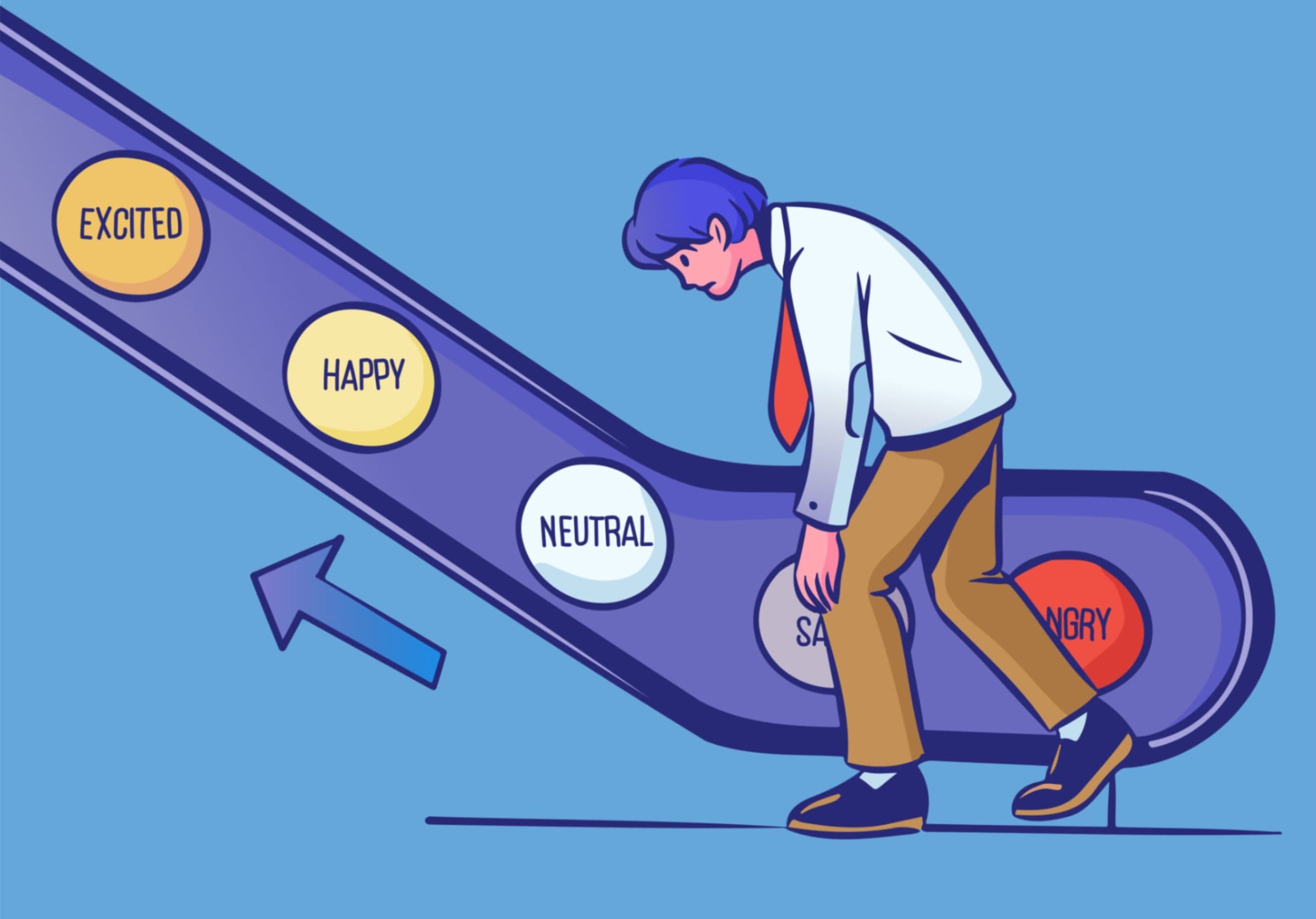
Picture the scene. A new director walks into a public works meeting with a slick vendor demo, a stack of AI dashboards, and the phrase "digital transformation" ready to launch. Around the table, arms fold. Someone stirs coffee a little too loudly. The most senior engineer, thirty years on the job, finally speaks: "We tried something like this in 2011. It's still sitting in a closet." Everyone nods. The demo ends. Nothing changes.
If that scene made you wince, you already understand the real problem with integrating advanced technologies into infrastructure. The algorithms are not the hard part. The people are.
The tech is the easy part
The technical case has stopped being controversial. California's grid operator is piloting an AI tool to help manage outages, the first system of its kind in North America. Las Vegas used AI-powered traffic analytics to cut wrong-way driving by more than 90 percent and save roughly a million dollars a year. Digital twin systems paired with machine learning have delivered a 30 percent drop in maintenance costs and reduced fault detection from fifteen days to three. These are not futuristic numbers. They are receipts. The more interesting question is why so many programs still stall inside city hall.
The 30 percent problem
Fifteen years of McKinsey research shows that only about 30 percent of major change programs succeed, and the leading causes of failure are employee resistance and management behaviors that do not support the desired change. Not the wrong vendor. The humans, and the leaders who forgot to bring them along. Prosci's benchmarking puts a finer point on it: projects with excellent change management meet or exceed objectives 93 percent of the time, while those with poor change management hit their targets just 15 percent of the time. The single biggest predictor of success, decade after decade, has been active and visible executive sponsorship. Your calendar is your change strategy.
Skepticism is data, not opposition
Expect pushback. Then respect it. A 2025 MissionSquare study of state and local employees found only 28 percent had received any AI training from their employer, and their top concerns were data privacy, reliability of AI outputs, and cost. A global KPMG study found 54 percent of people are wary of trusting AI systems. Deloitte notes a specific quirk in government: leaders are often more nervous than their own workforce. So when a veteran engineer folds their arms at your demo, they are not being difficult. They are surfacing risk you would otherwise miss. Metabolize that instinct into requirements, guardrails, and training plans.
Shared ownership beats slick specs
Run your needs assessment as a listening tour, not a checklist. Bring field crews, dispatchers, finance, and community liaisons into the room before you talk to a single vendor. Ask what breaks most often, what workaround they are quietly running, and what would actually save them time on a Tuesday afternoon. McKinsey found that programs which invited employees to shape the transformation were five times more likely to succeed than top-down efforts, and those with clear metrics were seven times more likely to succeed.
Culture is the operating system
You can install any software on top of a broken culture, and the culture will win. Celebrate the near misses, so when a predictive flag saves a lift station on a holiday weekend, that story gets told at the next all-hands. Budget for learning the way you budget for hardware, because Deloitte reports that 62 percent of employees rate their organization's AI training as average or poor. Make it safe to say "I don't know," or staff will simply shadow-use consumer AI on their phones instead.
Community feedback is a loop, not a survey
Residents are stakeholders too, and increasingly literate about what AI can and cannot do. Build feedback like a sensor network. Multiple channels, redundant paths, quick refresh cycles. Publish plain-language summaries of what your systems do and do not do. When residents flag something surprising, treat it the way maintenance treats a pressure anomaly in a water main: as early warning, not noise.
Money and privacy, the boring things that decide everything
Two objections surface within ninety seconds of any pitch. Cost is the first. The answer is rarely one big check. It is a stacked approach of federal and state grants, public-private partnerships, and phased rollouts that let a pilot earn its next dollar. Privacy is the second. Establish a data governance framework before you touch a live system, train every staff member who touches it, and publish your rules in language a resident could explain at a barbecue.
A word for the newcomer
If you are early in your career, do not wait to be handed authority. The people who shape transformations are rarely the loudest. They are the ones who ask the second question, volunteer for the pilot, and quietly become the person the director calls when a dashboard breaks. Change management is a career accelerant hiding in plain sight.
The ball is in your hands
This week, pick one system in your organization that everyone quietly agrees is fragile. Talk to the three people who know it best. Ask them what a smarter version would look like, and what would have to be true for them to trust it. Write down what they say. That single conversation is worth more than any vendor demo held later. The technology is ready. The evidence is in. The only question left is whether you are willing to lead in a way people will actually follow.
References
Aiken, Carolyn, and Scott Keller. "How Do I Implement Complex Change at Scale?" McKinsey and Company. https://www.mckinsey.com/~/media/mckinsey/dotcom/client_service/public%20sector/pdfs/how_do_i_implement_complex_change_at_scale.pdf.
Deloitte Insights. 2025 Government Trends. 2025. https://www.deloitte.com/us/en/insights/industry/government-public-sector-services/government-trends/2025.html.
Eggers, William, Joshua Knight, and Mahesh Kelkar. "Delivering on the Promise of AI in Government." Deloitte Insights, June 3, 2025. https://www.deloitte.com/us/en/insights/industry/government-public-sector-services/government-trends/2025/scaling-ai-in-government.html.
Eggers, William, Joshua Knight, and Kellie Nuttall. "Tailored AI Training for Government." Deloitte Insights, May 5, 2026. https://www.deloitte.com/us/en/insights/industry/government-public-sector-services/tailored-ai-training-for-government.html.
Intelligent Transportation Systems Joint Program Office. "AI-Based Traffic Management Pilot Program Implemented Near Las Vegas Contributed to a 17 Percent Reduction in Primary Crashes." U.S. Department of Transportation, September 25, 2025. https://www.itskrs.its.dot.gov/2020-b01507.
Keller, Scott, and Bill Schaninger. "Losing from Day One: Why Even Successful Transformations Fall Short." McKinsey and Company, December 7, 2021. https://www.mckinsey.com/capabilities/people-and-organizational-performance/our-insights/successful-transformations.
KPMG International and University of Melbourne. Trust, Attitudes and Use of Artificial Intelligence: A Global Study 2025. April 2025. https://kpmg.com/us/en/media/news/trust-in-ai-2025.html.
MissionSquare Research Institute. Artificial Intelligence in the State and Local Government Workforce. May 2025. https://research.missionsq.org/content/media/document/2025/5/Artificial_Intelligence_StateLocalEmployees.pdf.
NTT DATA. "City of Las Vegas Client Story." Accessed July 20, 2026. https://us.nttdata.com/en/case-studies/city-of-las-vegas-client-story.
O'Donnell, James. "California Is Set to Become the First US State to Manage Power Outages with AI." MIT Technology Review, July 14, 2025. https://www.technologyreview.com/2025/07/14/1120027/california-set-to-manage-power-outages-with-ai/.
Prosci. "Best Practices in Change Management." 2024. https://www.prosci.com/resources/articles/change-management-best-practices.
Yusuf, M., and R. Prasetyo. "AI-Driven Digital Twin Systems for Predictive Maintenance." Civil Engineering Science and Technology, 2025. https://cest.stekom.ac.id/index.php/cest/article/download/5/9.