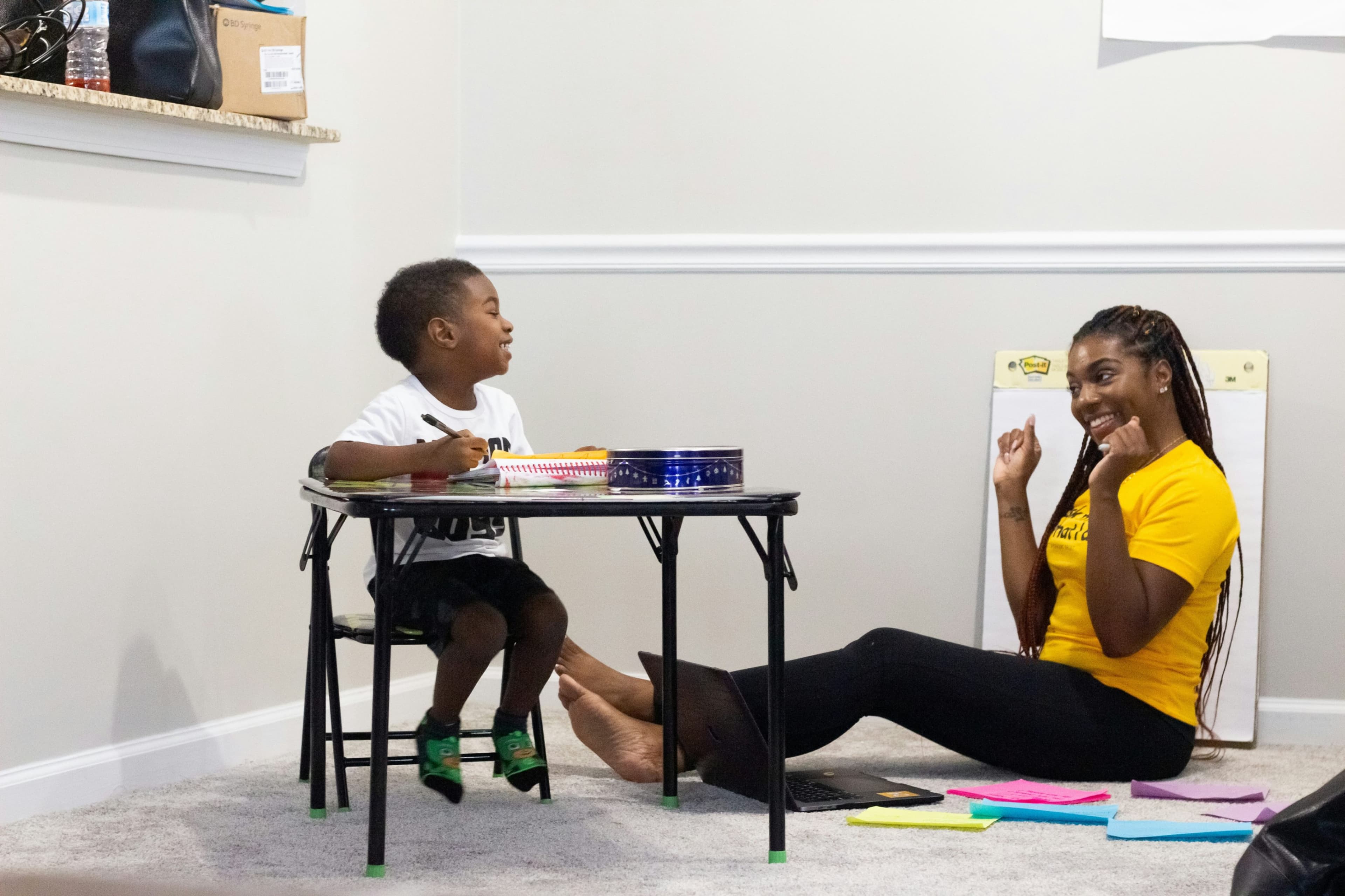
The Literacy Link: How Language Development Drives School Success
Language is more than words, it’s connection, culture, and the foundation for every learning experience a child will have.
Language acquisition forms the foundation of nearly every academic skill, from reading comprehension to problem-solving. For bilingual and limited English proficient (LEP) students, especially in the early grades, academic success is often predicated on their ability to access and use English effectively in the classroom. Research consistently shows that children who begin formal schooling with limited English vocabulary are at a disadvantage across content areas, not because of cognitive deficits, but due to language barriers that impede their ability to understand instruction and demonstrate knowledge (August and Shanahan 2006)1.
This challenge is particularly evident when students show weaknesses in verbal knowledge, a subcomponent of cognitive ability referred to as Gc, or crystallized intelligence. This factor, closely linked to vocabulary development and language comprehension, significantly impacts reading skills and academic performance. Students with limited exposure to academic English may lag behind their peers, even when they have average or above-average cognitive abilities. Without targeted support, these students may be misidentified or overlooked by special education teams, not because they have a learning disability, but because their language development has not kept pace with academic demands (Klingner and Artiles 2006)2.
When Language Delays Mimic Learning Disabilities
Consider a second-grade student named Sofia, who lives in a bilingual home where Spanish is the primary language. Sofia is a quiet, observant child who demonstrates emerging social awareness but struggles with problem-solving and cognitive flexibility. Her assessments reveal weaknesses in both verbal knowledge and problem-solving skills. When assessed to determine whether she should be evaluated in English or Spanish, results showed that she was at an initial level in Spanish and emerging proficient in English. Although Spanish is spoken at home, Sofia is not proficient in the language. Her mother reported that Sofia does not speak Spanish and only understands family members most of the time. Similarly, she is not fully proficient in English, making it difficult to identify the best instructional approach.
Her reading comprehension and vocabulary scores fall well below grade level in English, and testing in Spanish does not yield better results due to her limited proficiency in that language. As an educational diagnostician, I recognize that Sofia’s struggles are not due to a specific learning disability but rather a complex interplay of limited exposure to both languages and underdeveloped cognitive processing skills. Sofia does not qualify for special education services under the Individuals with Disabilities Education Act (IDEA), as her difficulties stem primarily from language acquisition and general cognitive delays rather than a neurological impairment. She might be considered for speech-language services, but these often focus on articulation, receptive, and expressive language, not the broader academic language skills she needs for reading and comprehension. Without a clear path for targeted intervention, students like Sofia can fall through the cracks, their academic challenges misinterpreted or minimized. This highlights the need for early, structured language support that addresses both English development and foundational literacy instruction, tailored to the student’s unique language profile.
Effective Early Interventions for Bilingual Learners
Early intervention is critical for bilingual students, especially during the formative years when foundational literacy and language habits are established. High-quality bilingual programs that support primary language development while introducing English gradually are shown to produce better academic outcomes in the long term. According to the National Academies of Sciences, Engineering, and Medicine, children who receive literacy instruction in their first language while acquiring English achieve higher levels of reading proficiency in both languages (National Academies 2017)3.
Schools can support students like Sofia by implementing dual-language programs, leveraging culturally responsive pedagogy, and using formative assessments that distinguish between language delays and learning disabilities. Classroom strategies should include vocabulary-rich instruction, scaffolded reading activities, and opportunities for oral language development in both languages. This dual approach not only builds literacy but also affirms the student’s cultural identity and strengthens cognitive flexibility, which benefits all areas of learning.
Collaborative Support from Families, Schools, and Communities
Language development does not occur in isolation, and the most effective strategies involve coordinated efforts among families, educators, and community stakeholders. Families should be encouraged and empowered to support literacy in their home language. Reading books together, engaging in storytelling, and having rich conversations in Spanish, for example, contribute to a child’s overall language capacity and create a strong base for acquiring English. In cases like Sofia's, where the home language is present but the child is not proficient, schools should support families in finding ways to strengthen both language environments. Educators can build partnerships with families by providing workshops, bilingual resources, and regular communication that respects and values the family's linguistic background.
Local governments and community-based organizations also play a key role in supporting early language development. Public libraries, literacy nonprofits, and after-school programs can offer bilingual reading sessions, parent-child literacy nights, and access to culturally relevant materials. These initiatives help bridge the gap between home and school and ensure that children are surrounded by language-rich environments. City departments that oversee education or youth services can collaborate with school districts to fund and promote these programs as part of a broader strategy to reduce early achievement gaps.
Building Equity Through Language-Inclusive Education Policies
Policies at the district, state, and local levels must prioritize language equity to ensure that all students, regardless of their English proficiency, have access to high-quality instruction. This includes hiring certified bilingual educators, providing professional development on second language acquisition, and ensuring that curriculum materials reflect the linguistic diversity of the student population. Data systems should track language proficiency growth over time, allowing educators to tailor instruction and interventions based on individual student needs.
Municipal leaders and public sector administrators must also recognize the long-term economic and social benefits of investing in bilingual education. Strong early language support reduces the need for costly academic remediation later and contributes to higher graduation rates, better workforce readiness, and more inclusive civic engagement. By treating bilingualism as an asset rather than a barrier, schools and communities can create environments where every child has the opportunity to thrive academically and socially.
Conclusion: A Call to Action for Early Language Support
For students like Sofia, early and effective language support can be the difference between academic struggle and success. Her experience reflects a broader need to distinguish between language development challenges and true learning disabilities. By investing in bilingual education, community partnerships, and early interventions, we ensure that all children, regardless of their first language, are given the tools they need to reach their full potential.
Municipal education leaders, school administrators, and community organizations must work together to build systems that value bilingualism, support language development in both English and the home language, and prevent children from falling through the cracks. The path forward is not only possible but essential. With coordinated effort, we can create a more equitable and effective educational system for all learners.
Bibliography
August, Diane, and Timothy Shanahan, eds. Developing Reading and Writing in Second-Language Learners: Lessons from the Report of the National Literacy Panel on Language-Minority Children and Youth. Mahwah, NJ: Lawrence Erlbaum Associates, 2006.
Klingner, Janette K., and Alfredo J. Artiles. "English Language Learners Struggling to Learn: Emergent Scholarship on Linguistic Differences and Learning Disabilities." Journal of Learning Disabilities 39, no. 5 (2006): 386-389.
National Academies of Sciences, Engineering, and Medicine. Promoting the Educational Success of Children and Youth Learning English: Promising Futures. Washington, DC: The National Academies Press, 2017.
More from 2 Topics
Explore related articles on similar topics