The Art of the Tiny Deal: Negotiation Lessons from the Juice Box Generation
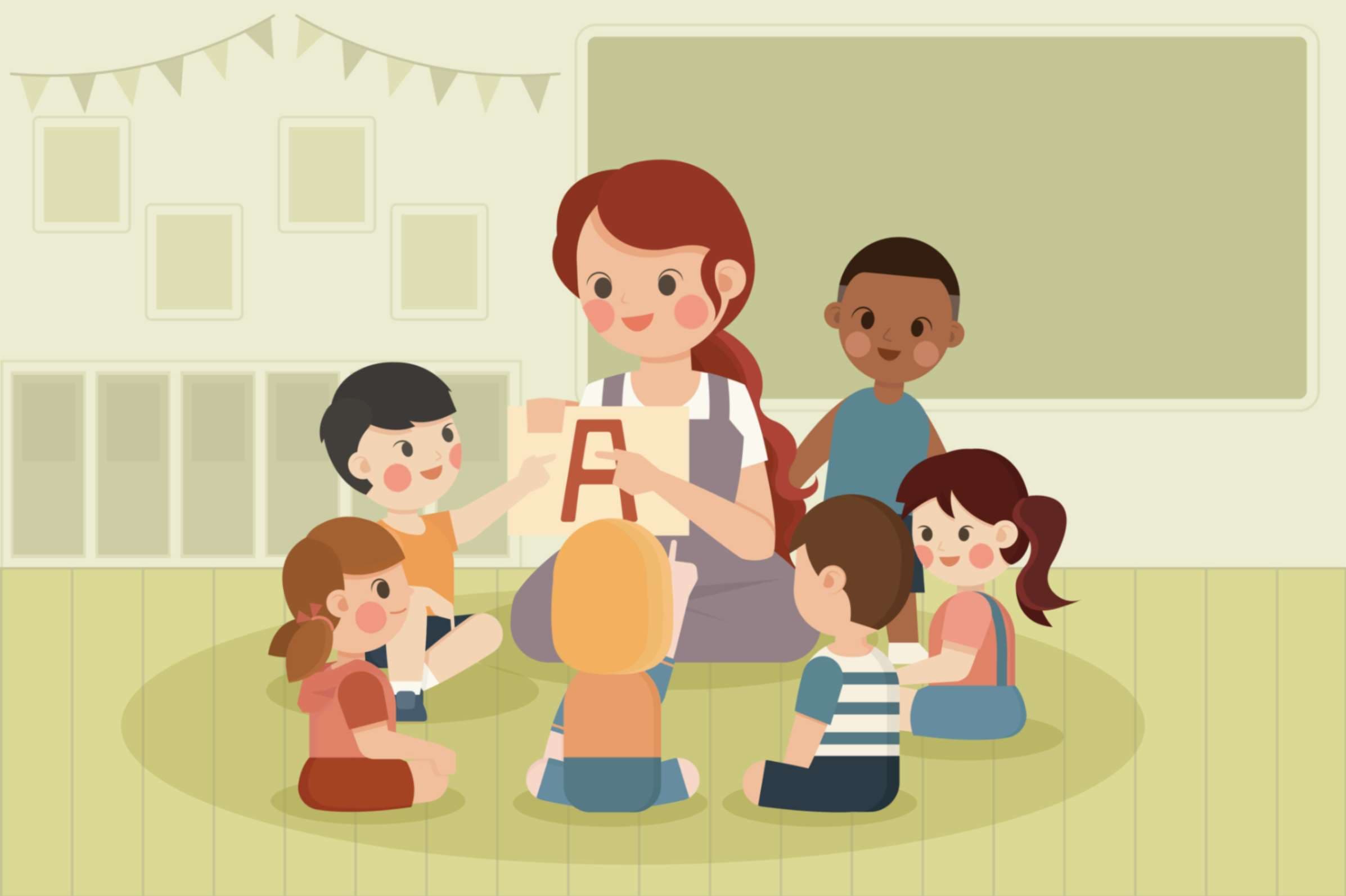
Let's get one thing straight: negotiation, as defined by the Oxford English Dictionary, is “discussion aimed at reaching an agreement.” But in a kindergarten classroom, negotiation is better defined as “the high-stakes art of persuading someone who just licked a glue stick not to climb into a cubby.” If you think municipal budget talks are intense, try convincing a room full of five-year-olds that naptime is not a government conspiracy.
When Jalissa stood poised with a carton of chocolate milk, locked and loaded, waiting for Juan to exit the boys' bathroom after calling her "bear-face," I had approximately three seconds to negotiate world peace. This wasn't just about dairy-based vengeance. It was about influence, power dynamics, and yes, attention - the only currency more volatile than crypto. My BATNA (Best Alternative to a Negotiated Agreement) was a room full of screaming children, a mop, and a parent call. So, I did what any seasoned educator would do: I made eye contact, crouched to her level, and whispered, “What if we write a letter to the Tooth Fairy instead?” She blinked. She paused. She asked if the Tooth Fairy had glitter pens. And just like that, we had a creative concession.
The Art of Influence When Sticker Charts Fail
Influence, in a kindergarten context, is not about authority. It’s about who brought fruit snacks. Or who can burp the alphabet. Or who once saw a squirrel and now is the class oracle. The traditional power structures collapse under the weight of finger paints and unfiltered honesty. So, influence becomes relational. You’re not leading a class; you’re managing a micro-democracy where every voter is sticky and emotional.
Practical tip? Build your street cred early. Wear fun socks. Know the lyrics to the Paw Patrol theme song. Do not, under any circumstances, mispronounce a Pokémon name. These are your influence points. Lose them, and you’ll be metaphorically (and perhaps literally) exiled to the block corner. Research shows that young children respond more to relational authority than positional authority, meaning trust and repetition are more effective than directives in high-stress scenarios (Coplan and Arbeau 2009)1.
Creative Concessions: Glitter, Stickers, and the Occasional Puppet
A creative concession in a municipal negotiation might involve a compromise on parking regulations. In kindergarten, it's agreeing to let someone be the line leader in exchange for not licking the fire extinguisher. The stakes feel just as high. The tactics? Arguably more advanced. You have to pivot quickly, offer value, and make it look like their idea.
For instance, when three kids wanted the same purple crayon, arbitration wasn’t about logic. It was about theatrics. I brought in Mr. Wiggles, a sock puppet with a Ph.D. in Conflict Resolution. Mr. Wiggles explained the concept of taking turns with a story about a unicorn who learned patience by waiting for sprinkles. The kids listened, nodded solemnly, and handed over the crayon. Did I lie about the unicorn? Possibly. Did it work? Yes. And that, my friends, is the essence of a creative concession.
BATNA: Bring A Tiny Negotiator Always
In formal negotiation theory, BATNA stands for “Best Alternative to a Negotiated Agreement.” In kindergarten, BATNA stands for “Bribery And Tactics, Not Anger.” If you don’t have a BATNA, you’re toast. Or worse, you’re juice-soaked toast. You always need a fallback: a sticker, a song, a promise that if they just put their shoes on, they can be the caboose in the hallway train.
The key is to know your audience. Research indicates that young children often respond best to immediate, tangible incentives over abstract reasoning (Gopnik et al. 2009)2. So when negotiations break down - which they will, usually around 10:17 a.m. - your BATNA must be visible, accessible, and ideally, shiny. When Isabella refused to clean up her puzzle because “the pieces were too hungry to go in the box,” my BATNA was a glittery sticker that said “Puzzle Queen.” She accepted the title with the gravity of a Nobel laureate.
Strategies for Survival and Sanity
If you ever doubt your ability to negotiate with a five-year-old, remember this: their attention span is shorter than a squirrel on espresso. Your entire strategy must be faster than their next impulse. Use distraction as a tool, humor as a shield, and snacks as a bargaining chip. Always have snacks. That’s not a metaphor. That’s survival.
Also, remember the power of the pause. Silence makes five-year-olds nervous. They expect adults to fill the void with logic or consequences. But if you just pause, tilt your head like you're considering a Supreme Court ruling, they’ll often fill the silence themselves - usually with an accidental confession or a spontaneous compromise. This tactic aligns with findings in child psychology that suggest delayed responses can encourage self-regulation in early childhood (Baumeister and Tierney 2011)3.
When You Question Your Life Choices Mid-Negotiation
There will be moments - maybe during a heated debate about whether the class hamster can be mayor, or while removing a toy from someone’s nasal cavity - when you will question everything. Your degree. Your career path. Your sanity. Whether it's too late to go to dental school. This is normal. It’s not that you’re bad at negotiating; it’s that your opposition is unpredictable, irrational, and entirely pantsless.
Coping mechanisms include deep breathing, whispered affirmations (“It’s just applesauce, not blood”), and the occasional strategic bathroom break. Also, remember that humor is not just a defense mechanism; it's a tactic. Laughter diffuses tension, builds rapport, and makes you appear slightly unhinged - which can be an advantage when your opponent is still learning how to use scissors.
Ready to Negotiate with Congress After This?
So, the next time someone tells you that kindergarten teaching is “just babysitting,” offer to trade jobs for a day. Give them a whistle, a glue stick, and a classroom of mini-litigators. Then ask them to pass a nap schedule through a room of unwilling stakeholders with competing agendas and limited hand-eye coordination. Better yet, ask them to solve the chocolate milk standoff without losing their voice or their will to live.
Because if you can settle disputes between 20+ five-year-olds before snack time, what can't you do? Negotiate labor contracts? Mediate community disputes? Run a city council meeting with finger puppets? Who needs Harvard Law when you've been called “poopy-head” before 9 a.m. and still managed to broker peace? Now, who's ready to trade their municipal budget spreadsheet for a juice box and a glitter glue negotiation?
Bibliography
Coplan, Robert J., and Kimberley A. Arbeau. 2009. "The Stresses of a 'Brave New World': Shyness and School Adjustment in Kindergarten." Journal of Research in Childhood Education 23 (3): 283-295.
Gopnik, Alison, Andrew N. Meltzoff, and Patricia K. Kuhl. 2009. The Scientist in the Crib: What Early Learning Tells Us About the Mind. New York: Harper Perennial.
Baumeister, Roy F., and John Tierney. 2011. Willpower: Rediscovering the Greatest Human Strength. New York: Penguin Press.
More from Education
Explore related articles on similar topics