Idle Ambulances Can't Save Lives:The Hidden Management Crisis in EMS
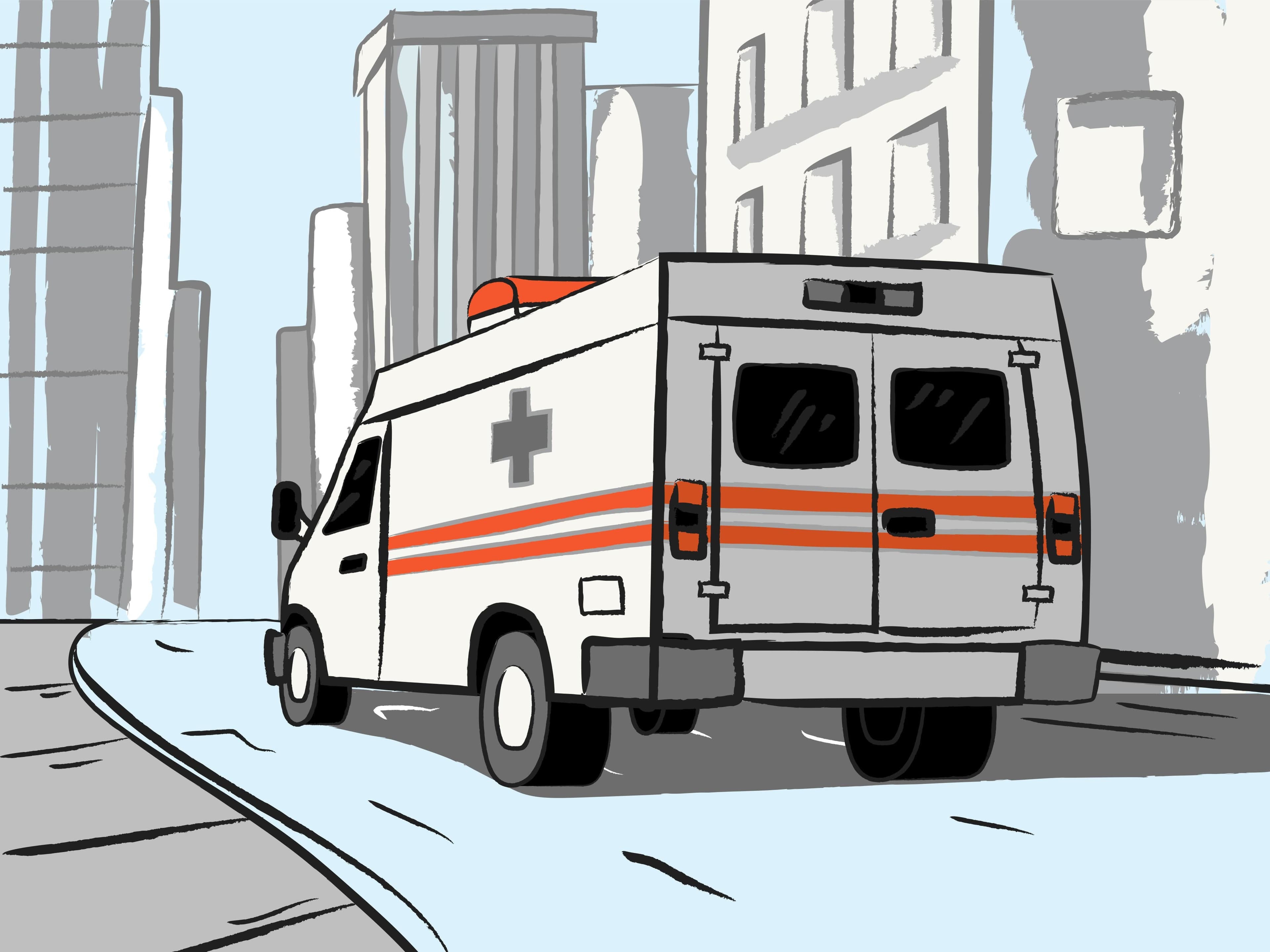
From analyzing FDNY ambulance response times as a young analyst intern at New York City's Office of Management and Budget to examining the effects of congestion pricing today, I've learned that emergency response depends on far more than how quickly an ambulance can travel.
By Scott Webber, DrPH, MBA, MPA, MPH
One of my earliest experiences in New York City government involved studying something most people hope they never have to think about: how long it takes an ambulance to arrive when someone calls 911.
As an analyst intern with the New York City Office of Management and Budget (OMB), I worked in its Fire, Parks and Sanitation Task Force. Among my assignments was analyzing response times for the Fire Department's Emergency Medical Services operations.
It was an interesting introduction to municipal budgeting.
Here I was, early in my public service career, examining statistics that represented something far more consequential than government performance measures.
Behind every response-time figure was a person waiting for medical assistance.
A patient experiencing a serious medical emergency. A family member anxiously watching the clock. An ambulance crew trying to reach someone through New York City's streets.
The assignment introduced me to a lesson that has stayed with me throughout my career.
Government performance isn't ultimately measured by the resources we purchase or the budgets we approve. It's measured by whether those resources are available when people need them.
More than two decades later, New York City's worsening ambulance response times—and the emerging evidence about congestion pricing—make that lesson particularly relevant.
The Numbers Are More Than Statistics
In October 2026, the New York City Comptroller's Office released A System Under Strain: FDNY EMS Operations and Fiscal Pressures.
Its findings were concerning.
Between fiscal years 2015 and 2026, average ambulance response times for life-threatening emergencies increased by approximately three minutes and fifty seconds, or 41%.
By fiscal year 2026, the average end-to-end response time reached 13 minutes and nine seconds, up from 11 minutes and 21 seconds the previous year.
These figures are systemwide averages. Individual responses vary by location, emergency classification, dispatch processing, and ambulance availability.
Nevertheless, the trend deserves attention.
These statistics bring me back to my early assignment at OMB.
Response-time analysis can seem straightforward until you examine the factors behind the numbers.
How many ambulances are available? How many can actually be staffed? How long does dispatch take? How much time do crews spend at hospitals? And how much does traffic congestion affect travel?
The answers involve several government functions that must operate together.
Source: NYC Comptroller, October 16, 2026
https://comptroller.nyc.gov/reports/a-system-under-strain-fdny-ems-operations-and-fiscal-pressures/
Congestion Pricing Offers an Important Lesson in Measuring Results
One particularly interesting development is the effect of New York City's congestion pricing program on emergency medical travel times.
When congestion pricing began in January 2025, much of the public debate focused on the financial burden imposed on drivers, the potential benefits for public transportation, and whether fewer vehicles would enter Manhattan.
But there's another question that deserves attention.
If congestion pricing reduces traffic, does it help ambulances reach patients and hospitals faster?
Research released in 2026 suggests that it can.
A National Bureau of Economic Research working paper examined approximately half a million FDNY EMS incidents from 2024 and 2025, comparing locations near the congestion pricing boundary at 60th Street in Manhattan.
The researchers estimated that congestion pricing reduced combined ambulance travel time to emergency scenes and hospitals by approximately 63 to 70 seconds, or roughly 5% to 6%, in the area studied.
Most of that improvement involved transporting patients from incident locations to hospitals, where travel times declined by approximately 54 to 59 seconds.
The estimated improvement in travel time to the initial emergency scene was considerably smaller—approximately seven to nine seconds—and less statistically precise.
These distinctions are important.
The research does not establish that congestion pricing reduced citywide 911-to-arrival response times by a minute.
It indicates that less traffic can improve certain components of ambulance travel, particularly hospital transportation, within the studied geographic area.
This has implications for emergency medical operations.
An ambulance that completes a hospital transport sooner may become available for another assignment sooner, assuming other parts of the process don't delay its return to service.
Sources: National Bureau of Economic Research, Working Paper 35414, July 2026, revised August 2026
https://www.nber.org/papers/w35414
NBER Research Summary, September 2026
https://www.nber.org/digest/202609/urban-congestion-pricing-and-response-times-emergency-medical-services
But Congestion Pricing Hasn't Solved the Response-Time Problem
There's an important complication.
Despite the research identifying faster travel times near the congestion pricing boundary, FDNY's reported ambulance response times continued to deteriorate.
In July 2026, WABC reported that FDNY found average ambulance response times to life-threatening emergencies increased by about 57 seconds in Manhattan's central business district when comparing 2025 with 2024.
FDNY attributed the broader deterioration primarily to staffing and call-volume pressures rather than congestion pricing.
That may initially appear inconsistent with the NBER findings.
But the two analyses measure different things.
The FDNY comparison concerns overall emergency response times, which include more than travel.
The NBER study isolates changes in travel times associated with congestion pricing near the geographic boundary.
Both findings can be true.
An ambulance may travel faster once dispatched, while patients still wait longer because fewer ambulances are available or dispatch delays have increased.
The NBER analysis is also a working paper rather than a completed peer-reviewed journal publication, and its findings should be considered alongside the FDNY's operational data.
To me, this is precisely why performance measurement matters.
A policy can improve one part of an emergency response system without fixing the entire system.
Source: WABC, July 9, 2026
https://abc7ny.com/amp/post/7-side-investigates-has-congestion-pricing-reduced-911-response-times/19476789/
An Ambulance in the Fleet Isn't Necessarily an Ambulance on the Street
The Comptroller's October report identified another important problem: the difference between ambulances owned and ambulances actually available for service.
On January 8, 2026, FDNY reported 360 ambulances in service, compared with a daily deployment target of 488 and a total fleet roster of 651.
By September, the number in service had improved to 416, although it remained below the earlier deployment target.
A responsible fleet requires spare vehicles and maintenance reserves. Not every ambulance should be operating simultaneously.
But a substantial difference between inventory and deployment requires explanation.
Are vehicles unavailable because of maintenance? Insufficient personnel? Scheduling constraints?
This distinction is particularly relevant to my current work overseeing technology procurement and budgeting at the Department of Correction.
A communications system, security device, or other operational asset has limited value if it isn't functioning or available when needed.
The same principle applies to ambulances.
Buying a public safety resource is an administrative accomplishment. Making it consistently available is the operational achievement that matters.
Staffing Is Part of Emergency Readiness
Workforce retention presents another challenge.
The Comptroller reported approximately 2,540 EMTs and 900 paramedics at the end of fiscal year 2026, along with more than 500 EMT departures during the fiscal year.
Compensation and career advancement opportunities are important factors.
The report identified substantial salary differences between experienced EMTs and firefighters under the compensation arrangements then in effect.
These occupations have different responsibilities and bargaining arrangements, but the management question remains.
What does it cost government to recruit, train, and develop employees, only to lose their experience?
The expense extends beyond recruitment.
Training, overtime, scheduling disruptions, and lost institutional knowledge all have consequences.
In my own career, I've experienced the challenge of maintaining substantial administrative responsibilities with limited staffing.
That has reinforced my belief that vacancies are not merely human resources statistics.
They're operational risks.
For EMS, those risks can affect whether an ambulance is available to respond.
Hospital Turnaround May Offer an Opportunity to Recover Capacity
Another overlooked factor is what happens after an ambulance reaches the hospital.
The crew must transfer responsibility for the patient and complete necessary procedures before returning to service.
Delays reduce the time available for subsequent assignments.
Consider a hypothetical system with 400 ambulances, each completing four hospital transfers daily.
If better coordination reduced turnaround time by ten minutes per transfer, the system could recover approximately 267 ambulance-hours per day.
That wouldn't automatically translate into lower staffing costs or faster responses.
But it illustrates how operational improvements can increase the effective capacity of existing resources.
This is where congestion pricing becomes especially interesting.
If reduced traffic shortens hospital transportation, and better hospital coordination reduces handoff delays, the combined effect could help ambulances return to service sooner.
Those benefits should be measured, not assumed.
Government frequently looks to new equipment when trying to expand capacity.
Sometimes additional equipment is necessary.
But sometimes the better investment involves recovering time that the system is already losing.
Technology Can Help, but It Cannot Replace the Workforce
My professional background naturally leads me to examine technology's role.
Modern dispatch systems, vehicle location technology, demand forecasting, and operational dashboards can improve how emergency resources are allocated.
But technology has limits.
A dispatch system cannot send an ambulance that isn't staffed.
An asset management platform cannot repair a vehicle without technicians and replacement parts.
And artificial intelligence cannot compensate indefinitely for inadequate staffing or poorly designed processes.
Government should avoid purchasing technology as a substitute for addressing underlying management problems.
Modernization should improve an adequately supported service—not conceal weaknesses in its operating model.
EMS Financing Requires Long-Term Planning
The Comptroller found that FDNY EMS expenditures increased from approximately $257 million in fiscal year 2015 to $434 million in fiscal year 2026.
Associated revenues increased from approximately $160 million to $254 million.
Ambulance transport generates reimbursement from insurers and government healthcare programs, but those payments don't necessarily cover the full cost of providing emergency medical services.
Unlike an ordinary commercial operation, EMS must maintain readiness even when demand fluctuates.
Government cannot evaluate emergency medical care exclusively through revenue generation.
But it must understand the financial gap and identify a sustainable funding strategy.
That requires evaluating personnel costs, fleet maintenance, hospital coordination, technology, and reimbursement together.
What I Would Measure Differently
If I were reviewing EMS performance today, I would want a dashboard that separates each stage of the emergency response process.
Call processing.
Dispatch.
Travel to the scene.
Patient care and transportation.
Hospital turnaround.
Return to service.
I would also examine staffing levels, fleet availability, and geographic differences.
Most importantly, I would want to measure the effect of individual policy interventions.
Did congestion pricing improve ambulance travel times within the tolling zone?
Did those improvements reduce total time to patient care or increase unit availability?
Did hospital turnaround initiatives produce additional capacity?
Did workforce changes improve the number of staffed ambulances?
And were the benefits sustained?
The Independent Budget Office's October 20, 2026 testimony emphasized that no single explanation or simple solution explains worsening EMS response times. It also identified hospital-operated ambulance withdrawals and workforce attrition as important considerations.
That's consistent with the broader lesson I've learned in government.
Complex operational problems rarely have one cause.
And they rarely have one solution.
Source: NYC Independent Budget Office, October 20, 2026
https://www.ibo.nyc.gov/content/news/2026-october-ems-testimony-council
The Lesson Has Stayed With Me
I didn't know when I was an analyst intern at OMB that I would eventually spend much of my career managing technology procurement and budgets at a major City agency.
But analyzing FDNY EMS response times introduced me to the relationship between financial decisions, operational performance, and public service.
More than two decades later, the debate over congestion pricing illustrates how complicated that relationship can be.
Reducing traffic can improve ambulance travel.
But faster travel doesn't automatically overcome staffing shortages, unavailable vehicles, or delays at hospitals.
A public policy can deliver a measurable benefit while other problems continue to worsen.
Government leaders need to understand those distinctions.
An ambulance doesn't save lives because it appears in a capital budget, sits in a fleet inventory, or benefits from a faster roadway. It saves lives when trained personnel, reliable equipment, effective dispatch, and coordinated hospitals come together to reach someone who needs help.
That's the difference between funding a service and delivering one.
And it's a lesson I first began learning as a young analyst examining FDNY EMS response times—a lesson that has remained relevant throughout my public service career.
The views expressed in this article are my own and do not necessarily represent the positions of the New York City Department of Correction, the New York City Office of Management and Budget, or the City of New York.