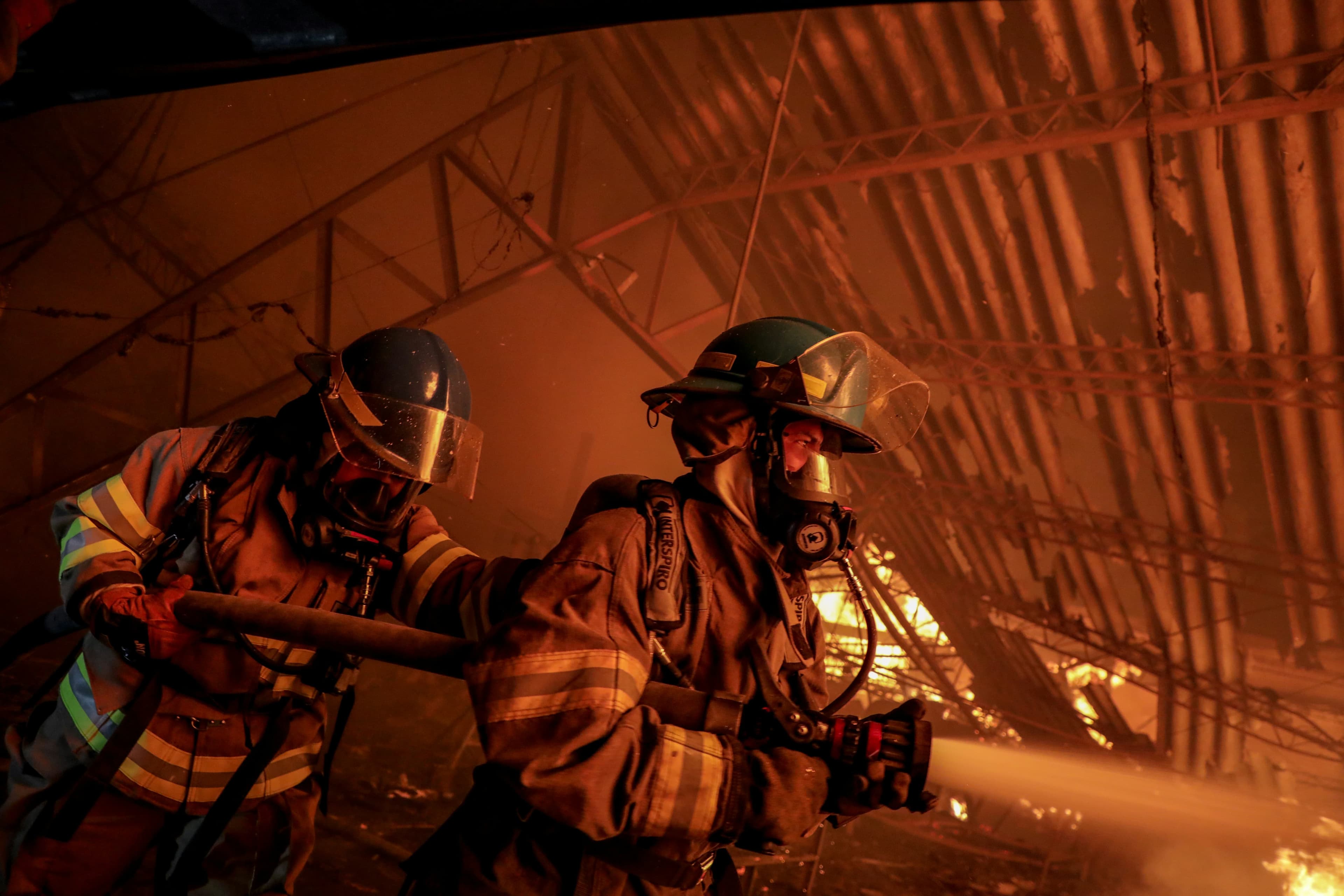
The Military Understands Something Civilian Government Often Forgets: Readiness Has a Price
By Scott Webber, DrPH, MBA, MPA, MPH
I still remember reporting to work in the aftermath of Hurricane Sandy in October 2012.
The storm had devastated portions of New York City and Long Island. Trees were down, neighborhoods were flooded, the region was without electricity, and transportation systems were severely disrupted.
On my way to work, I encountered storm debris blocking the roadway. I had to physically move it out of the way just to reach the highway and continue my commute.
I wasn't a firefighter conducting rescues, a correction officer securing a housing unit, or a medical professional treating patients. I was a civilian government employee working for the New York City Department of Correction.
But the Department still had thousands of people in its custody, and its responsibilities hadn't disappeared because a hurricane had struck.
That experience reinforced something I've come to appreciate throughout my career: Government doesn't build capacity merely for an ordinary Tuesday. It builds capacity for the day when everything goes wrong.
I've never served in the military, but after more than 22 years in New York City government, including approximately 15 years at DOC, I've developed considerable respect for the military's emphasis on logistics, preparedness, and operational continuity.
The military understands that readiness requires resources that may not be fully utilized every day.
Civilian government should recognize the same principle.
Government Isn't Supposed to Operate at 100% Capacity Every Day
One challenge of public administration is explaining why government sometimes needs to maintain resources that appear underutilized.
We staff firehouses even when there aren't fires. We maintain emergency generators that may sit idle for months. We establish contingency contracts, stockpile supplies, and invest in redundant infrastructure for emergencies we hope will never occur.
Consider the Federal Emergency Management Agency (FEMA) and New York City Emergency Management (formerly OEM).
Their responsibilities include preparing for disasters, coordinating emergency resources, and ensuring that essential services can continue when ordinary systems fail.
A catastrophic hurricane may not strike this year. A major blackout may not occur. Another pandemic may be years away.
But when an emergency happens, the public expects government to respond immediately.
That capability cannot be created overnight.
The public isn't simply paying for the services government provides today. It's also paying for the capacity to respond when normal life is disrupted.
At Rikers Island, There Is No Such Thing as Closing for the Storm
My experience at the Department of Correction has made this principle particularly meaningful.
People in custody depend on government for food, water, medication, medical treatment, safe housing, and security.
Unlike residents who can evacuate their homes or relocate temporarily, people in custody generally cannot make those arrangements independently.
Government has assumed responsibility for their care.
That obligation continues through hurricanes, blackouts, pandemics, and other emergencies.
During Hurricane Irene in 2011 and Hurricane Sandy in 2012, Rikers Island remained operational without a general evacuation.
Following Sandy, DOC reported that the island avoided a major power outage, significant flooding and widespread operational disruption. Subsequent assessments nevertheless identified shoreline erosion and infrastructure damage.
The decision not to evacuate also raised legitimate questions about whether contingency planning was adequate for people who could not leave independently.
The fact that operations continued didn't mean the risks were insignificant. It demonstrated both the importance of sustaining essential services and the need to scrutinize the plans intended to protect them.
Correctional facilities require functioning communications, technology infrastructure, maintenance support, transportation, supplies, and administrative coordination.
My role involves procurement and budgeting rather than frontline correctional operations, but the resources my division helps obtain support the larger mission.
COVID-19 Exposed the Cost of Operating Without Sufficient Flexibility
If hurricanes demonstrated the importance of emergency logistics and physical infrastructure, COVID-19 exposed the challenges of sustaining operations during a prolonged crisis.
Unlike a hurricane, the pandemic didn't pass in a few days.
The Department had to keep housing, feeding, supervising, and providing healthcare access for people in custody while responding to an infectious disease emergency.
COVID created extraordinary challenges involving testing, isolation, medical treatment, staffing, and operational coordination.
The Department and Correctional Health Services implemented screening procedures, modified housing arrangements, and expanded infection-control measures.
Technology became increasingly important. Video visitation and other remote services helped preserve certain functions when in-person interactions were restricted.
But the pandemic exposed limitations that technology alone couldn't resolve.
The Board of Correction documented concerns involving housing density, staffing, and infection prevention. By March 2022, DOC reported nearly 2,000 fewer correction officers than at the end of 2019, even as the in-custody population had grown beyond earlier projections.
An organization with just enough resources to function under normal circumstances may have little ability to absorb an emergency.
If nearly every employee is needed for routine operations, what happens when substantial numbers become sick?
If supplies are ordered only when immediately required, what happens when manufacturers shut down, or transportation networks fail?
COVID demonstrated that preparedness depends on personnel, infrastructure, supplies, and operational flexibility working together.
I've Seen the Same Capacity Problem in My Own Division
Today, I oversee IT Procurement and Budget at DOC, an operation responsible for approximately 200 to 300 procurements annually, roughly $23 million in operating technology expenditures and a ten-year capital plan approaching $181 million.
Over time, my division has experienced substantial staffing reductions while continuing to manage complex technology contracts, major renewals, and budget responsibilities.
I've automated repetitive tasks, eliminated unnecessary processes, and improved procurement efficiency.
I strongly believe in reducing waste.
But there's an important distinction between eliminating inefficiency and eliminating resilience.
When staffing becomes too lean, an unexpected procurement, major contract expiration, or critical infrastructure problem can overwhelm an otherwise functional operation.
A spare network component sitting in storage may appear unnecessary until a critical device fails. A backup communications system may seem expensive until primary connectivity becomes unavailable.
A government operation that has no spare capacity isn't necessarily lean. It may simply be one emergency away from failure.
The Lowest Price Isn't Always the Lowest Cost
I spend considerable time challenging vendor pricing, evaluating alternative procurement vehicles, and negotiating better terms.
In FY2025, my operation saved about 9% through procurement and budget management efforts.
But the least expensive proposal isn't necessarily the best value.
Consider specialized technology supporting a correctional facility.
One maintenance provider may offer a lower annual price, while another has direct access to proprietary replacement parts, manufacturer support, and technicians familiar with the installed equipment.
If the lower-cost provider cannot restore service promptly, the consequences may outweigh the initial savings.
That doesn't justify avoiding competition.
It means evaluating the total cost of ownership alongside the cost of failure.
For a routine administrative application, several hours of downtime may be tolerable. For technology supporting essential facility operations, the consequences could be far more serious.
The objective should be to achieve the required reliability at the lowest reasonable long-term cost.
Preparedness Begins With Long-Term Planning
Earlier in my City career, I worked as a capital budget analyst at the Department of Transportation, where I managed infrastructure projects, including retaining walls, step streets, and other capital improvements.
That experience taught me that infrastructure deterioration doesn't follow the City's fiscal calendar.
A retaining wall doesn't wait for the next budget cycle before developing a structural problem.
Neither does a server, network switch, storage system, or telecommunications platform.
Today, I apply that perspective to technology capital planning.
If a major software agreement expires in three years, we should start planning before the final year.
If equipment is approaching the end of manufacturer support, we should evaluate replacement options before failure becomes imminent.
If a technology investment will generate millions in recurring operating expenses, we should understand how we will fund those obligations.
Long-term planning isn't merely about producing a more accurate budget. It's about preserving the agency's ability to fulfill its mission.
A Practical Readiness Framework for Government Leaders
I believe every government agency should periodically evaluate its readiness through six questions:
1. What absolutely cannot stop? Identify mission-critical services and the minimum operating requirements needed to sustain them. At DOC, those include custody operations, food, water, medical care, security, and essential communications.
2. How long can we tolerate an interruption? Establish recovery-time objectives for critical systems and services. A four-hour outage may be acceptable for one function and unacceptable for another.
3. What happens when normal demand or employee availability changes dramatically? Model emergencies involving staffing shortages, supply disruptions, and increased service demand. Don't assume every employee and supplier will be available.
4. Where are our single points of failure? Identify dependencies on individual employees, vendors, facilities, and systems. Cross-train personnel and establish appropriate alternatives.
5. Have we actually funded our contingency plans? A plan dependent on equipment that hasn't been purchased, contracts that don't exist, or funding that hasn't been secured may provide false reassurance.
6. When did we last test our assumptions? Conduct exercises, verify backup systems, and incorporate lessons from actual emergencies. Hurricane Sandy and COVID exposed very different vulnerabilities; preparing exclusively for the last disaster is insufficient.
These questions should inform annual budget development, major procurement decisions and agency continuity planning.
The objective isn't to eliminate every risk or maintain unlimited reserves.
It's to identify consequential vulnerabilities and invest in the most economical combination of personnel, equipment, contracts and contingency resources needed to address them.
Readiness should be measurable, funded, and tested- not simply assumed.
The Real Cost of Being Unprepared
When I think about readiness, I still remember clearing storm debris from the roadway after Hurricane Sandy so I could reach the highway and report to work.
I wasn't responding to an emergency as a firefighter, correction officer or medical professional. I was doing my part as a civilian public servant in an organization whose responsibilities continued regardless of the conditions outside.
That experience reinforced a lesson I've carried throughout my career: government must plan, fund, and maintain the resources it needs during a crisis long before it arrives.
As public administrators, our responsibility is not to eliminate every dollar of unused capacity. It's to distinguish unnecessary expenditures from the reserves, redundancy and operational flexibility that protect essential services.
We should challenge costs, demand efficiency, and eliminate waste. But we should also understand the consequences of failure—and budget accordingly.
The military understands that readiness has a price. Civilian government must understand that the absence of a crisis doesn't mean the investment in preparedness was wasted.
Sometimes the greatest return on a public investment is the disaster that never becomes a catastrophe because government was ready.
Sometimes the most important thing taxpayers buy is the assurance that, when almost everything else stops, their government won't.
The views expressed in this article are my own and do not necessarily represent the positions of the New York City Department of Correction or the City of New York.