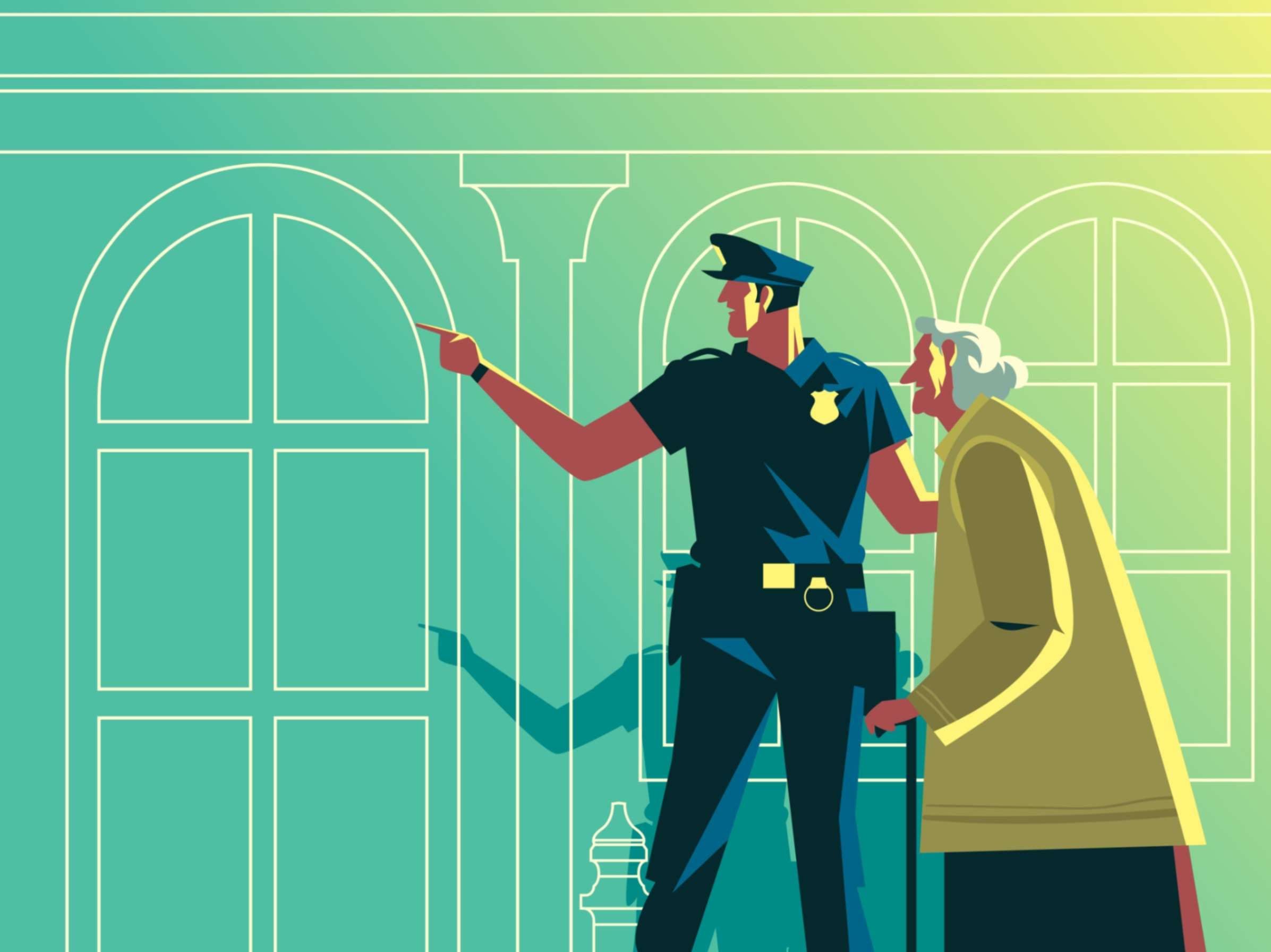
Community Policing Without Burnout: Doing the Work Without Losing Your Edge
Community policing is often described as the “soft side” of law enforcement, but anyone who has done it well knows the truth: it can be exhausting. It requires patience when running on little sleep. It requires emotional control when being insulted. It requires steady professionalism when dealing with the same problems, the same addresses, the same families, and the same cycles - again and again.
And it asks something else, too: it asks officers to stay human.
The danger is not that community policing makes officers weak. The danger is that officers will try to do it without the tools and support that make it sustainable. Over time, the work can hollow out even good cops. It can turn genuine care into resentment. It can make every complaint feel like an accusation. It can make every conversation feel like a trap.
Burnout does not happen all at once. It happens by degrees. And if community policing is going to work, agencies must treat officer wellness as part of the strategy - not as an afterthought.
Community Policing Is Still Officer Safety
A common misconception is that community policing is separate from tactical readiness. It isn’t.
Knowing the neighborhood - truly knowing it - improves officer safety. Familiarity reduces surprises. Relationships reduce resistance. Residents who trust officers are more likely to warn them when something is escalating, more likely to cooperate as witnesses, and more likely to intervene early by calling before a problem turns violent.
Community policing is not a replacement for enforcement. It is a form of prevention that makes enforcement safer, smarter, and more targeted.
The Emotional Labor Is Real
There is a kind of emotional strain unique to community policing. Officers are not only responding to danger - they are absorbing the community’s frustration, grief, fear, and anger. They become the person people unload on, even when the officer didn’t cause the problem.
Over time, that can create a quiet bitterness:
“Nothing I do matters.”
“They only call us when they want something.”
“They hate us until they need us.”
Those thoughts don’t always mean an officer is broken. They often mean an officer is tired.
Community policing requires agencies to acknowledge emotional labor honestly. Not with slogans. With real support - peer counseling, access to mental health professionals, and protected time for decompression.
Do the Work - But Don’t Try to Carry the Whole City
One of the fastest roads to burnout is believing officers must fix everything.
Officers see problems that are not primarily criminal: mental illness, addiction, poverty, neglect, loneliness, broken families. Policing touches the sharp edge of these issues, but it cannot solve them alone. When officers internalize the belief that they must “save” everyone, the result is predictable: frustration, fatigue, and cynicism.
A healthier mindset is this:
Do what the badge authorizes. Do what the role allows. Do what can be sustained.
Community policing works best when it is shared work - police, residents, services, leadership - each doing their part.
Boundaries Are Not Coldness
Officers who care deeply sometimes struggle with boundaries. They return calls at all hours. They carry residents’ problems home. They become the unofficial social worker, counselor, mediator, and emergency manager.
The heart behind it is good. The cost is high.
Boundaries are not a lack of compassion. They are a form of discipline. They keep the officer stable, and they keep the work from consuming the person.
A sustainable officer is more useful to the community than a burned-out hero.
Consistency Beats Intensity
Many agencies expect community policing to look like big gestures: events, meetings, outreach programs, school visits, public forums.
Those things have value. But they are not the core of the work.
The core is consistency:
showing up when promised
calling people back
taking small concerns seriously
being predictable in tone and professionalism
explaining clearly what can and cannot be done
Communities do not trust intensity. They trust follow-through.
Community Policing Requires Supervisors Who Protect Their People
Officers cannot do community policing well if they feel unsupported.
Supervisors matter more than policy. A good supervisor:
backs officers who act professionally
corrects officers early and privately
shields the team from political panic
insists on both courtesy and officer safety
ensures training and staffing are realistic
A bad supervisor can turn community policing into constant fear: fear of complaints, fear of discipline, fear of being sacrificed for optics. That environment produces defensive policing, not community policing.
Don’t Lose Your Edge - Refine It
There is a fear among some officers that community policing means becoming passive. That fear is understandable. The job is dangerous, and officers must stay sharp.
But the best community officers are not less tactically prepared. They are more prepared - because they are practiced in reading people, managing emotion, and recognizing escalation early.
Professionalism is not weakness. Calm is not surrender. Courtesy is not compliance.
The edge to keep is not aggression. It is discernment.
The Work That Lasts
Community policing, done well, is slow. It does not always show immediate results. It rarely brings applause. But it prevents harm in ways that may never be seen.
And it gives officers something vital in return: meaning.
In a job that can harden the heart, community policing offers a way to stay anchored. Not naïve. Not unguarded. But steady.
Because the best officers are not those who feel nothing.
They are the ones who feel, and still choose discipline.
They keep their edge.
And they keep their soul.
Bibliography
International Association of Chiefs of Police. (2022). Officer Safety and Wellness. Retrieved from https://www.theiacp.org/topics/officer-safety-and-wellness
President’s Task Force on 21st Century Policing. (2015). Final Report. Washington, DC: Office of Community Oriented Policing Services.
Morin, R., Parker, K., Stepler, R., & Mercer, A. (2017). Behind the Badge. Pew Research Center. Retrieved from https://www.pewresearch.org/social-trends/2017/01/11/behind-the-badge/
National Institute of Justice. (2019). The Benefits of Community Policing. Retrieved from https://nij.ojp.gov/topics/articles/benefits-community-policing
Violanti, J.M., Owens, S.L., McCanlies, E., Fekedulegn, D., Andrew, M.E., & Lawler, M.R. (2018). Law Enforcement Work and Retirement: A Narrative Review. Policing: A Journal of Policy and Practice, 13(3), 386–400.
More from Public Safety
Explore related articles on similar topics