Lessons in Resilience: Preparing Schools for the Next Big Disruption
When disaster strikes, the first images that come to mind are flooded streets, damaged homes, and disrupted lives. But one crisis is often overlooked: the sudden halt of education. After Hurricane Katrina, thousands of students lost not only their classrooms but also the digital lifelines that could have kept them learning. The storm exposed a harsh truth: education continuity now depends on digital infrastructure just as much as on physical classrooms.
In an era of increasing natural disasters and global disruptions such as hurricanes and the Covid 19 pandemic, ensuring every student has access to technology, connectivity, and community support is no longer optional- it’s a moral imperative. Schools, governments, and communities must work together to build resilient systems that allow learning to continue seamlessly, whether in person or online. The future of educational equity depends on our ability to prepare for the unpredictable- and to ensure that no student is left offline when it matters most.
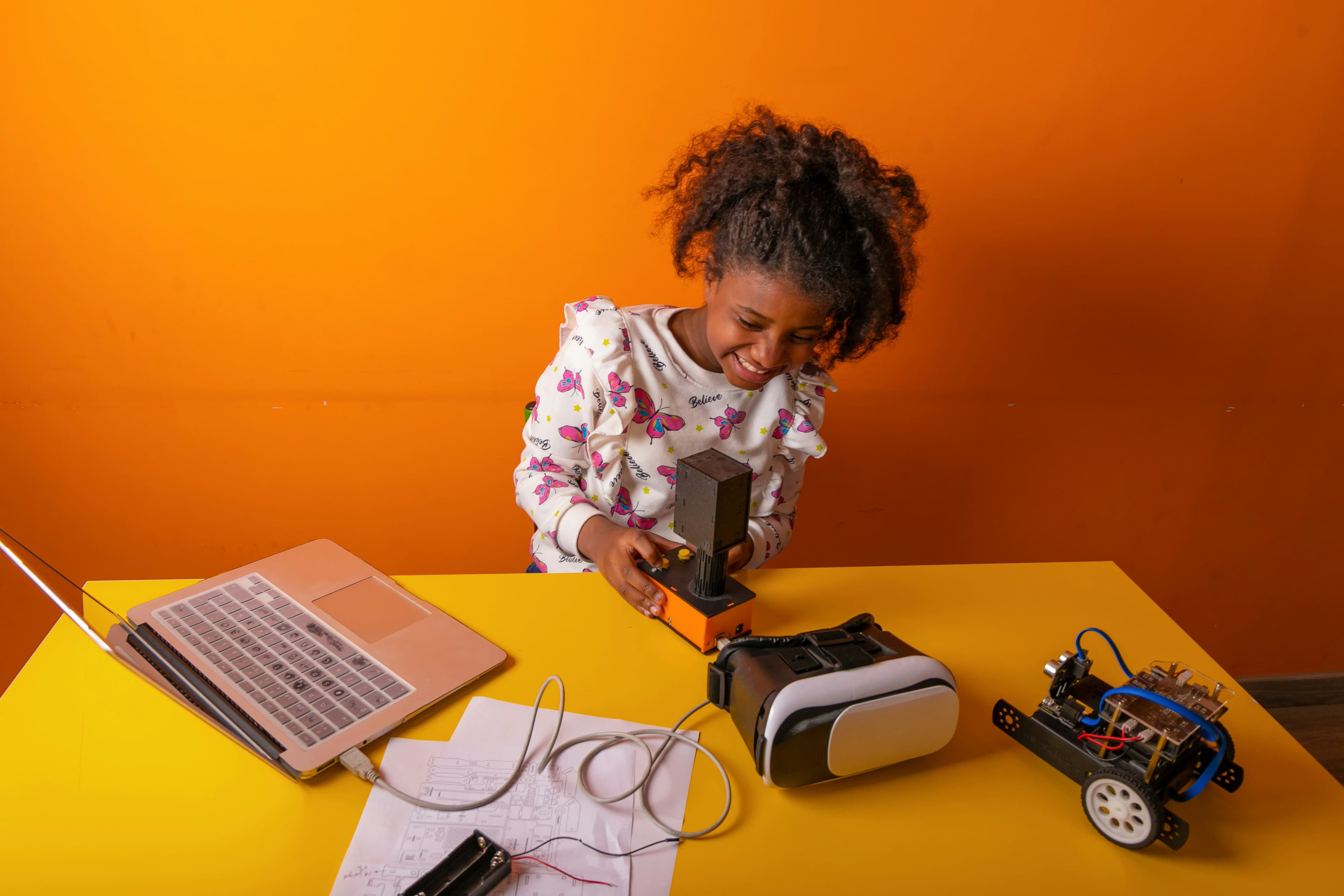
Ensuring continuity of education in the midst of large-scale disruptions requires robust digital infrastructure. Many displaced students lacked access to computers, internet connectivity, and digital learning platforms, which severely limited their ability to continue schooling during and after the crisis. The digital divide, particularly affecting low-income and minority communities, became more pronounced and highlighted an urgent need for systemic investment in digital equity. According to the Consortium for School Networking, only 20 percent of school districts had comprehensive digital learning plans prior to 2020, indicating a substantial vulnerability in disaster readiness planning1.
Local and state governments should develop comprehensive digital learning strategies that include the distribution of devices, establishment of mobile internet hubs, and partnerships with telecom providers to ensure connectivity for all students. These strategies must be embedded in emergency preparedness plans and remain operational even in non-crisis periods to build resilience. Furthermore, school districts should maintain cloud-based platforms for instructional materials, student records, and virtual classrooms to enable rapid transition to remote learning when needed. Public-private partnerships can also be leveraged to fund and sustain these efforts, particularly in historically underserved communities.
Building Community-Based Support Networks in Schools
Education recovery after a disaster extends beyond academics; it requires rebuilding trust and community cohesion. Schools often serve as anchor institutions within neighborhoods, providing not only education but also access to meals, healthcare referrals, and social services. After Katrina, the dissolution of neighborhood schools, particularly in New Orleans, disrupted these support systems and left families without vital lifelines2. Reforms introduced in the name of efficiency often eroded the relational infrastructure that schools had cultivated over years.
To address this, educational institutions should formalize partnerships with local nonprofits, health agencies, and faith-based organizations to create comprehensive support networks anchored in schools. These networks can offer wraparound services, including healthcare screenings, legal aid, housing support, and mental health counseling. School administrators should also engage in participatory planning with community members to design programs that reflect local needs. In times of crisis, these established relationships can be mobilized more quickly than top-down interventions. Building this kind of resilience requires long-term investment and deliberate community engagement strategies.
Institutionalizing Equity-Oriented Policy Reviews
One of the most lasting criticisms of the post-Katrina education reforms is the lack of systemic equity evaluations prior to implementation. Policies such as mass layoffs, school closures, and the expansion of charters were enacted rapidly, often without inclusive stakeholder input or racial equity assessments. These decisions disproportionately impacted Black educators and communities, contributing to a sense of disenfranchisement and loss of cultural continuity3.
To avoid repeating these mistakes, school districts and education agencies should institutionalize racial and socioeconomic equity reviews as standard practice in policy development. These reviews should be conducted by independent evaluators and include both qualitative and quantitative data. Metrics might include impact on workforce diversity, access to specialized services, and changes in enrollment or academic performance by demographic group. Local education boards should use the findings of these assessments to guide decision-making, allocate resources, and adjust strategies to avoid unintended harm. Embedding equity in policy design is not only a matter of justice but also a mechanism for more effective governance.
Stabilizing Student Transitions Through Interstate Collaboration
After Hurricane Katrina, thousands of students were uprooted and relocated to schools in neighboring states, often with little coordination between sending and receiving districts. Students faced challenges related to credit transfers, curriculum mismatches, and differing graduation requirements. The lack of a standardized interstate protocol for educational transitions created additional stress for families already coping with trauma and displacement4.
To prepare for future displacements, state education departments should enter into mutual aid agreements that facilitate the temporary integration of displaced students. These agreements can standardize credit recognition, align core curriculum benchmarks, and identify liaisons to assist families with enrollment and support services. Regional education compacts, such as the Southern Regional Education Board, can serve as platforms for developing these protocols. Additionally, a national student identification system could assist in tracking academic records and ensuring continuity across jurisdictions. These proactive agreements can significantly reduce the administrative and emotional burden on displaced students and their families.
Developing Flexible Funding Models for Crisis Recovery
Funding mechanisms for education recovery often lack the flexibility needed to address the nuances of post-disaster landscapes. In the aftermath of Katrina, federal aid primarily flowed through rigid grant structures that did not account for the specific needs of displaced populations, such as temporary housing, transportation, or bilingual support for immigrant students. Local school leaders frequently cited difficulties in accessing and applying these funds due to bureaucratic complexity and inconsistent guidance from federal agencies5.
To improve responsiveness, education funding models should include contingency allocations that can be activated during federally or state-declared emergencies. These funds should prioritize equity by using need-based formulas that account for income level, displacement status, and other vulnerability factors. States can also establish education emergency reserve funds, governed by transparent criteria and oversight, to provide immediate relief before federal aid becomes available. Simplifying application procedures and providing technical assistance to school districts will further ensure that resources reach intended recipients without delay.
Supporting Youth Civic Engagement in Education Recovery
The voices of young people affected by disasters are often marginalized in the policy decisions that shape their futures. After Katrina, many students expressed frustration over the lack of input into school reforms, curriculum changes, and the closure of beloved institutions. Yet, research shows that involving youth in decision-making processes can improve civic outcomes, foster resilience, and lead to more inclusive educational environments6.
School districts and local governments should create formal pathways for student participation in recovery planning and governance. This can include youth advisory councils, participatory budgeting for school improvement projects, and student representation on school boards or oversight committees. Empowering students to contribute their lived experiences fosters a sense of agency and ensures that recovery efforts align with their actual needs. By institutionalizing youth engagement, schools can also cultivate future civic leaders who are prepared to advocate for equitable policy changes beyond the classroom.
Bibliography
Consortium for School Networking. 2020. “Driving K-12 Innovation: 2020 Hurdles + Accelerators.” Washington, DC: CoSN.
Buras, Kristen L. 2015. Charter Schools, Race, and Urban Space: Where the Market Meets Grassroots Resistance. New York: Routledge.
Weber, Rachel. 2020. “The Political Economy of Disaster Recovery: New Orleans’ Education Reform after Katrina.” Urban Affairs Review 56(3): 765-794.
U.S. Department of Education. 2007. “Hurricane Help for Schools: A Guide to Federal Disaster Aid for Education.” Washington, DC: Office of Elementary and Secondary Education.
Nelson, Kimberly, and Beth Gazley. 2014. “The Rise of Charter Schools in Post-Katrina New Orleans: A Case of Disaster Capitalism?” Journal of Public Management and Social Policy 20(1): 20-40.
Abramson, David, et al. 2010. “The Impact of Hurricane Katrina on the Mental and Physical Health of Low-Income Parents in New Orleans.” American Journal of Orthopsychiatry 80(2): 237-247.