Beyond the Big Names: A 2026 Power Ranking of Mid-Sized America
This deep dive was worth doing because too much of the national conversation focuses on either superstar metros or struggling places, while a great deal of American energy, creativity, and institutional promise is being built in cities that sit in the middle ("The Rise of Mid-Sized American Cities"; "Top 100 Best Places to Live"). These mid-sized cities still have life in them. They are places where universities, employers, local governments, and neighborhoods can still shape a shared future in visible ways, which is exactly why they deserve both serious analysis and a strong endorsement ("The Rise of Mid-Sized American Cities"; "Innovation Cities Index"; "AARP Livability Index").
Mid-sized American cities have become some of the most competitive places in the country for talent, investment, and institutional growth because they often combine economic dynamism, manageable scale, and a quality of life that is harder to sustain in the largest metropolitan areas ("The Rise of Mid-Sized American Cities"; "Top 100 Best Places to Live"). For this article, mid-sized cities are treated as communities or metro areas that sit below the largest superstar metros but still possess enough population, employment depth, and civic infrastructure to function as major regional anchors ("The Rise of Mid-Sized American Cities"; "Top 100 Best Places to Live").
This ranking identifies the top 10 mid-sized cities in the United States and evaluates them against a broader pool of 30 cities, with each top-10 selection compared to three regional peers so that every comparison remains geographically grounded and structurally fair ("The Rise of Mid-Sized American Cities"; "Top 100 Best Places to Live"; "Innovation Cities Index"). The goal is not simply to list popular places to live. It is to identify which cities have built the strongest overall position for long-term competitiveness, balancing jobs, affordability, innovation capacity, educational depth, and livability in 2026 ("The Rise of Mid-Sized American Cities"; "AARP Livability Index"; "Top 100 Best Places to Live").
Methodology
The ranking methodology draws from widely used themes in national livability, innovation, and growth frameworks. Sources on mid-sized city growth emphasize that these places are increasingly attractive because they offer a more favorable balance of affordability and economic opportunity than many large metropolitan areas ("The Rise of Mid-Sized American Cities"). Innovation benchmarking also shows that mid-sized cities can compete above their weight when they combine knowledge assets, institutional strength, and quality-of-place advantages ("Innovation Cities Index"). National livability indexes likewise reward places that perform well across housing, health, mobility, environment, and civic life ("AARP Livability Index"; "Top 100 Best Places to Live").
Based on those themes, five factors were used in this article. First, economic momentum measured whether a city had a diverse employer base, visible job growth sectors, and durable business formation trends ("The Rise of Mid-Sized American Cities"; "Innovation Cities Index"). Second, affordability measured whether housing and daily living costs remained plausible relative to wages and local opportunity rather than in abstract national terms ("Top 100 Best Places to Live"; "AARP Livability Index"). Third, quality of life included safety, health access, recreation, commuting patterns, and the overall ability to build a stable household in the city ("Top 100 Best Places to Live"; "AARP Livability Index"; "Best Places to Live for Quality of Life"). Fourth, talent infrastructure examined the presence of universities, colleges, medical systems, and workforce pipelines that continually renew the local economy ("20 Best Midsized US Cities to Live"). Fifth, civic and innovation capacity assessed whether a city showed evidence of institutional adaptability, meaning it could coordinate public, private, and educational partners in ways that support modern growth ("Innovation Cities Index"; "Methodology Americas").
Regional comparison mattered because a city in the Mountain West faces a different development context than one in the Northeast corridor or the South. Housing pressure, weather, land use patterns, migration flows, and industrial history vary by region, so each selected city was compared to three peer finalists in its own region rather than to arbitrary national opposites ("The Rise of Mid-Sized American Cities"; "Top 100 Best Places to Live"). This produced a field of 30 cities in total. From that pool, the final top 10 were chosen based on balance. A city needed to demonstrate strength across several categories, not just one standout feature such as a university, a tourism brand, or low taxes alone ("The Rise of Mid-Sized American Cities"; "Innovation Cities Index"; "AARP Livability Index").
Northeast
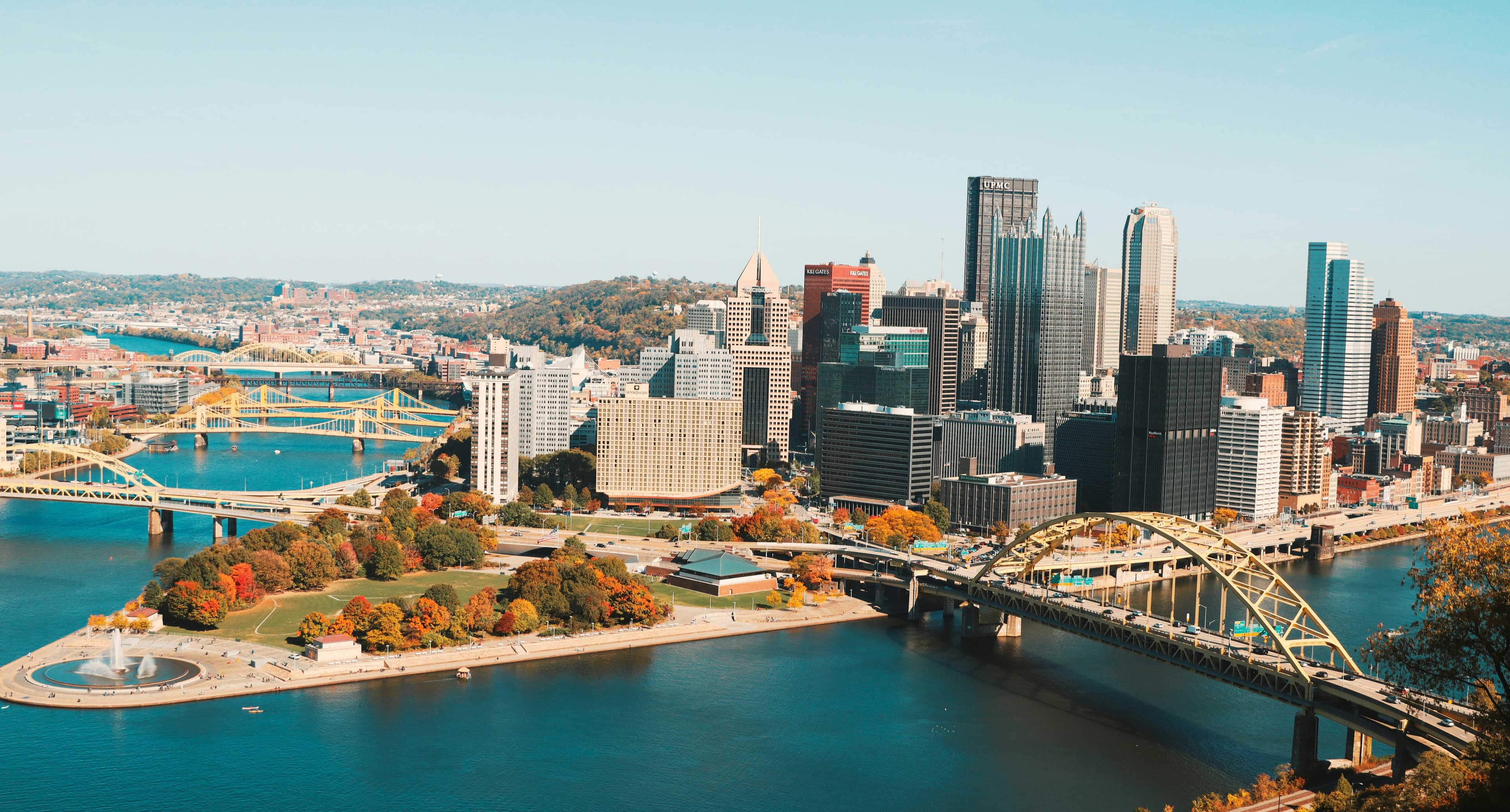
1. Pittsburgh, Pennsylvania
Pittsburgh ranks first in the Northeast because it has built one of the most complete reinvention stories in urban America. The city transformed from a steel-dominated legacy economy into a center of healthcare, robotics, higher education, and advanced research anchored by Carnegie Mellon University and the University of Pittsburgh ("20 Best Midsized US Cities to Live"). That combination gives Pittsburgh something few mid-sized cities possess: a legacy industrial backbone, world-class academic institutions, and a future-facing technology platform operating in the same place ("20 Best Midsized US Cities to Live"; "Innovation Cities Index").
Pittsburgh also stands out because its affordability remains stronger than many East Coast cities that offer comparable cultural depth and institutional assets ("Top 100 Best Places to Live"; "AARP Livability Index"). Residents gain access to major hospitals, universities, arts institutions, sports, and a recognizable urban identity without paying the premium associated with Boston, New York, or Washington-adjacent communities ("Top 100 Best Places to Live"; "AARP Livability Index"). In a period when many households and firms are searching for value, that balance matters enormously.
The regional finalist comparison clarifies why Pittsburgh was selected. Compared with Rochester, New York, Pittsburgh has a broader innovation profile and a more diversified higher education footprint ("Innovation Cities Index"; "20 Best Midsized US Cities to Live"). Compared with Providence, Rhode Island, it benefits from a lower cost profile and a larger healthcare and robotics growth narrative ("Top 100 Best Places to Live"; "AARP Livability Index"). Compared with Stamford, Connecticut, it offers a more independent economic identity rather than operating largely in the shadow of a larger metro labor market ("The Rise of Mid-Sized American Cities"; "Top 100 Best Places to Live"). Pittsburgh was chosen because it combines resilience, affordability, and innovation better than any other Northeast finalist in this ranking pool.
2. Raleigh, North Carolina
Raleigh ranks just behind Pittsburgh and could easily be first in many methodology models because its long-term fundamentals are exceptional. The city benefits from the larger Research Triangle ecosystem, which links North Carolina State University with Duke University and the University of North Carolina, creating one of the strongest talent-production corridors in the country ("20 Best Midsized US Cities to Live"). That talent engine fuels growth in technology, biotech, life sciences, and professional services, and it gives Raleigh a level of future readiness that many peers cannot replicate ("The Rise of Mid-Sized American Cities"; "Innovation Cities Index").
Raleigh was selected because it is one of the clearest examples of how a mid-sized city can scale while preserving broad opportunity. It continues to attract employers and residents, yet it still offers a more manageable cost structure and a more navigable urban form than many large coastal markets ("The Rise of Mid-Sized American Cities"; "Top 100 Best Places to Live"; "Best Places to Live for Quality of Life"). Its appeal is not driven by one single sector. Instead, it reflects a reinforcing system of universities, employers, suburban and urban housing options, and a professional class that sees the region as both aspirational and practical ("The Rise of Mid-Sized American Cities"; "20 Best Midsized US Cities to Live").
The regional comparison strengthens Raleigh's case. Compared with Durham, North Carolina, Raleigh has a broader government and corporate profile while still sharing access to the same research ecosystem ("The Rise of Mid-Sized American Cities"; "20 Best Midsized US Cities to Live"). Compared with Richmond, Virginia, Raleigh shows stronger current momentum in technology and life sciences ("The Rise of Mid-Sized American Cities"; "Innovation Cities Index"). Compared with Frederick, Maryland, Raleigh is less dependent on spillover from a larger federal metro and has greater scale as a stand-alone innovation center ("Best Places to Live for Quality of Life"; "The Rise of Mid-Sized American Cities"). Raleigh was chosen because it performs at a very high level across jobs, talent, and livability without becoming prohibitively expensive.
3. Providence, Rhode Island
Providence earns the third Northeast slot because it blends historic urban fabric, higher education strength, healthcare presence, and relative accessibility to the larger Northeast corridor ("Top 100 Best Places to Live"; "AARP Livability Index"). Brown University and the Rhode Island School of Design contribute intellectual and creative capital that elevate Providence beyond what its population size alone would suggest ("20 Best Midsized US Cities to Live"). At the same time, the city remains more affordable than many nearby coastal competitors, which makes it attractive to students, young professionals, and households priced out of Boston ("Top 100 Best Places to Live"; "Best Places to Live for Quality of Life").
Providence was chosen because it offers a rare mix of density, culture, and institutional relevance in a compact footprint. Many mid-sized cities provide affordability but lack urban texture. Others provide culture but suffer from extreme cost burdens. Providence sits in a more compelling middle zone, where place-making, education, and access still produce a credible growth story ("Top 100 Best Places to Live"; "AARP Livability Index").
Against regional finalists, Providence clearly separated itself. Compared with Rochester, New York, Providence has stronger access to a broader coastal economy and a more diversified identity beyond healthcare and higher education ("The Rise of Mid-Sized American Cities"; "Top 100 Best Places to Live"). Compared with Stamford, Connecticut, Providence offers a stronger local civic and cultural center rather than acting primarily as a commuter extension ("Top 100 Best Places to Live"; "AARP Livability Index"). Compared with Portland, Maine, Providence has greater institutional depth and a more scalable economy ("20 Best Midsized US Cities to Live"; "The Rise of Mid-Sized American Cities"). Providence was selected because it balances urbanism, affordability, and academic capital in a way few Northeast cities do.
South
4. Franklin, Tennessee
Franklin leads the South in this ranking because it represents one of the strongest combinations of household desirability and economic access in the region. Located within the greater Nashville economy, Franklin benefits from a business-friendly environment, no state income tax, and strong connections to healthcare, finance, professional services, and the broader entertainment economy ("20 Best Midsized US Cities to Live"). Yet its appeal goes beyond tax policy. Franklin has also maintained a high-quality built environment, strong schools, and a reputation for livability even as the region has grown rapidly ("Top 100 Best Places to Live"; "Best Places to Live for Quality of Life").
Franklin was chosen because it demonstrates that growth does not have to mean disorder. Some Sun Belt cities have expanded quickly but strained infrastructure, weakened affordability, or produced uneven civic outcomes. Franklin has been more disciplined. It has used its position in the Nashville orbit to attract talent and firms while maintaining the type of household stability that helps a city hold long-term value ("The Rise of Mid-Sized American Cities"; "Top 100 Best Places to Live").
Regional comparisons make that advantage visible. Compared with McKinney, Texas, Franklin has a more distinct local identity and stronger access to multiple high-value sectors rather than relying primarily on the broader Dallas-Fort Worth engine ("The Rise of Mid-Sized American Cities"; "Best Places to Live for Quality of Life"). Compared with Greenville, South Carolina, it has deeper connections to a larger metro labor market and more nationally visible corporate momentum ("The Rise of Mid-Sized American Cities"). Compared with Doral, Florida, Franklin offers a better balance of household livability and sector diversification rather than a narrower concentration in logistics and Miami-adjacent activity ("Best Places to Live for Quality of Life"; "Top 100 Best Places to Live"). Franklin was selected because it performs exceptionally well at the intersection of growth, quality, and strategic location.
5. McKinney, Texas
McKinney ranks next in the South because it has become one of the most consistently admired mid-sized cities in the country for families, employers, and relocating professionals ("20 Best Midsized US Cities to Live"; "Top 100 Best Places to Live"). Its strength comes from combining the scale and momentum of North Texas with a local environment known for planned growth, highly regarded schools, and strong residential appeal ("Top 100 Best Places to Live"; "Best Places to Live for Quality of Life"). The absence of a state income tax adds to the value proposition, but the city's standing is really built on the broader North Texas economy and McKinney's ability to translate that macro growth into neighborhood-level desirability ("The Rise of Mid-Sized American Cities").
McKinney was chosen because it is not simply riding a larger metro wave. It has developed a recognizable local brand centered on community quality, family stability, and upward mobility ("Top 100 Best Places to Live"). In national discussions of livable mid-sized places, that matters. A city that converts metro access into a trusted local experience is more durable than one that only benefits from regional spillover ("Top 100 Best Places to Live"; "AARP Livability Index").
Compared with regional finalists, McKinney holds up extremely well. Against Carrollton, Texas, it has a stronger family-oriented housing and school reputation even though both benefit from the same metro economy ("Best Places to Live for Quality of Life"). Against Greenville, South Carolina, McKinney offers greater scale and deeper access to a national corporate corridor ("The Rise of Mid-Sized American Cities"). Against Huntsville, Alabama, it has a more diversified suburban growth model rather than one tied heavily to aerospace and defense ("The Rise of Mid-Sized American Cities"; "Top 100 Best Places to Live"). McKinney was selected because it turns regional growth into a broad-based local advantage.
6. Greenville, South Carolina
Greenville completes the Southern trio because it has emerged as one of the most credible secondary city success stories in the country. Its downtown revitalization is often cited as a model for placemaking, and the city has developed a diversified economy that includes advanced manufacturing, logistics, health systems, and business services ("The Rise of Mid-Sized American Cities"). Greenville also benefits from a strategic location between larger Southern growth corridors, giving it access to labor, freight, and regional migration flows without inheriting the scale problems of the largest Sun Belt metros ("The Rise of Mid-Sized American Cities"; "Top 100 Best Places to Live").
Greenville was chosen because it reflects balanced urban improvement rather than hype. It has built a place that is attractive to employers and residents while preserving a manageable scale and civic coherence ("Top 100 Best Places to Live"; "AARP Livability Index"). That combination is especially valuable for firms that want access to Southern growth markets without paying top-tier costs or dealing with severe congestion.
The regional comparison explains why Greenville made the final 10. Compared with Huntsville, Alabama, Greenville has a more visibly diversified local economy and a stronger urban core experience ("The Rise of Mid-Sized American Cities"; "Top 100 Best Places to Live"). Compared with Doral, Florida, it offers a more self-contained regional identity and lower cost pressure ("Top 100 Best Places to Live"; "Best Places to Live for Quality of Life"). Compared with Chattanooga, Tennessee, Greenville has stronger current momentum in business recruitment and a more comprehensive white-collar growth story ("The Rise of Mid-Sized American Cities"). Greenville was selected because it combines quality urban development with practical economic positioning.
Midwest
7. Madison, Wisconsin
Madison ranks highest in the Midwest because it is one of the most balanced mid-sized cities in the United States. It has the University of Wisconsin, a major state government presence, strong healthcare institutions, and a growing innovation economy tied to research and entrepreneurship ("20 Best Midsized US Cities to Live"). That dual-anchor model of university plus capital city gives Madison unusual stability. It is not dependent on a single corporation or one narrow industry cycle ("20 Best Midsized US Cities to Live"; "Innovation Cities Index").
Madison was chosen because it performs consistently well across nearly every category in the methodology. It offers strong education, a robust talent pipeline, civic identity, and quality-of-life advantages that include outdoor access, cultural activity, and a relatively manageable scale ("20 Best Midsized US Cities to Live"; "AARP Livability Index"). In a national environment where many cities excel in one category but struggle in another, Madison's balance becomes a major strategic strength.
Compared with regional finalists, Madison remains the strongest overall package. Against Ann Arbor, Michigan, it offers a more diversified institutional base through the combination of state government and a flagship university ("20 Best Midsized US Cities to Live"). Against Rochester, Minnesota, it is less dependent on a single healthcare anchor ("20 Best Midsized US Cities to Live"). Against Des Moines, Iowa, it has a stronger research identity and a more visible national brand for talent attraction ("The Rise of Mid-Sized American Cities"; "Top 100 Best Places to Live"). Madison was selected because it combines resilience, knowledge assets, and livability at a very high level.
8. Ann Arbor, Michigan
Ann Arbor secures the second Midwest position because the University of Michigan gives it one of the strongest research and innovation ecosystems of any city its size ("20 Best Midsized US Cities to Live"). That academic engine supports startups, technology development, healthcare research, and a highly educated labor pool that consistently refreshes the local economy ("Innovation Cities Index"; "20 Best Midsized US Cities to Live"). Ann Arbor also benefits from a walkable downtown, strong cultural life, and a reputation for attracting knowledge workers who prioritize both intellectual and lifestyle amenities ("Top 100 Best Places to Live"; "AARP Livability Index").
Ann Arbor was chosen because it converts elite academic strength into a broader city advantage. Some university towns remain dependent on campus activity alone. Ann Arbor has moved beyond that model. It has become a place where the university acts as a platform for commercialization, entrepreneurship, and professional migration ("Innovation Cities Index"; "The Rise of Mid-Sized American Cities").
The regional comparison confirms its position. Compared with Rochester, Minnesota, Ann Arbor has a wider innovation story beyond healthcare ("20 Best Midsized US Cities to Live"; "Innovation Cities Index"). Compared with Des Moines, Iowa, it has a stronger identity in research and startup formation ("The Rise of Mid-Sized American Cities"). Compared with Carmel, Indiana, it offers deeper institutional assets and a more dynamic knowledge economy ("Top 100 Best Places to Live"; "AARP Livability Index"). Ann Arbor was selected because it is one of the few mid-sized cities whose educational capital clearly translates into national competitiveness.
9. Overland Park, Kansas
Overland Park earns the third Midwest slot because it combines safety, school quality, corporate stability, and household desirability in a way that makes it exceptionally strong for long-term livability ("20 Best Midsized US Cities to Live"; "AARP Livability Index"). As part of the Kansas City region, it benefits from metro-scale opportunity while maintaining a distinct local reputation for order, parks, and economic reliability ("Top 100 Best Places to Live"). Its economy is not built on a single boom narrative, which is precisely why it performs well in a methodology that rewards durability ("The Rise of Mid-Sized American Cities").
Overland Park was chosen because it provides a practical model of middle-American success. It may not dominate headlines, but it consistently delivers the conditions that residents and employers value: low friction, institutional competence, and broad access to regional opportunity ("Top 100 Best Places to Live"; "AARP Livability Index"). In many cases, those qualities are more important than a flashy growth story.
Compared with regional finalists, Overland Park distinguishes itself clearly. Against Carmel, Indiana, it has a somewhat broader corporate base and stronger metro integration ("Top 100 Best Places to Live"; "AARP Livability Index"). Against Fishers, Indiana, it presents a more established business profile ("Top 100 Best Places to Live"). Against Des Moines, Iowa, it offers stronger suburban household appeal while still benefiting from a large regional labor market ("The Rise of Mid-Sized American Cities"; "Top 100 Best Places to Live"). Overland Park was selected because it is one of the country's strongest examples of a stable, high-performing mid-sized suburban city.
West
10. Fort Collins, Colorado
Fort Collins takes the final spot in the top 10 and leads the West because it offers one of the best lifestyle-to-opportunity ratios in the country ("20 Best Midsized US Cities to Live"; "Top 100 Best Places to Live"). Colorado State University supplies research and talent, while the local economy includes clean energy, technology, advanced manufacturing, and well-known consumer brands ("20 Best Midsized US Cities to Live"; "The Rise of Mid-Sized American Cities"). Fort Collins also benefits from a strong outdoor recreation identity, public health orientation, and a civic environment that is attractive to both mobile professionals and established households ("Top 100 Best Places to Live"; "AARP Livability Index").
Fort Collins was chosen because it is unusually complete for a city of its size. It has educational depth, strong quality of life, a credible innovation narrative, and a local identity that is distinct rather than derivative of a larger nearby city ("20 Best Midsized US Cities to Live"; "Innovation Cities Index"). In the current era of mobile talent and flexible work, those assets matter more than ever.
The regional comparison shows why Fort Collins made the final list. Compared with Colorado Springs, Colorado, Fort Collins has a more balanced quality-of-life profile and a less defense-centered economy ("The Rise of Mid-Sized American Cities"; "Top 100 Best Places to Live"). Compared with Boise, Idaho, it has deeper university-based talent infrastructure ("20 Best Midsized US Cities to Live"). Compared with Olympia, Washington, it offers a broader private-sector growth story rather than one tied primarily to government functions ("The Rise of Mid-Sized American Cities"; "AARP Livability Index"). Fort Collins was selected because it combines livability and competitiveness more effectively than any other Western finalist in this ranking set.
Honorable Mentions
Several Western cities did not make the final top 10 but still deserve honorable mention because they illustrate how much energy remains in the mid-sized city landscape across California, Washington, Arizona, Nevada, Utah, and Idaho ("Top 100 Best Places to Live"; "AARP Livability Index"). These places are especially important because the West often compresses innovation, migration, housing pressure, and lifestyle appeal into the same local market, which means a city can be highly compelling even if it falls just short of the final list on affordability, scale balance, or institutional depth ("The Rise of Mid-Sized American Cities"; "Top 100 Best Places to Live").
California deserves recognition through places such as Sacramento and Santa Rosa. Sacramento remains notable because it combines state-government employment, improving urban vitality, and access to Northern California's larger economy, even though housing costs can weaken its value position compared with lower-cost finalists ("Top 100 Best Places to Live"; "America: Current Quality of Life Index by City"). Santa Rosa is compelling for quality of place and identity, but it faces the same broader California affordability challenge that kept it outside the final top tier ("Top 19 Hippest Mid-Size US Cities"; "America: Current Quality of Life Index by City").
Washington produced two especially credible honorable mentions in Vancouver and Spokane. Vancouver appears prominently in Livability's 2026 rankings and benefits from access to the Portland labor market while keeping a more manageable scale and a distinct Southwest Washington identity ("Top 100 Best Places to Live in the U.S. in 2026"). Spokane also remains attractive because it offers a lower-cost inland Northwest alternative with improving livability metrics, though it does not yet match the institutional depth of the Western finalists that made the top 10 ("America: Current Quality of Life Index by City"; "AARP Livability Index").
Arizona and Nevada both produced strong contenders. Chandler stands out in Arizona because Livability places it high among small- to mid-sized cities, reflecting its role in the Phoenix-area technology and advanced manufacturing economy ("Top 100 Best Places to Live in the U.S. in 2026"). Tucson also merits mention because it combines culture, university presence, and quality-of-life appeal, while Reno remains one of Nevada's most interesting mid-sized markets due to migration momentum and growing recognition in Western city lists ("Top 19 Hippest Mid-Size US Cities"; "America: Current Quality of Life Index by City").
Utah and Idaho also belong in this honorable mention group. Salt Lake City was strong enough to appear in earlier ranking discussions and remains one of the West's most important mid-sized economies because of its technology growth and talent base, even though the final version of this article gave the last Western top-10 spot to Fort Collins ("America: Current Quality of Life Index by City"; "Top 19 Hippest Mid-Size US Cities"). Boise and Meridian show why Idaho continues to attract attention nationally. Boise appears in both population and livability discussions, while Meridian is highlighted by Livability as one of the best places to live out West, reinforcing Idaho's growing reputation as a state where mid-sized cities are gaining real national traction ("Largest cities in the United States by population"; "Livability – Find Where to Live, Work and Play in the US"; "Top 25 Best Places To Live Out West").
Why these 10 won
The final top 10 were chosen because each city demonstrated a compelling mix of economic traction, institutional depth, and durable livability rather than a narrow advantage in a single category ("The Rise of Mid-Sized American Cities"; "Top 100 Best Places to Live"; "AARP Livability Index"). Some had stronger universities. Others had lower taxes. Others had better urban form or stronger family appeal. The cities that made the list were the ones that blended these strengths into a more complete civic proposition ("Innovation Cities Index"; "Top 100 Best Places to Live").
Another important factor was independence of identity. Many mid-sized cities sit near large metros, but not all of them function as true regional leaders. The selected cities generally showed the capacity to stand on their own, whether through a research economy, a healthcare and education complex, a corporate cluster, or a well-developed local quality-of-life brand ("The Rise of Mid-Sized American Cities"; "20 Best Midsized US Cities to Live"; "AARP Livability Index"). That matters because cities with independent identity tend to be more resilient when regional market conditions change.
Finally, the regional comparison framework kept the ranking grounded. A Southern growth city was not judged by the same housing logic as a Northeast legacy city or a Mountain West lifestyle market ("The Rise of Mid-Sized American Cities"; "Top 100 Best Places to Live"). By requiring each winner to outperform three nearby peer cities, the methodology emphasized strategic strength in context. That is why the resulting top 10 is less about hype and more about which mid-sized cities are best positioned to compete, attract talent, and sustain quality of life over time ("The Rise of Mid-Sized American Cities"; "Innovation Cities Index"; "AARP Livability Index").
Sources
"AARP Livability Index Top 100." AARP Livability Index, 11 Mar. 2026, [https://livabilityindex.aarp.org/top-communities](https://livabilityindex.aarp.org/top-communities).
"Best Places to Live for Quality of Life in the US in 2026-2027." U.S. News & World Report, 28 Mar. 2025, [https://realestate.usnews.com/places/rankings/best-places-to-live-for-quality-of-life](https://realestate.usnews.com/places/rankings/best-places-to-live-for-quality-of-life).
"Innovation Cities™ Index: USA Mid-Size Cities." Innovation Cities Index, [https://innovation-cities.com/innovation-cities-index-usa-mid-size-cities/27961/](https://innovation-cities.com/innovation-cities-index-usa-mid-size-cities/27961/).
"Methodology Americas." World's Best Cities, 4 Mar. 2024, [https://www.worldsbestcities.com/methodology-americas/](https://www.worldsbestcities.com/methodology-americas/).
"Top 100 Best Places to Live in the U.S. in 2026." Livability.com, 5 May 2026, [https://livability.com/best-places/top-100-best-places-to-live-in-the-us](https://livability.com/best-places/top-100-best-places-to-live-in-the-us).
"20 Best Midsized US Cities to Live." Becker's Hospital Review, 20 July 2022, [https://www.beckershospitalreview.com/rankings-and-ratings/20-best-midsized-us-cities-to-live/](https://www.beckershospitalreview.com/rankings-and-ratings/20-best-midsized-us-cities-to-live/).
"The Rise of Mid-Sized American Cities: The Drivers of Perfectly Sized Growth." Milken Institute, 22 Jan. 2025, [https://milkeninstitute.org/content-hub/insights/rise-mid-sized-american-cities-drivers-perfectly-sized-growth](https://milkeninstitute.org/content-hub/insights/rise-mid-sized-american-cities-drivers-perfectly-sized-growth).
More from Economic Development
Explore related articles on similar topics






Top Paying Jobs in Economic Development
Highest paying opportunities related to this article
ABOUT THE ROLE The County of San Diego is seeking exceptionally qualified individuals for the Deputy Chief Financial Officer position within Executive Management. The organization is committed to a vision of a just, sustainable, and resilient future for all, guided by core values of integrity, equity, access, belonging, excellence, and sustainability. KEY RESPONSIBILITIES - Specific responsibilities are detailed in the official Deputy Chief Financial Officer job description and detailed job brochure available through the employer's recruitment portal. MINIMUM QUALIFICATIONS - Specific minimum qualifications are outlined in the official job description brochure. - Candidates must clearly document their experience meeting these minimum requirements within their application materials. SPECIAL REQUIREMENTS - Blind Applicant Screening: Personally identifiable information (name, phone number, address, gender, age, and race) is removed from all new recruitments to ensure a fair, equitable, and unbiased selection process. - Unclassified Service: Persons serving in this position do not accrue tenure and serve at the pleasure of the appointing authority. - Disaster Service Worker: Under California Government Code Sections 3100 - 3109, public employees are designated as disaster service workers and may be assigned disaster service activities by their employer or by law. - Accommodation: Reasonable accommodation may be made to enable qualified individuals with disabilities to perform essential job functions on a case-by-case basis. SELECTION PROCESS - All applications are subject to Blind Applicant Screening. - Candidates will be evaluated based on their submitted application materials. - The most highly qualified candidates, based on evaluation results, will be referred for an interview. HOW TO APPLY - Submit an application as soon as possible prior to the closing date. - Explicitly detail all experience meeting the minimum requirements in both the Work Experience section and the Supplemental Questionnaire section of the application. EMPLOYMENT DETAILS - Employer: County of San Diego - Location: County of San Diego, CA - Job Type: Regular - Full time - Job Number: 26032707U - Department: Finance & General Gov't Group - Opening Date: 07/28/2026 - Closing Date: 8/27/2026 11:59 PM Pacific
About the Role The City of Richmond's Department of Economic Development seeks a results-oriented Senior Vice President of Business Investment to lead the strategy and execution of the City's efforts to attract, retain, and engage businesses, and activate commercial corridors. This highly visible senior position works with leaders across the City to manage mission-critical initiatives that shape the city's future. Key Responsibilities - Work directly with the Director and City leaders to define priorities, positioning, and near- and long-term strategy. - Oversee a team focused on business attraction, retention, business engagement, and commercial corridor activation. - Develop or oversee policies and programs to activate commercial corridors, encourage placemaking, attract commercial investment, and support small businesses. - Lead high-stakes corporate recruitment and retention projects, including proposal development, negotiations, and deal closures. - Represent the City to the press, elected leaders, and public and private partners. - Serve on industry and community task forces, boards, or collaborative initiatives. - Oversee team performance by tracking key metrics related to business investment efforts and using data to improve outcomes. - Develop and manage annual budgets, employee work plans, and consultant projects. Minimum Qualifications - Bachelor's degree in public administration, urban planning, public policy, political science, economic development, business administration, or a similarly related area. - Seven years of progressively responsible related experience in an economic development organization that includes significant program management and supervisory experience. - An equivalent combination of training and experience may be used as approved by the department. Special Requirements - Must possess a valid Commonwealth of Virginia driver's license. - Preferred qualifications include a Master's degree in a related field and ten years of progressively responsible related experience. - Experience leading business attraction, placemaking, and commercial corridor initiatives such as business improvement districts. - Proven ability to conceptualize, draft, and implement new policies and programs. - Experience managing economic development professionals and building relationships with corporate and community stakeholders. - Experience presenting to City Councils, economic development authorities, and planning commissions. - Experience with Customer Relationship Management software, specifically Salesforce. - Physical requirements are considered sedentary work, exerting up to 10 pounds of force occasionally. Selection Process 1. Application Review: Applications are reviewed to ensure candidates meet the minimum qualifications and experience requirements. 2. Interview and Assessment: Candidates who meet the qualifications will proceed to further evaluation and interviews as determined by the hiring department. How to Apply - Submit an application through the official City of Richmond career portal. - For ADA accommodations during the application or interview process, contact Veronica Kenner at HR-ADA@rva.gov. Employment Details - Employer: City of Richmond, Department of Economic Development - Benefits: Virginia Retirement System (VRS), language incentive, referral bonus, and tuition assistance program. - Equal Opportunity: The City of Richmond provides equal employment opportunities and prohibits discrimination based on any protected characteristic. - Veteran Friendly: The City is an official V3 Certified Company and a proud partner with the US Army Partnership for Your Success PaYS Program.
About the Role The City of St. Louis is seeking a transformational executive leader for the Commissioner of Building Operations & Code Administration. This pivotal role oversees a team of 200 employees and is responsible for the city's building regulatory, permitting, and inspection functions. The Commissioner will drive city-wide transformation, accelerate tornado recovery efforts, reform the permitting process to fuel economic development, and lead the historic Zoning Upgrade overhaul. Key Responsibilities - Lead and manage all building operations, including permitting, inspections, and code enforcement. - Establish and drive performance metrics such as permit cycle times, inspection turnaround, and backlog reduction. - Modernize permitting and plan review systems, including the implementation of new digital platforms and workflow optimization. - Ensure compliance with all applicable local, state, and federal building codes and regulations. - Oversee the development, interpretation, and implementation of building codes, ordinances, and design standards. - Serve as the primary liaison to developers, contractors, design professionals, community stakeholders, and elected officials. - Represent the City in hearings, including the Board of Adjustment and Appeals, and provide expert testimony. - Collaborate with internal departments to ensure coordinated service delivery and regulatory alignment. - Lead, mentor, and develop a multidisciplinary team of managers, inspectors, and technical staff. Minimum Qualifications - A Bachelor's degree in Architecture, Engineering, Public Administration, or a directly related field with Certified Building Code Official (CBO) status. - OR a Master's degree in the aforementioned fields plus five years of experience managing building code enforcement at a senior management level. - OR Registration as a Professional Architect in the State of Missouri. - OR Registration as a Professional Engineer in the State of Missouri. - OR an equivalent combination of education, training, and experience. Special Requirements - Must possess executive leadership, operational excellence, regulatory expertise, and strategic thinking skills. - Must be skilled in stakeholder management, change management, and data-driven decision making. - Must pass a background investigation on a pass or fail basis. - Must pass a medical examination on a pass or fail basis. - Must submit documentation of academic credentials upon request. Selection Process 1. Application Review: Evaluation of the fully completed employment application, scoring 100 percent based on experience and training. 2. Background Investigation: Must pass a comprehensive background check on a pass or fail basis. 3. Medical Examination: Must pass a medical examination on a pass or fail basis. How to Apply - Submit a fully completed Employment Application through the official City of St. Louis careers portal. - Do not submit a resume in place of the application, as incomplete applications will not be considered. - Thoroughly describe your education, training, and experience in the Employment History and Educational sections. - Submit a copy of your DD 214 if claiming Veterans Preference points. - City residents who have lived in the city for at least one year receive preference points on the exam. Employment Details - Department: City of St. Louis, Building Division - Location: Downtown - St. Louis, MO - Position Type: Full-Time, Permanent - Position Grade: 20M - Examination Number: EX1611
ABOUT THE ROLE The Office of Economic Development seeks a community-centered advisor to lead, guide, and support Seattle neighborhoods through the complex processes of forming and expanding Business Improvement Areas. This role blends technical expertise, policy fluency, data analysis, strategic advising, and community relationship-building to serve as the subject-matter expert on formation, assessment structures, and governance models. KEY RESPONSIBILITIES - Lead and facilitate formation across multiple neighborhoods simultaneously through the full lifecycle. - Provide expert technical assistance on assessment structures, sustainable funding models, and governance. - Analyze complex datasets including parcel characteristics, land use, and taxation data, utilizing GIS tools to map boundaries and run scenarios. - Develop tools, resources, toolkits, and policies that strengthen city support for early-stage operations. - Support newly formed areas in establishing governing boards, operational systems, and service delivery plans. - Facilitate high-stakes community engagement, building trust and navigating political dynamics among diverse stakeholders. - Oversee projects, consultant contracts, neighborhood grants, and program implementation while coordinating with city departments. MINIMUM QUALIFICATIONS - Experience in community engagement, coalition building, and stakeholder facilitation with diverse groups. - Background in place-based economic development, special assessment districts, or similar community-driven initiatives. - Ability to analyze complex property, land use, zoning, or taxation data and interpret assessment models. - Proficiency in using or directing GIS tools to map boundaries and evaluate district conditions. - Experience in policy development, program design, and project management for multistakeholder efforts. - Strong communication skills to synthesize data and legal requirements into actionable recommendations for decision-makers. SPECIAL REQUIREMENTS - Passion for advancing the Race and Social Justice Initiative and committing to equitable, community-centered outcomes. - Dedication to reducing barriers faced by communities of color, immigrant-owned businesses, and historically underserved neighborhoods. - Eligibility for Language Premium Pay ($200 monthly stipend) if evaluated and assigned to provide direct in-language communication services. SELECTION PROCESS Applications are reviewed by a human hiring team without the use of artificial intelligence or automated screening tools to ensure an equitable process. Applications received by 4:00 p.m. Pacific Time on Tuesday, July 21, 2026, receive first consideration. The hiring team evaluates transferable skills, growth mindset, and commitment to racial equity. HOW TO APPLY Submit your application online at https://www.governmentjobs.com/careers/seattle using Job Number 2026-00849. You must include a resume and a cover letter with your application. For accommodation requests or questions, contact Nicolette.Hornbeck@seattle.gov. EMPLOYMENT DETAILS - Employer: City of Seattle - Location: Seattle Municipal Tower, 700 5th Ave., Seattle, WA (Flexible/Hybrid) - Department: Office of Economic Development - Job Type: Classified Civil Service, Regular, Full-Time - Classification: Strategic Advisor 1, General Government -L17 - Job Number: 2026-00849 - Opening Date: 06/25/2026 - Closing Date: Continuous - Reports to: Business Districts Manager
ABOUT THE ROLE The Policy Director for Housing will lead the New York City Comptroller's housing policy and oversight agenda to address the city's housing affordability crisis. Working within the Policy Bureau, this role involves independently leading complex policy initiatives, advising the Comptroller and senior leadership, developing innovative policy recommendations, and representing the Office before government agencies, stakeholders, and the public. The position coordinates closely with Budget, Audit, Legal, Contracts, and the Bureau of Asset Management to advance housing priorities and strengthen accountability across City government. KEY RESPONSIBILITIES - Lead policy research and oversight on housing affordability, production, preservation, tenant protections, homelessness, land use, and related issues - Independently manage complex research and policy projects from conception through publication and implementation - Develop strategic policy recommendations and advise the Comptroller and senior leadership on emerging housing issues - Produce major policy reports, testimony, public statements, briefing materials, and legislative analyses - Coordinate housing initiatives across Budget, Audit, Legal, Contracts, Bureau of Asset Management, and other bureaus - Build and maintain relationships with elected officials, government agencies, housing providers, advocates, researchers, and philanthropic organizations - Represent the Office in public meetings, conferences, legislative hearings, working groups, media briefings, and stakeholder convenings MINIMUM QUALIFICATIONS - A baccalaureate degree from an accredited college with a major in accounting, business administration, public relations, city planning, urban renewal, law, or a related field AND three (3) years of satisfactory, full-time, responsible experience in housing, education, health services, planning, state-federal-city relations, or community relations involving administration or program development and evaluation; OR - A satisfactory equivalent (such as a bachelor's degree and five (5) or more years of professional experience in housing policy, urban planning, public policy research and analysis in government, nonprofit organization, academia, or a related area) SPECIAL REQUIREMENTS - New York City residency is generally required within 90 days of appointment (exceptions may apply for City employees with 2 continuous years of service, allowing residence in specific surrounding counties such as Nassau, Suffolk, Putnam, Westchester, Rockland, or Orange) - No civil service exam is required for this Non-Competitive-5 title classification SELECTION PROCESS - No Exam Required - Candidates will be evaluated based on preferred skills, including demonstrated expertise in housing policy, experience managing complex projects, supervisory experience, strong quantitative and qualitative research skills, and deep knowledge of NYC's housing agencies, land use process, and affordability policy landscape - Application review will continue until the posting closes on September 15, 2026 HOW TO APPLY - Submit an application through the official City of New York jobs portal referencing Job ID 786333 - Ensure your application clearly demonstrates how your education and experience meet the minimum qualifications, highlighting relevant work in housing policy, urban planning, or public policy research EMPLOYMENT DETAILS - Job ID: 786333 - Title Code: 13198 - Civil Service Title: RESEARCH AND LIAISON COORDINAT - Title Classification: Non-Competitive-5 - Business Title: Policy Director, Housing - Experience Level: Manager (Job Level M3) - Number of Positions: 1 - Work Location: 1 Centre St., N.Y. (Manhattan) - Department: POL-Policy, Office of the Comptroller - Category: Policy, Research & Analysis
NOTE: Annual salary is at the start of the pay range. The current salary range is subject to change. Please confirm the starting salary with the hiring department before accepting a job offer. A Building Mechanical Inspector inspects residential construction of two dwelling units or less, accessory buildings, signs and swimming pools to secure conformance to zoning ordinances, building, plumbing, mechanical and electrical codes and approved plans, specifications and standards; investigates all complaints and alleged code violations on all buildings; conducts surveys to identify blight, deterioration, and substandard conditions; issues appropriate orders to comply and citations; and assists in training other inspection employees as required. REQUIREMENT(S)/MINIMUM QUALIFICATION(S) Four years of full-time paid experience as a building, construction, plumbing, mechanical, electrical, housing, or combined inspector for or on behalf of a governmental agency engaged in general residential construction; or Four years of full-time paid experience as a licensed general, masonry, plumbing, mechanical, electrical contractor engaged in general residential construction; or Two years of full-time paid experience in carpentry, masonry, electrical, plumbing, or mechanical work, in general residential construction following the completion of a recognized apprenticeship program; or Eight years of full-time paid experience in carpentry, masonry, plumbing, mechanical, electrical, or other construction related craft work in general residential construction; or One year full-time paid experience, as an Assistant Inspector III or an Inspector Trainee III with the City of Los Angeles. PROCESS NOTES Applicants filing under Requirement #3 must submit proof of completion of a recognized apprenticeship program at the time of filing. The requested document(s) must be attached to the on-line application BEFORE the application is submitted. If the document(s) is attached AFTER the on-line application has been submitted, it will not be available to the City and applicants WILL NOT be credited with having submitted the document(s). Applicants who fail to submit the document(s) at the time of filing by not attaching it to the on-line application will not be considered further in this examination. A valid certification from the International Code Council (ICC) per Article 5.13 of MOU #5 and Assembly Bill AB717 is required within two years from the date of appointment to the class. A valid Class C driver’s license issued by the California Department of Motor Vehicles (DMV) is required at the time of filing. Applicants will be disqualified and not eligible for hire if their DMV record within the last 36 months reflects three or more moving violations and/or at-fault accidents, or a conviction of a major moving violation such as DUI. Upon appointment, a Building Mechanical Inspector will be required to furnish an automobile, properly insured, for use in City service. Mileage will be paid according to established rates.
ABOUT THE ROLE The Town of Lexington is seeking a qualified Economic Development Director to join the Land Use, Housing and Development Department. This full-time position is responsible for managing economic development operations and fostering a culture of diversity, equity, and inclusion within the community. The Director will develop and implement economic development strategies in close coordination with the Assistant Town Manager for Development, Planning Director and staff, property developers, property owners, and other business leadership. The role aims to enrich the character and quality of life in Lexington by serving all constituents and promoting diversity in the workforce. KEY RESPONSIBILITIES - Manage Economic Development operations for the Town of Lexington. - Develop and implement comprehensive economic development strategies. - Coordinate with the Assistant Town Manager for Development and Planning Director/staff. - Collaborate with property developers, property owners, and business leadership. - Promote, respect, and accommodate diversity in the workforce to best serve all constituents. - Oversee supervision, budgeting, and marketing initiatives related to economic development. MINIMUM QUALIFICATIONS - Master’s degree, MBA, or equivalent. - Five to seven years of increasingly responsible experience in economic development. - Experience in local government is preferred. - Experience in supervision, budgeting, and marketing. - Equivalent combination of education, training, and experience may be considered. PREFERRED QUALIFICATIONS - Experience in local government economic development. SPECIAL REQUIREMENTS - Commitment to fostering, cultivating, and preserving a culture of diversity, equity, and inclusion. - Ability to collaborate effectively with various stakeholders including town officials, developers, and business leaders. SELECTION PROCESS - Position remains open until filled. - Review of submitted application forms, cover letters, and resumes. HOW TO APPLY - Obtain a complete job description and the town’s required application form online at www.lexingtonma.gov/311/Current-Job-Openings. - Submit the following documents: - Town application form (required) - Cover letter - Resume - Submission methods: - Email: jobs@lexingtonma.gov - Mail: Town of Lexington, Human Resources Department, 1625 Massachusetts Avenue, Lexington, MA 02420 - For questions, call 781-698-4590. EMPLOYMENT DETAILS - Community: Lexington, MA - Region: Greater Boston - Position Type: Full-time - Operational Area: Community Development (Planning, Building, Economic Development) - Department: Land Use, Housing and Development Department - Status: Open until filled
ABOUT THE ROLE The City of McMinnville is hiring an Associate Housing Planner to perform advanced work in city planning, including current and long-range planning, developing land use ordinances and comprehensive plans, review of development proposals, and implementation of land use and related policies. This journey-level position involves investigating, analyzing, and developing reports and recommendations pertaining to zoning and land use planning. KEY RESPONSIBILITIES - Conduct and manage housing planning initiatives, comprehensive planning projects, periodic review, and housing capacity analysis. - Serve as lead staff for the Affordable Housing Committee and administer the Affordable Housing Construction Excise Tax program and Fund. - Conduct research, gather and interpret data, prepare reports, and maintain housing and planning databases. - Evaluate land use applications and site plans for compliance with local, state, and Federal laws. - Act as project manager for assigned land use applications through the approval process. - Provide customer service by checking zoning regulations, conducting on-site inspections, and providing information to the public and professionals. - Provide staff support to the Planning Commission and various other commissions and committees. - Write and administer grants for housing planning projects. - Make presentations to the City Council, citizen groups, and committees. MINIMUM QUALIFICATIONS - Any equivalent combination of education and experience providing the required knowledge, skills, and abilities. - A typical way to qualify is a master's degree in urban planning, landscape architecture, or a related field AND at least 2 years of experience as a professional land use planner for a government or private entity, or closely related experience. - Knowledge of data gathering, research techniques, citizen survey tools, land use policy formulation, and planning applications for land use theory, urban design, economics, and land use law. - Ability to use advanced math tools, conduct on-site inspections, analyze data, speak publicly, and draft ordinances and resolutions. SPECIAL REQUIREMENTS - Preferred qualifications include Certification in the American Institute of Certified Planners (AICP). - Preferred experience in current planning, comprehensive planning, urban design issues, and GIS/graphic skills. - Applicants with GIS experience may be assigned GIS-related responsibilities such as developing and maintaining ArcGIS Online map services and researching GIS data. - Must possess a regular ability to use dexterity and fine motor skills and continuous use of office equipment. - Position requires some responsibility for driving. SELECTION PROCESS - Finalists will be subject to a computerized criminal history check. Adverse background information could result in withdrawal of a conditional job offer. - The City does not offer visa sponsorship. Must complete I-9 form within three days of hire confirming authorization to work in the US. HOW TO APPLY - Submit application through the online application system at governmentjobs.com/careers/Mcminnville. - Required documents must be provided at the time of application. Remove personal protected information from documents. - For best consideration, apply by the first review date on Monday, September 21st. - Veterans may request preference by electronically attaching required documentation (DD Form 214/215 or VA letter) at the time of application. EMPLOYMENT DETAILS - Employer: City of McMinnville - Department: Community Development - Division: Planning - Job Type: Full-Time - Location: Community Development Center | 231 NE 5th St., McMinnville, OR - Opening Date: 08/05/2026 - Closing Date: Continuous