The Business of Joy: How Theme Parks Power Jobs and Economic Development

Behind every roller coaster scream is a paycheck, a permit, and a local economy holding on tight. America's amusement and theme parks have come roaring back since the pandemic. They now support more than 200,000 jobs and turn places like Orange County, Florida, and Sevier County, Tennessee, into economic powerhouses.
But the ride has its dips. Productivity has slipped, ticket and food prices keep climbing, and average pay is still around $36,000. For the cities and counties that depend on these parks, the questions are serious ones: how to grow good jobs, build career pathways, and keep the benefits flowing to the workers who keep the gates open. Here's what the data shows about one of the country's most thrilling industries, and what it means for the communities built around it.
According to the Bureau of Economic Analysis, amusements, gambling, and recreation industries generated $236.8 billion in output in 2023. This was an increase of $100.7 billion, or 74 percent, from 2020 when the industry was hit particularly hard due to the COVID-19 pandemic. This Spotlight on Statistics reviews establishment, employment, and wage trends for the amusement and theme parks industry. Additionally, it examines productivity, expenditures for entertainment fees and admissions, and prices for select amusement and theme parks products.
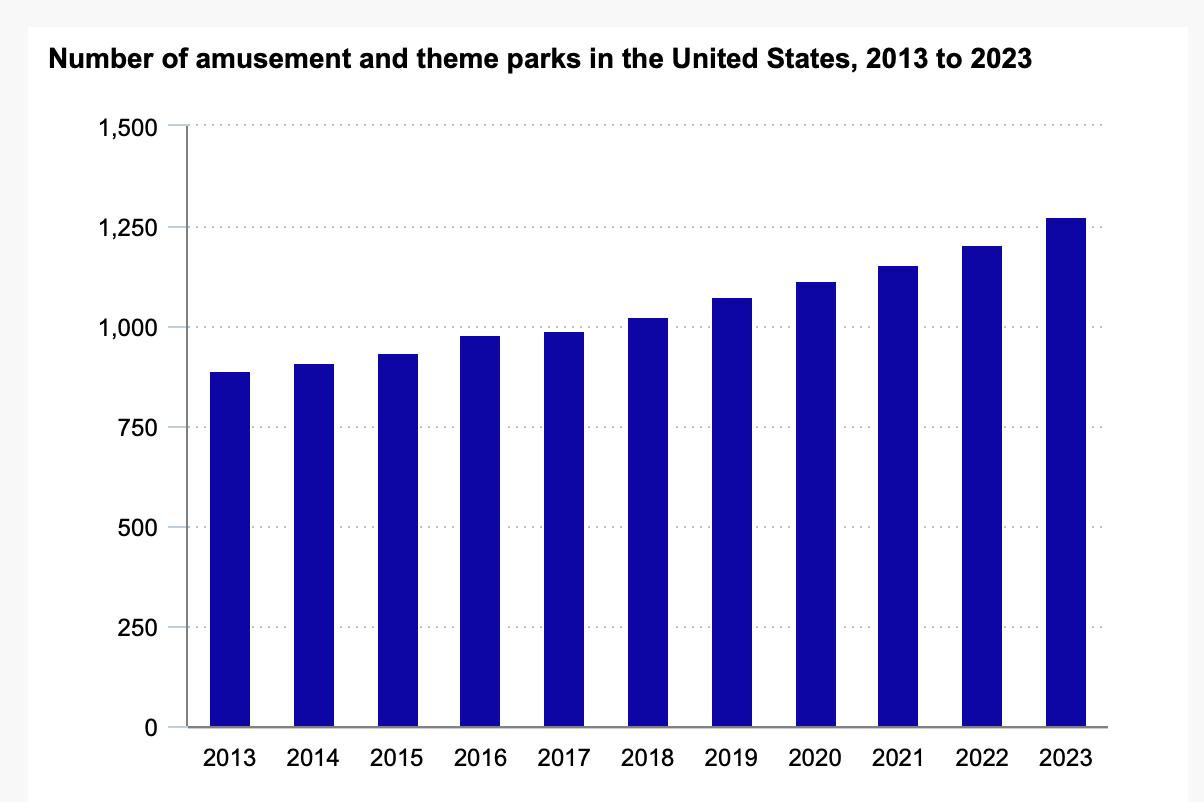
The number of amusement and theme parks in the United States increased steadily from 2013 to 2023
In 2023, there were 1,273 amusement and theme parks nationwide. The industry grew 43 percent from 2013 to 2023, adding 383 establishments. The largest single year increase occurred in 2023 with the addition of 66 establishments. The 2023 growth was also the largest over-the-year percentage gain, at 5.5 percent, followed by a 5.1-percent increase in 2019.
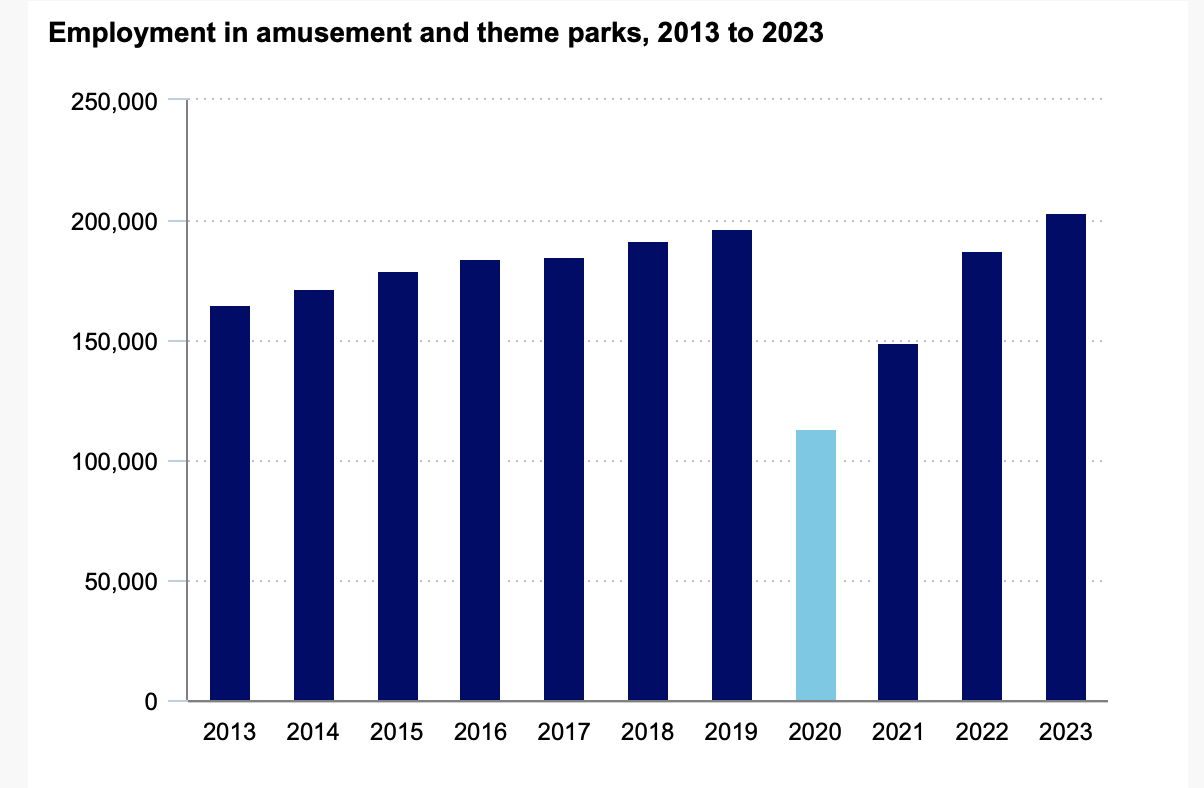
There were over 200,000 jobs in the amusement and theme parks industry in 2023
Employment in the amusement and theme parks industry was 203,361 in 2023. From 2013 to 2023, the industry added 38,162 jobs, an increase of 23 percent. The largest over-the-year net increases in employment for the industry were 38,032 in 2022 and 35,694 in 2021. These increases followed the industry’s largest decline in employment, which occurred in 2020 (-83,026) as a result of the COVID-19 pandemic.
Florida led the nation in amusement and theme parks jobs from 2013 to 2023
In 2013, Florida had the most jobs in the amusement and theme parks industry (63,555), followed by California (39,883). Collectively, the two states accounted for 60 percent or more of all jobs in the amusement and theme parks industry in each year from 2013 to 2023. Florida had 81,752 jobs in the industry in 2023, and California had 47,918 jobs.
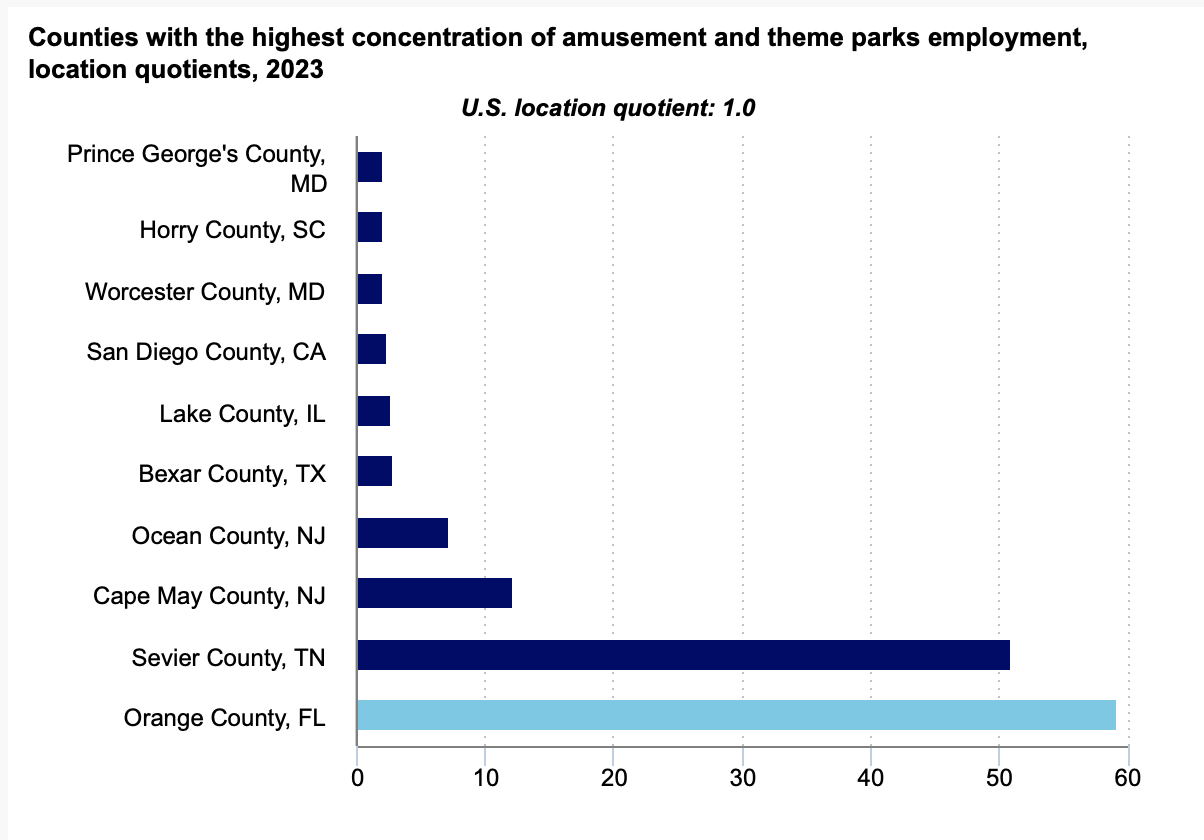
Orange County, Florida had the highest concentration of amusement and theme parks employment
In 2023, 10 counties had at least twice the average concentration of employment in the amusement and theme parks industry. Orange County, Florida, had the highest concentration of jobs for amusement and theme parks. Orange County’s employment was 59.2 times more concentrated than the U.S. average for the industry. Sevier County, Tennessee, had the next highest concentration at 50.9 times the U.S. average.
We compare employment concentrations across areas using location quotients. Location quotients are calculated by dividing the percentage of total employment for an industry at the local level by the percentage of total employment in the industry at the national level. If a location quotient is equal to 1, then the industry has the same share or concentration of local employment as the nation. A location quotient greater than 1 indicates an industry with a greater share of employment in the local area than nationwide.
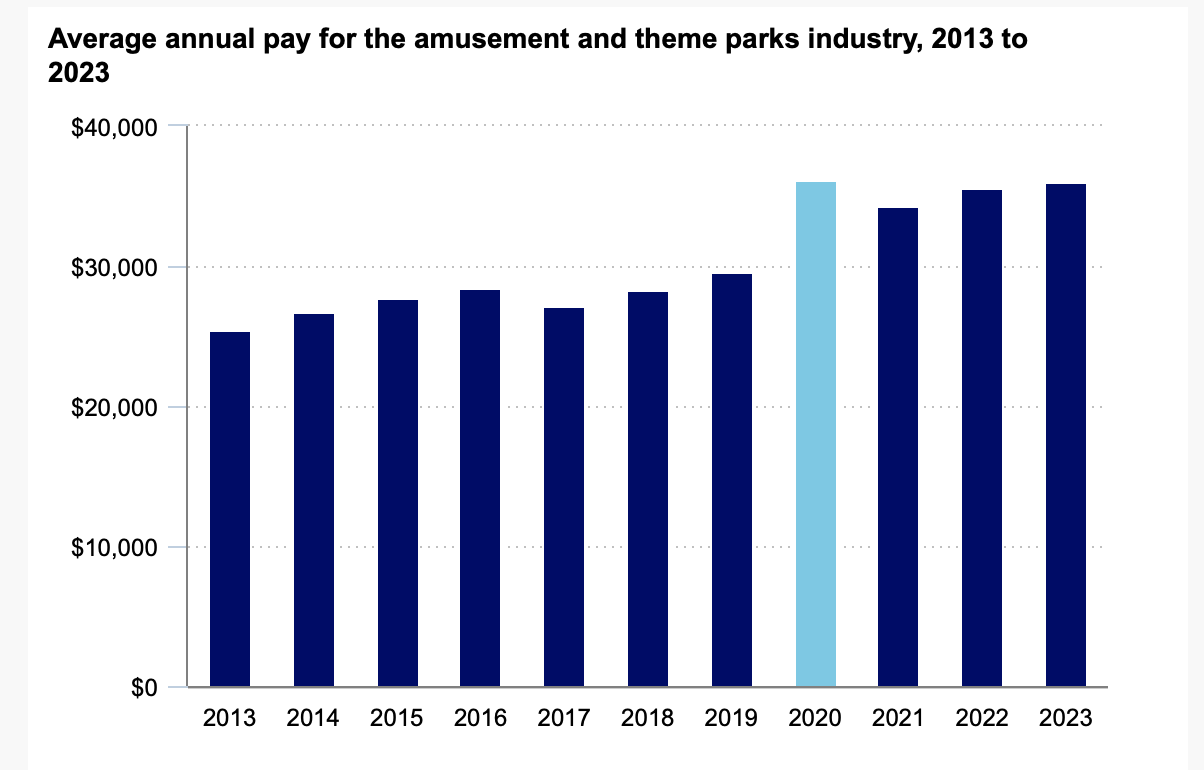
Average annual pay in the amusement and theme parks industry from 2013 to 2023 was $30,477
Average annual pay in the amusement and theme parks industry was $36,015 in 2023. Wages in 2023 were down from the industry peak of $36,112 in 2020. The largest over-the-year increase in wages was in 2020 (+$6,586), followed in 2021 by the largest decline in wages (-$1,891). The largest percentage increase was 22.3 percent from 2019 to 2020.
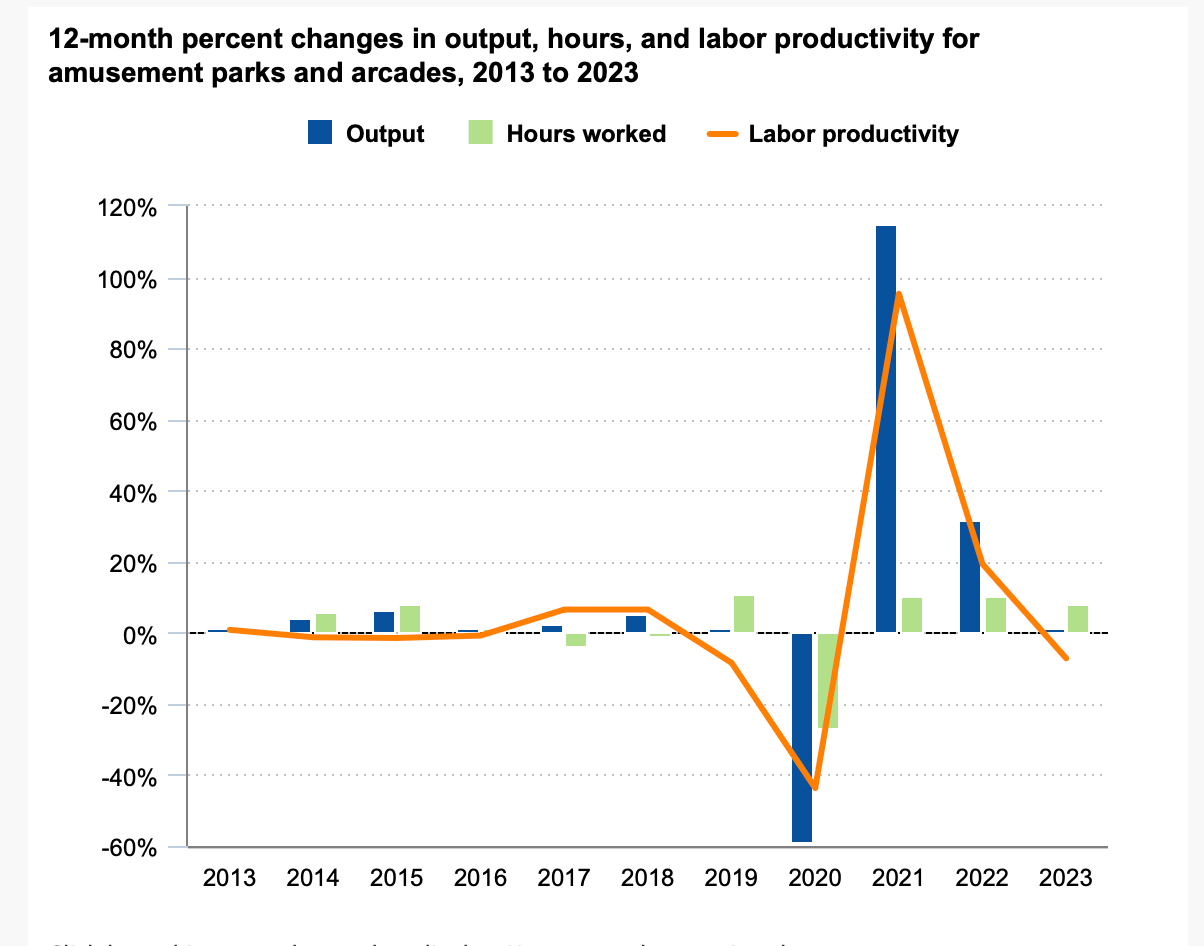
Labor productivity for the amusement parks and arcades industry down from post pandemic peaks
Labor productivity for amusement parks and arcades declined 7.2 percent in 2023, after large post-pandemic increases in 2021 (+95.3 percent) and 2022 (+19.3 percent). Output for the industry rose 0.4 percent in 2023 but was more than offset by an 8.2-percent increase in hours worked. In comparison, output increased 115.1 percent in 2021 and 31.5 percent in 2022, while hours worked rose 10.1 percent and 10.3 percent over the same periods.
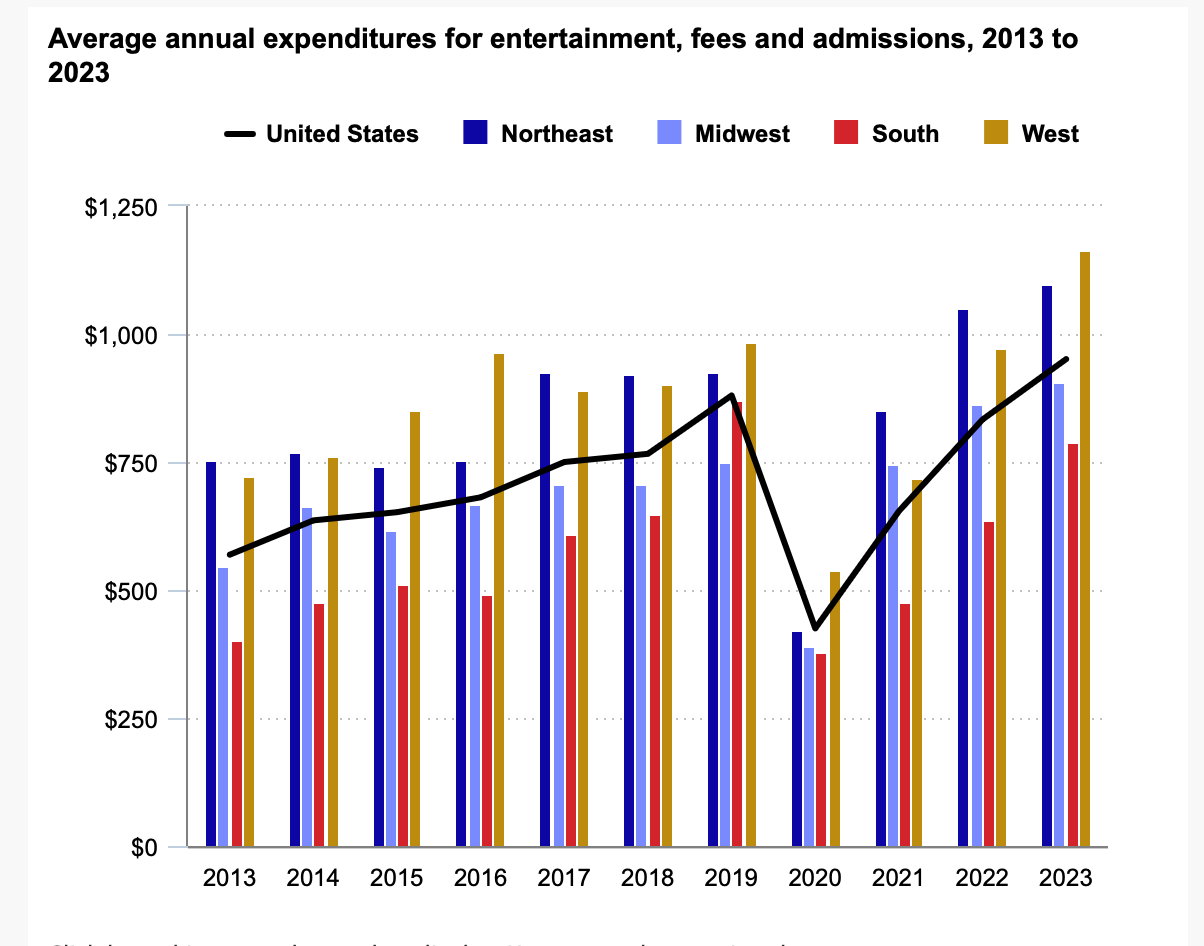
Consumer expenditures for entertainment fees and admissions bounced back from 2020 decline
Consumer expenditures for entertainment fees and admissions were $951 in 2023, up 124 percent from 2020 when expenditures declined due to the COVID-19 pandemic. Among the four census regions, consumers in the West spent the most on entertainment fees and admissions in 2023 ($1,165), while those in the South spent the least ($790). The South was the only region to have expenditures lower than the pre-pandemic high seen in 2019.
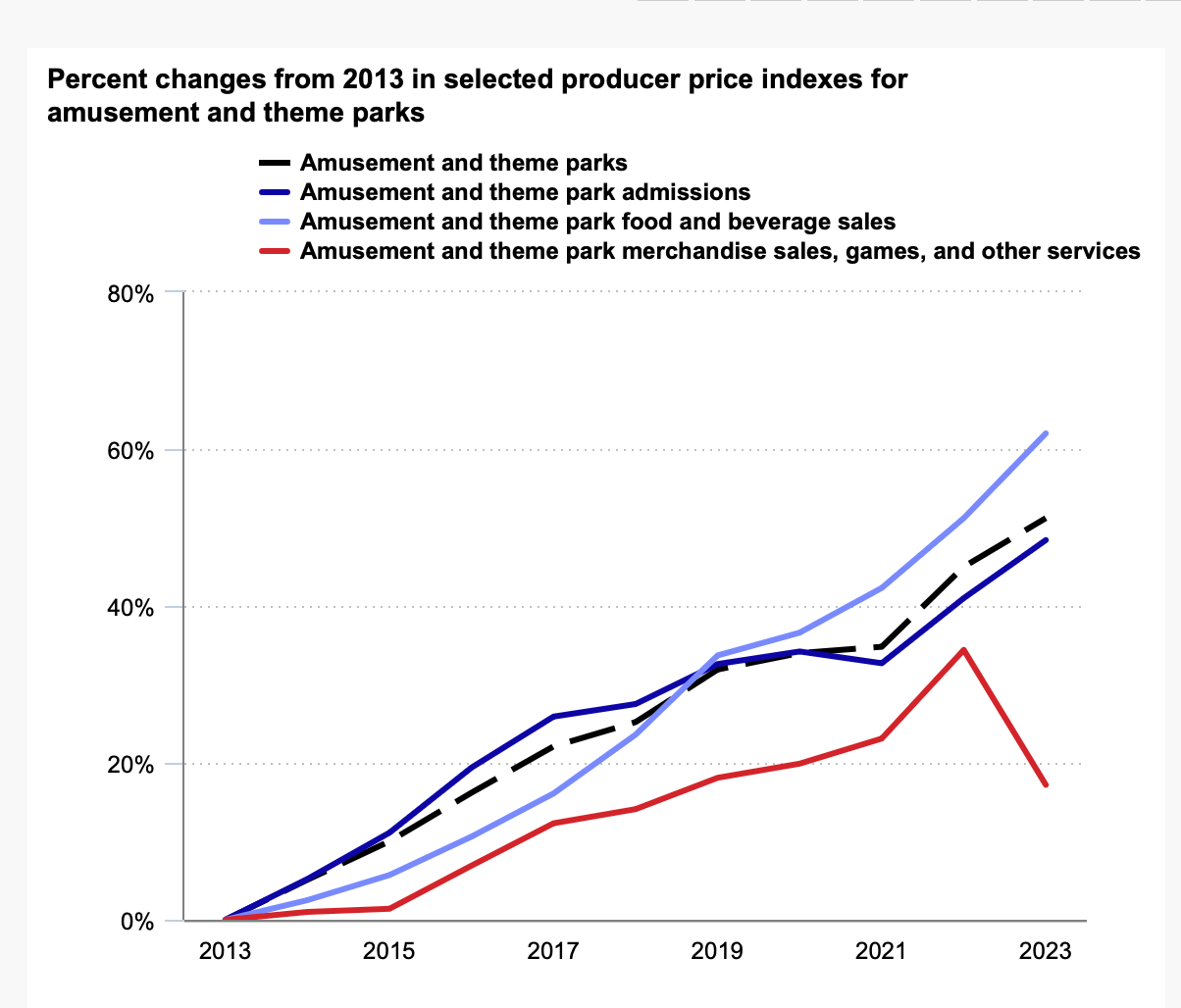
Producer prices for amusement and theme parks increased 51.2 percent from 2013 to 2023
From 2013 to 2023, prices increased for each of the three components of the amusement and theme parks producer price index. Prices for food and beverages had the largest percentage increase over the decade at 62.0 percent, followed by prices for admissions at 48.4 percent. Prices for merchandise sales, games, and other services rose 17.2 percent from 2013 to 2023.
Theme parks sell thrills, but the real story is what happens after the gates close: who gets the jobs, what those jobs pay, and whether the communities around the parks get more out of them than traffic and seasonal work. As ticket prices climb and paychecks lag behind, leaders in cities, counties, and the industry have a choice to make. They can treat these parks as tourist attractions, or they can treat them as launch pads for real careers and shared prosperity. The ride is booming, and the question now is who gets to come along.
Attribution: Timothy Ewing, "A Look at a Thrilling Industry: Amusement and Theme Parks," U.S. Bureau of Labor Statistics, Spotlight on Statistics, February 2025. Introduction and conclusion: CityGov editors.





Join the discussion
Members can read and add comments on every article.