Preventing Package Theft Without Turning Your Porch Into a Fortress
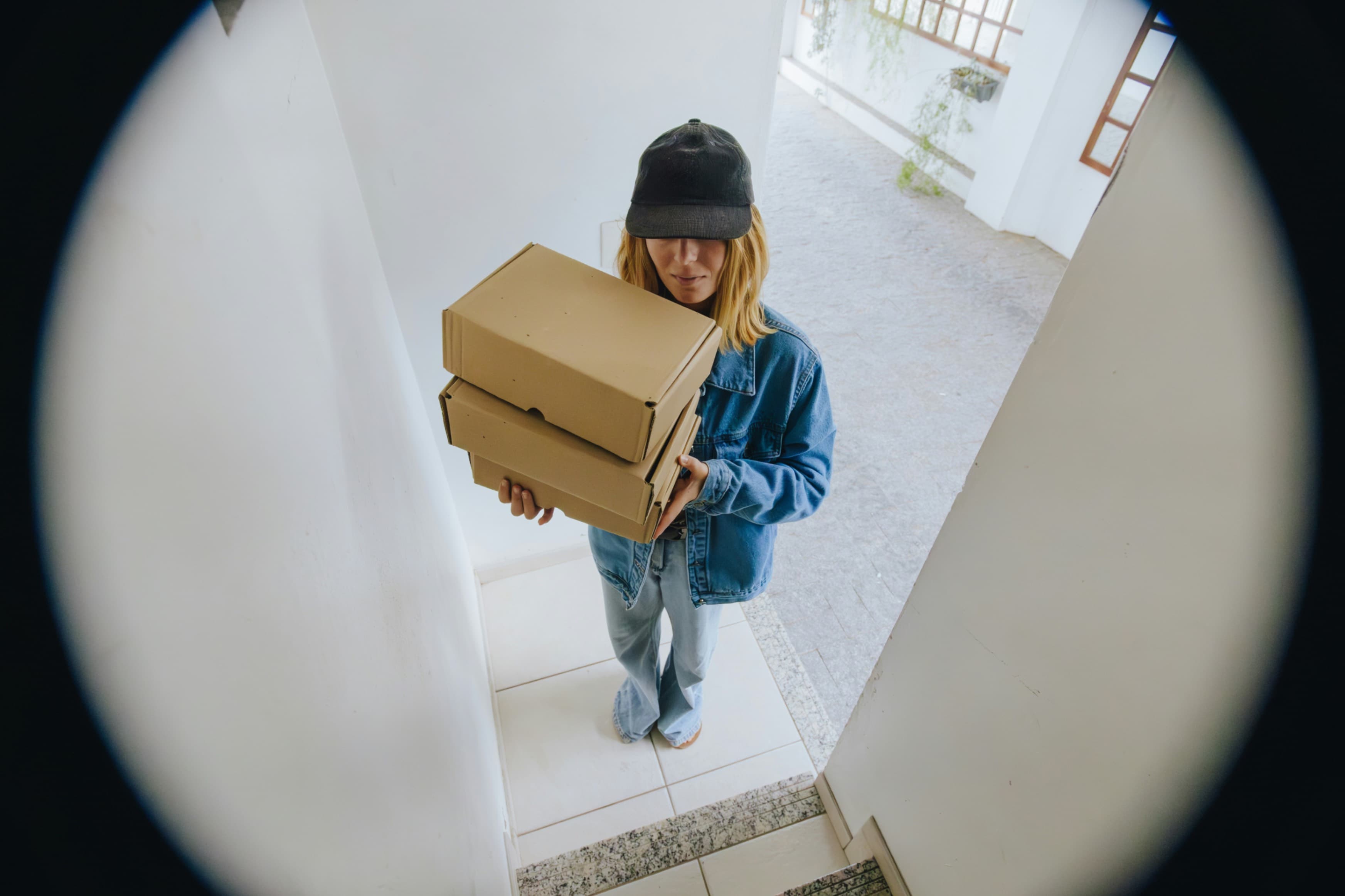
Picture this. It's a Tuesday evening, you're finally unwinding with dinner, and your phone buzzes with that satisfying little chime: "Delivered." You smile. Twenty minutes later, you swing open the door to grab your package, and the porch is empty. Just a lonely welcome mat and the sinking feeling that someone was standing exactly where you're standing now, holding something that belonged to you.
If you've been there, you know the theft itself is only half the story. The other half is the weirdly personal residue it leaves behind, the sense that a stranger sized up your home and decided it was worth the risk. It makes people do dramatic things. They install four cameras, buy a fake dog, google "how much does a moat cost." But here's the truth that most porch pirates don't want you to know: you don't need a fortress. You need a porch that simply isn't worth their time.
Opportunists Hate a Watched Porch
Most package thieves are not criminal masterminds plotting elaborate heists. They're opportunists driving through neighborhoods scanning for the easiest possible score, and according to the National Crime Prevention Council, reducing opportunity is the single most effective deterrent for this kind of crime. A porch that looks watched, well-lit, and slightly unpredictable is a porch they scroll past like a boring LinkedIn post.
Motion-activated lighting is the closest thing to a magic trick in this space. It's affordable, easy to install, and it fundamentally changes the environment the second someone approaches. A thief expecting a quiet grab suddenly feels spotlighted on a stage, and that psychological shift matters more than any expensive gadget you could bolt to the wall.
Shorten the Window of Vulnerability
Every minute a package sits in plain view on your porch is a minute someone could take it. So the goal is simple: shrink that window until it barely exists.
If your schedule lets you, use the delivery tools the carriers already built for exactly this problem. USPS Informed Delivery sends you scans of incoming mail and packages before they arrive. UPS My Choice lets you reroute deliveries, reschedule them, or leave specific instructions like "place behind the planter." FedEx Delivery Manager offers similar controls, including holding packages at a nearby location until you're ready. These are free, take about three minutes to set up, and most people never bother.
Adding a simple delivery note that redirects packages behind a column, next to a side door, or inside a screened porch removes the biggest thing thieves rely on, which is the assumption that your box is sitting in the open like a gift for the taking.
The Underrated Power of Not Being Home for the Delivery
Sometimes the smartest move is to not receive the package at your house at all. Amazon Hub Lockers let you send deliveries to a secure locker at a nearby pharmacy, grocery store, or apartment building, and you retrieve them with a code on your own schedule. UPS Access Point and FedEx Hold at Location work the same way. Yes, it's a small detour on your errand run. It's also a zero percent chance of theft, which is a trade a lot of people would happily make once they've been burned.
For frequent shoppers, a parcel drop box on the porch is worth considering. It doesn't have to look like a bank vault. Plenty of models blend into normal porch décor, and even a weighted deck box paired with clear delivery instructions can quietly solve the problem. Think of it as a mailbox that grew up.
Cameras Are Helpful, Not Heroic
A doorbell camera is a useful tool, but it is not a force field. Footage of a hooded figure walking off with your protein powder is satisfying to post on the neighborhood Facebook group and occasionally useful to police, but it rarely gets your package back. The International Association of Chiefs of Police consistently emphasizes layered prevention, meaning cameras work best when paired with lighting, placement, and community awareness rather than standing alone as your single line of defense.
If you already own a camera, keep it. Just don't let it be the whole plan.
Your Neighbors Are the Best Security System You Have
There's a reason "know your neighbors" has been on every crime prevention list for the last fifty years. A block where people casually notice each other, wave hello, and text when a delivery arrives is a block where opportunistic theft becomes deeply inconvenient. The Federal Trade Commission and community policing programs across the country consistently point to informal neighborhood watchfulness as one of the most effective and lowest-cost deterrents that exists.
You don't need a formal watch group with matching t-shirts. You need one or two neighbors who'll grab your box on a rainy Wednesday and expect you to do the same when they're at their kid's soccer game. Whether you're a manager building a team or a young professional building a life in a new city, the same principle applies: the strongest systems are usually the ones built out of small, reciprocal relationships.
Report It Even When It Feels Pointless
If theft keeps happening, file a report. It rarely leads to instant recovery, and yes, it can feel like shouting into a well. But every report contributes to a pattern that police and postal inspectors use to allocate resources and target repeat offenders. Your one incident is somebody's data point, and enough data points eventually become an investigation.
The Real Takeaway
Preventing package theft isn't about fear or fortification. It's about making your porch a little less predictable, a little less convenient, and a lot less rewarding for someone who's just looking for an easy grab. Lighting, smart placement, carrier tools, a locker or drop box when it makes sense, and neighbors who actually notice each other. That's the whole playbook.
So here's your move. Pick one thing from this article, just one, and do it before your next package arrives. Set up UPS My Choice on your lunch break. Screw in a motion light this weekend. Text the neighbor you've been meaning to talk to. Porch pirates count on your inaction. Prove them wrong.
References
Federal Trade Commission. "Consumer Advice." Accessed July 15, 2026. https://consumer.ftc.gov/.
FedEx. "FedEx Delivery Manager." Accessed July 15, 2026. https://www.fedex.com/en-us/delivery-manager.html.
International Association of Chiefs of Police. "Crime Prevention." Accessed July 15, 2026. https://www.theiacp.org/topics/crime-prevention.
National Crime Prevention Council. "Home and Neighborhood Safety." Accessed July 15, 2026. https://www.ncpc.org/resources/home-neighborhood-safety/.
United Parcel Service. "UPS My Choice." Accessed July 15, 2026. https://www.ups.com/mychoice/.
United States Postal Service. "Informed Delivery." Accessed July 15, 2026. https://informeddelivery.usps.com/.