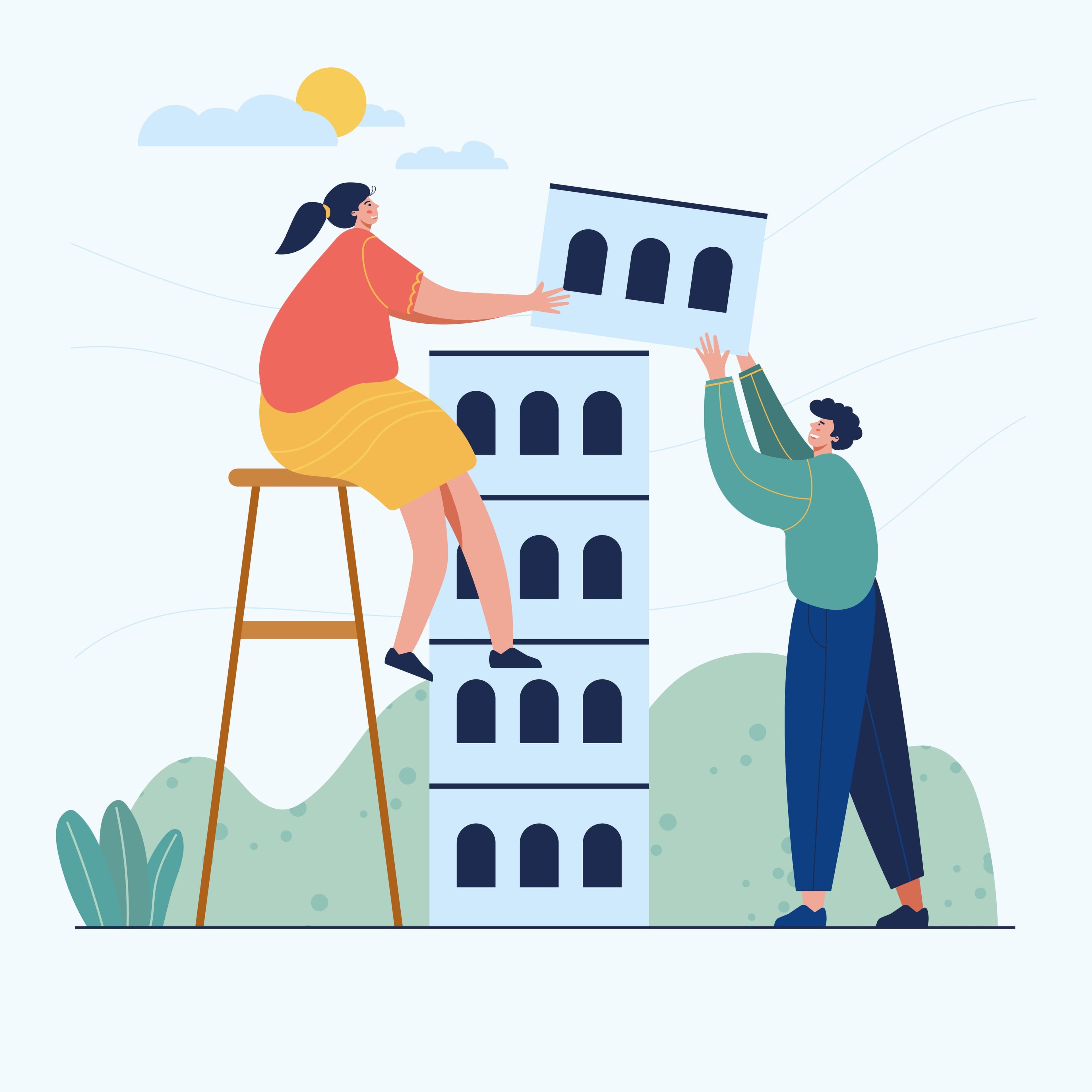
Behind Every Great Event Is a Great Team

Ever go to a concert or a game and wonder what it takes to get everything ready before the doors open?
Most of us show up thinking about finding our seats, grabbing something to eat, and enjoying the event. Meanwhile, there is a whole team making sure staff are in place, guests know where to go, and everyone is ready for the crowd.
Now multiply that by a few thousand nights. In 2025, Live Nation alone hosted 159 million fans across roughly 55,000 shows worldwide (Live Nation Entertainment 2026). Every one of those shows relied on people most guests never noticed, and that is usually a sign the job was done well.
That is where event services comes in. And if you have never considered a career in this industry, let's talk about it.
I'm a Regional Recruiter with Allied Universal Event Services, and I help connect people with opportunities in event security, guest services, and operations leadership across multiple markets. One of my favorite parts of my job is getting to know someone beyond their resume. What do you enjoy doing? What are you ready to take on? Where do you want your career to go?
Sometimes, that conversation opens the door to an opportunity they had never thought about.
The Show Before the Show
Hours before the first guest arrives, the real opening act is already underway. Supervisors run briefings. Radios get checked. Posts are assigned, entry plans are reviewed, and someone is already asking, "What do we do if it rains?"
What separates a smooth night from a chaotic one is rarely talent alone. When Google studied 180 of its own teams, researchers found that how a team works together mattered far more than who was on it. The top factor was psychological safety, meaning people feel safe to ask a question, admit a mistake, or raise a concern without being embarrassed for it (Google re:Work, n.d.).
At a venue, that idea is not abstract. It is the newest usher feeling comfortable radioing that a line is backing up at Gate C. It is the officer who says, "Something about that group looks off," and gets thanked instead of brushed aside. In an office, silence costs time. On an event floor, it can cost someone's safety.
The best event teams I've seen tend to share a few habits:
Everyone knows their post, their role, and exactly who to call.
Small problems get flagged early, before they turn into big ones.
People are dependable, because a gap at one entrance is felt at the next one.
The whole team shares one goal: every guest gets home safe and happy.
When the Plan Meets the Weather
Every event has a plan, and nearly every event tests it. A storm delays the gates. Ten thousand people arrive in the same 20 minutes. A child gets separated from a parent. A frustrated guest needs someone calm, right now. A few staff members call out an hour before doors.
Staffing is a real challenge across this field. Employment of security guards is projected to stay roughly flat through 2034, yet the industry still generates about 162,300 openings a year, almost all of them to replace people who leave (UC Berkeley Labor Center 2026). Teams that hold on to good people tend to do a few simple things consistently, and anyone can borrow them.
For leaders and managers, that means using the pre-shift briefing to walk through a couple of "what if" scenarios, so the team has already rehearsed the hard moment before it arrives. Pair new hires with experienced staff for their first few events. Rotate posts on long shifts to fight fatigue. Hold a five-minute debrief after the crowd clears: what went well, what got messy, and what we'll do differently next time. And learn names. People stay longer where they feel seen.
For those just starting out, the playbook is just as practical. Learn the radio and the venue map early. Ask the question you think might sound silly, because someone else is usually wondering too. Watch how veterans calm a tense guest, then practice doing the same. Reliability is the fastest way to earn trust, and trust is what gets you handed bigger responsibilities.
Leaders Who Emerge Mid-Shift
Picture this. Twenty minutes before doors, a ticket scanner goes down at a main entrance. No one has been assigned to handle it. A guest services team member three months into the job starts calmly directing people to the next gate. A security officer calls it in on the radio. Another teammate grabs a handheld scanner and opens a second line. By the time the supervisor arrives, the problem is already solved.
So who led?
Everyone did, a little. Researchers call this shared leadership, describing it as "an emergent team property that results from the distribution of leadership influence across multiple team members" (Carson, Tesluk, and Marrone 2007, 1218). A review of 42 studies found it is linked to more effective teams, and that the effect is stronger when the work is complex (Wang, Waldman, and Zhang 2014). Few jobs are more complex than managing thousands of people, moving parts, and changing conditions in real time.
That is the part of this industry I find most encouraging. Leaders are not always born, and they are not always made in a training room. Sometimes they emerge, in the middle of a shift, because a team needed someone to step up and they did. Many of the supervisors and managers in event services started on the floor, earning trust one event at a time.
If you lead a team, make room for those moments. Give people enough clarity and trust to act, then recognize them when they do. If you are early in your career, remember that you do not need a title to lead. You just need to notice what the team needs and be willing to help.
Your Experience Already Speaks
There is a lot more to this work than people realize. It takes someone who can help a guest who is lost or frustrated. Someone who can give their team clear direction when things get busy. Someone who notices a problem early and takes the time to address it.
And it takes people who care. About their team, about the guests, and about doing the job well.
If you are reading this and wondering whether your experience could fit, think about what you have already done. Have you led a team? Worked through a difficult customer situation? Trained employees? Had to change plans and figure things out on the fly?
Those are experiences worth talking about. Every position has its own requirements, and some need specific security or event experience. But you should be able to explain what you bring to the table and ask questions about where that experience might fit.
The Honest Fine Print
I'll also be upfront: events do not always happen Monday through Friday, nine to five. Nights, weekends, and holidays are part of many roles. Things get busy, plans change, and communication matters. You have to be comfortable working with people and staying focused when there is a lot happening around you.
For someone who enjoys that energy, though, there is something rewarding about seeing the doors open, watching your team come together, and knowing you helped make it happen.
Before the Lights Go Down
Great events are not built by one person with a clipboard. They are built by people who show up, look out for one another, and step forward when the moment calls for it.
So the next time the lights go down and the crowd starts to roar, ask yourself: will you be in the seats, or on the team that made the moment possible?
References
Carson, Jay B., Paul E. Tesluk, and Jennifer A. Marrone. 2007. "Shared Leadership in Teams: An Investigation of Antecedent Conditions and Performance." Academy of Management Journal 50 (5): 1217-34.
Google re:Work. n.d. "Guide: Understand Team Effectiveness." Accessed October 10, 2026. https://rework.withgoogle.com/intl/en/guides/understand-team-effectiveness.
Live Nation Entertainment. 2026. "Live Nation Entertainment Full Year and Fourth Quarter 2025 Results." February 19, 2026. https://newsroom.livenation.com/news/live-nation-entertainment-full-year-and-fourth-quarter-2025-results/.
UC Berkeley Labor Center. 2026. "Underpaid, Undervalued, and Essential: The Security Guard Workforce in the United States." Berkeley: University of California, Berkeley. https://laborcenter.berkeley.edu/wp-content/uploads/2026/07/Underpaid-Undervalued-and-Essential%E2%80%94The-Security-Guard-Workforce-in-the-United-States.pdf.
Wang, Danni, David A. Waldman, and Zhen Zhang. 2014. "A Meta-Analysis of Shared Leadership and Team Effectiveness." Journal of Applied Psychology 99 (2): 181-98. https://doi.org/10.1037/a0034531.